
Table of Contents
Introduction
In today’s precision-driven manufacturing world, speed, accuracy, and efficiency define success.
That’s where the 4 axis CNC machine stands out — transforming how parts are made by adding rotational control and reducing multiple setups.
Compared to standard three-axis models, a four-axis CNC machine allows rotation along the A-axis, giving manufacturers the ability to work on multiple sides of a component in one setup.
Whether you’re using a 4 axis CNC lathe, a CNC machine with 4th axis, or a full 4 axis machining center, the benefits are clear: improved precision, higher throughput, and lower costs.
This article explores how 4-axis machining works, its benefits, industries that rely on it, and why Dongguan Huade Precision Manufacturing Co., Ltd. is your trusted partner for advanced CNC-machined parts.
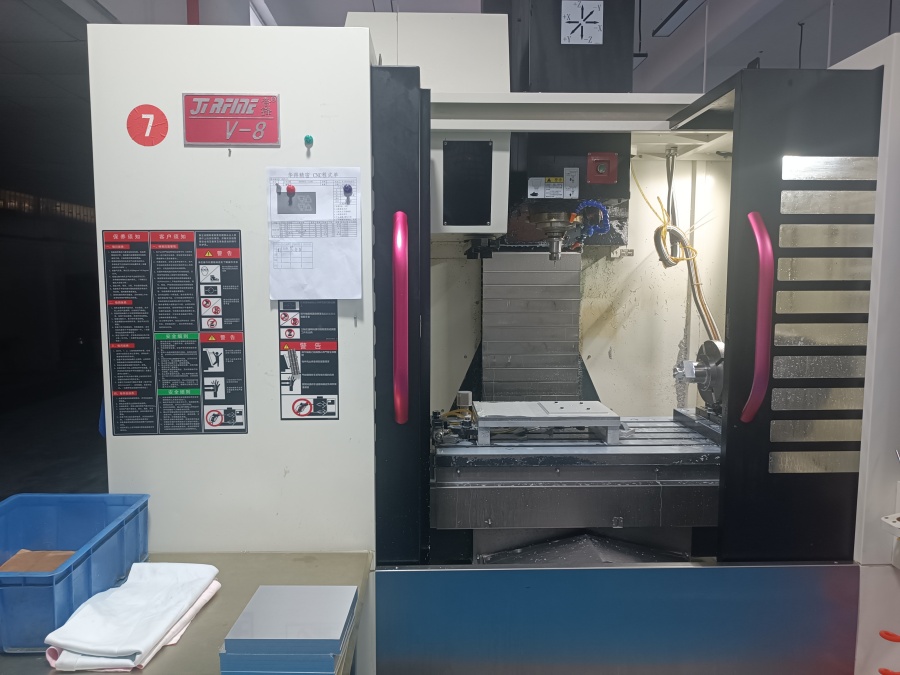
What Is a 4 Axis CNC Machine and How It Works
A standard 3-axis CNC machine moves along three linear directions: X, Y, and Z.
A 4 axis CNC machine introduces an additional rotational motion — usually the A-axis, rotating around the X-axis.
This rotation allows the part to be positioned or continuously spun during machining.
As a result, complex features such as angles, holes, or grooves on different sides of the workpiece can be completed in a single operation — saving both time and setup effort.
In essence, a 4 axis CNC machine bridges the gap between simple 3-axis systems and expensive 5-axis equipment, providing precision and flexibility for a wide range of manufacturing needs.
Types of 4 Axis CNC Machines and Applications
• 4 Axis CNC Milling Machines
These are vertical or horizontal machining centers equipped with a rotary table or integrated A-axis.
They are ideal for producing complex parts such as valve bodies, plates, and heavy-duty housings with five-side access in one setup.
• 4 Axis CNC Lathes
In turning operations, the fourth axis may act as a rotary turret or driven spindle.
A 4 axis CNC lathe combines turning and milling operations seamlessly, allowing the operator to complete multiple features without moving the part.
• CNC 4th Axis Attachments
For smaller workshops or retrofits, a 4th-axis rotary module can be added to standard three-axis routers or mills.
It converts a basic system into a flexible four-axis CNC machine capable of producing cylindrical or multi-face components efficiently.
• Common Applications
Industries that rely on 4-axis machining include aerospace, automotive, medical devices, industrial equipment, and packaging.
It handles materials from lightweight aluminum to titanium and stainless steel — covering everything from precision housings to decorative metal containers.
Key Advantages of a 4 Axis CNC Machine
1. Fewer Setups, Higher Accuracy
Rotating rather than reclamping the part ensures all faces are machined in precise alignment, improving dimensional accuracy and repeatability.
2. Reduced Cycle Time and Lower Cost
Eliminating multiple setups cuts idle time, minimizes human error, and lowers overall production costs — making the 4 axis CNC machine a cost-effective investment.
3. Ability to Machine Complex Geometry
With an additional A-axis, intricate contours, undercuts, and curved surfaces can be machined effortlessly, expanding design freedom.
4. Versatility Across Materials and Sizes
From small precision components to large industrial parts, 4 axis CNC machines provide flexibility for various materials and geometries.
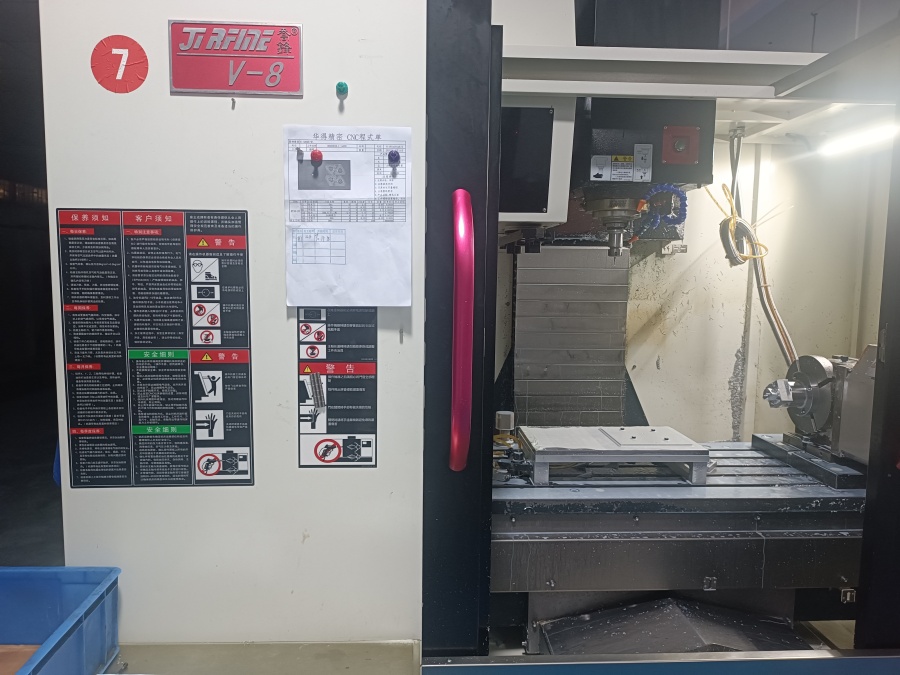
Choosing the Right 4 Axis CNC Machine
When selecting your system, consider the following:
- Machine Rigidity & Axis Configuration
Ensure the rotary table or A-axis is robust enough for your workpiece size and weight. - Control System & CAM Software
Verify that your control supports fourth-axis programming and simultaneous motion. - Workpiece Envelope & Load Capacity
The swing diameter and table area must suit your parts. - Lathe vs. Mill Functionality
Choose between a 4-axis lathe for cylindrical parts or a milling machine for prismatic ones. - Investment Return
The initial cost is quickly offset by faster production, higher precision, and reduced scrap.
A properly chosen 4 axis CNC machine can dramatically enhance productivity and part quality in any precision workshop.
Common Misconceptions
• “4 Axis = 5 Axis”
They are not the same.
A 4 axis CNC machine adds one rotational axis (A), while a 5-axis machine adds two or more (A + B or A + C), enabling more complex orientations.
• “Programming Is Too Difficult”
Modern CAM software simplifies fourth-axis programming with built-in tool-path strategies and simulation tools.
• “All Parts Need 5-Axis”
Not true — many parts can achieve the same precision with a 4 axis CNC machine at lower cost and higher efficiency.
Real-World Example: CNC Machining for Metal Packaging
Take the example of premium metal packaging — airtight aluminum cans, tobacco tins, or cosmetic containers that require perfect surface finish and tight sealing.
At Dongguan Huade Precision Manufacturing Co., Ltd., we use 4 axis CNC machines to complete threading, engraving, and finishing in one setup.
This approach guarantees high consistency, mirror-like surfaces, and flawless airtight closures — whether producing small snuff tins or large decorative housings.
The result: efficiency, accuracy, and aesthetics all in one process.
Future Trends in 4 Axis CNC Machining
As manufacturing advances toward automation and Industry 4.0, the 4 axis CNC machine continues to evolve.
Key trends include:
- Automated part loading/unloading for lights-out machining.
- Hybrid turning-milling systems combining multiple functions.
- Smart monitoring for tool wear, spindle load, and real-time optimization.
For most manufacturers, upgrading from 3-axis to 4 axis CNC machines is the most practical step before moving into full 5-axis automation.
Conclusion & Call to Action
If your production involves multi-surface machining, tight tolerances, or time-sensitive projects, the 4 axis CNC machine is the perfect solution.
It offers unmatched precision, versatility, and efficiency — helping your business stay ahead of the competition.
As a professional CNC parts manufacturer,
Dongguan Huade Precision Manufacturing Co., Ltd. provides advanced 4 axis CNC machining services with fast prototyping, ±0.01 mm tolerance, and low-MOQ flexibility.
📧 Contact us: sales@hdproto.com
🌐 Visit: www.hdproto.com
Experience the next level of manufacturing precision — with the power of 4 axis CNC machine technology.
 English
 Deutsch
 Español
 Français
 Português do Brasil
 Italiano