
Metal hinges are one of the most widely used mechanical components across industrial, commercial, and consumer products. They provide reliable rotational movement, stable support, and long service life. As CNC machining technology evolves, the performance and customization level of metal hinges continue to reach new standards.
This article serves as a pillar guide that introduces all major hinge categories, materials, applications, and design factors—ideal for engineers, product designers, and buyers seeking a complete understanding of metal hinges.
What Are Metal Hinges?
Metal hinges are mechanical joints that connect two parts and allow rotational or pivoting movement around a fixed axis.
Most hinges are made from:
- Stainless steel
- Carbon steel
- Aluminum
- Brass
- Other specialty alloys
A hinge’s performance depends on material selection, geometry, pin structure, and manufacturing accuracy.
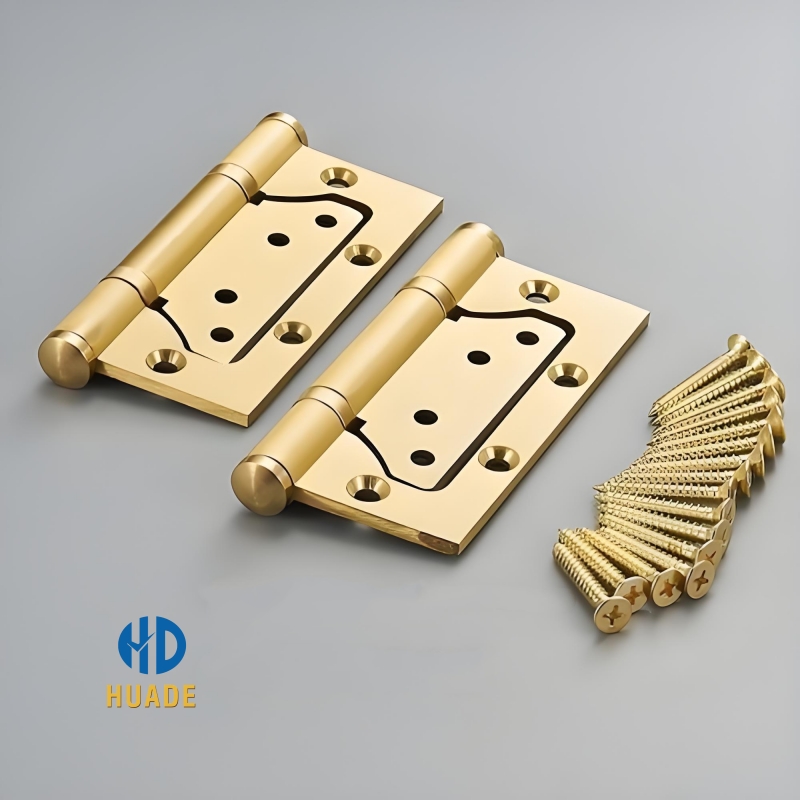
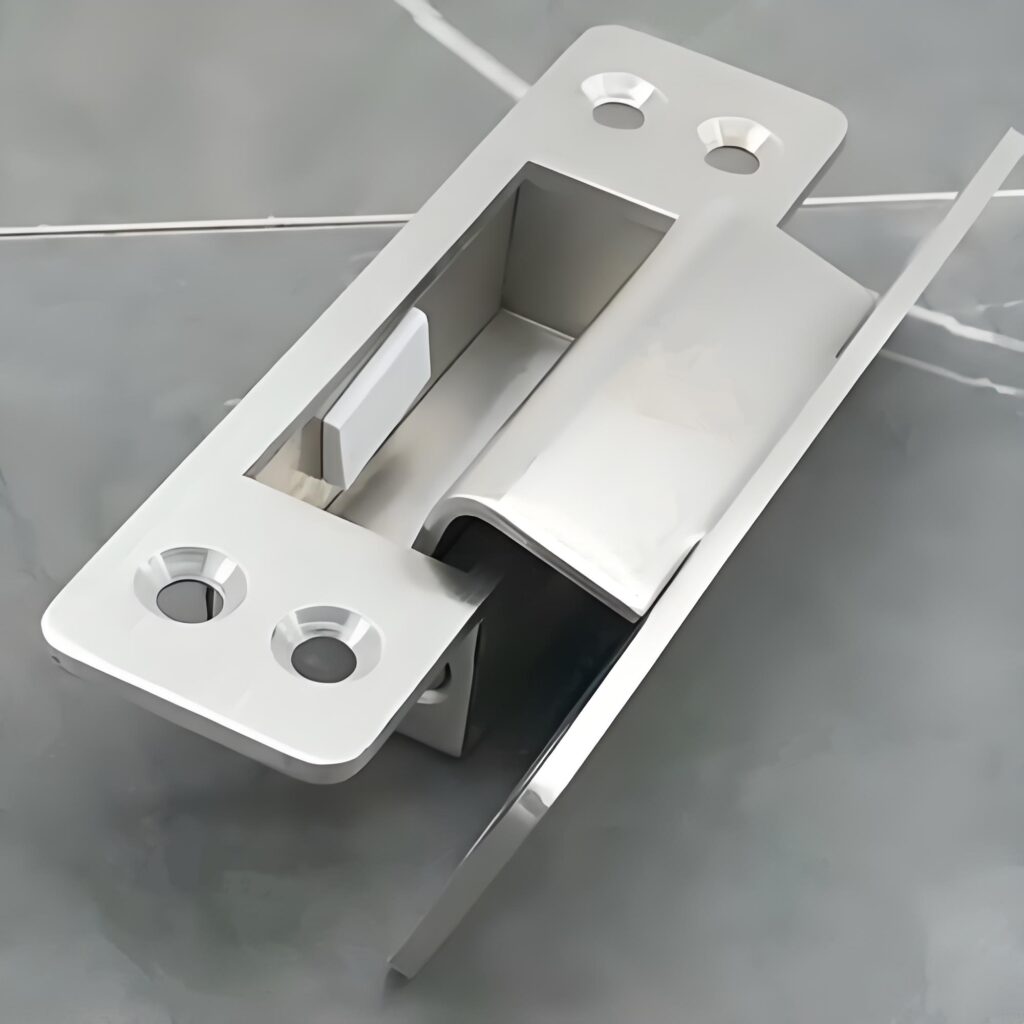
Common Types of Metal Hinges
Although hinge designs vary greatly, most can be grouped into several main categories.
1. Butt Hinges
Common in doors, cabinets, and structural applications. They consist of two rectangular leaves and a central pin.
2. Continuous / Piano Hinges
Long, uniform hinges widely used for lids, panels, and protective covers.
3. Concealed Hinges
Hidden inside the structure, often used in furniture or aesthetic applications.
4. Torque / Friction Hinges
Provide controlled resistance and hold positions without additional locking mechanisms.
5. Specialty Hinges
Designed for specific environments, such as:
- high-load gates
- sanitary equipment
- lightweight acrylic enclosures
- precision metal cases
These categories help determine how hinge properties match usage conditions.
Applications of Metal Hinges
Metal hinges appear in countless products, but a few categories dominate engineering use cases.
1. Gate and Outdoor Structures
Hinges used in large gates must handle heavy loads and weather exposure.
Examples include metal gate hinges heavy duty, gate hinges for metal gates, and metal gate post hinges.
2. Industrial and Commercial Doors
Applications require high strength and reliable alignment.
This includes metal door hinges and supporting components such as metal door hinge screws and shims.
3. Sanitary and Bathroom Equipment
Metal hinges provide durability in wet environments.
Typical examples include metal toilet seat hinges, elongated toilet seat metal hinges, and various replacement models.
4. Metal Boxes and Small Enclosures
Small products rely on precision for smooth opening.
Examples include metal box with hinged lid and other compact hinged components.
5. Acrylic, Plexiglass, and Transparent Panels
Custom hinges support equipment covers, displays, and inspection windows.
These include specialized metal hinges for plexiglass.
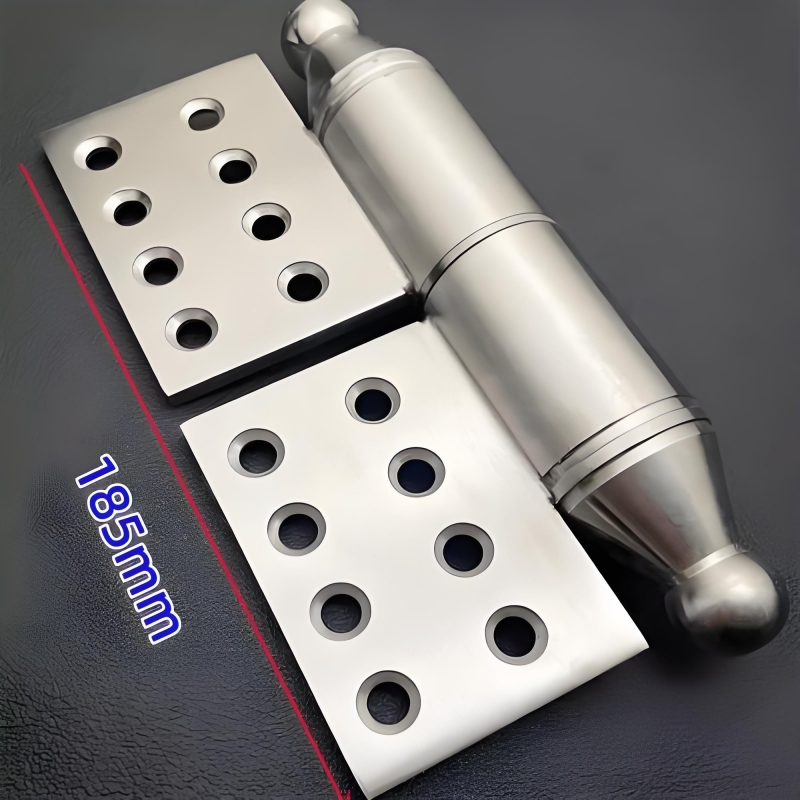
Metal Hinge Material Comparison
| Material | Strength | Corrosion Resistance | Weight | Common Uses |
|---|---|---|---|---|
| Stainless Steel | High | Excellent | Heavy | Outdoor, sanitary, gate hinges |
| Carbon Steel | Very High | Low–Medium | Heavy | Structural doors, heavy gates |
| Aluminum | Medium | Good | Light | Boxes, plexiglass hinges, portable devices |
| Brass | Medium | Good | Medium | Decorative or smooth-action applications |
Key Engineering Factors When Choosing Metal Hinges
1. Load Capacity
A hinge must support both static and dynamic loads.
Higher loads require thicker leaves, larger pins, and stronger materials.
2. Movement Angle
Some hinges rotate fully to 180°, while others are limited for safety or structural requirements.
3. Usage Frequency
High-cycle applications—such as toilet seats, commercial doors, or industrial panels—must withstand repeated movement.
4. Environmental Conditions
Outdoor environments demand corrosion resistance.
Indoor applications may focus on smooth motion and noise reduction.
5. Mounting Method
Holes, countersinks, screws, and welded options vary by application.
Why CNC Machining Matters in Hinge Manufacturing
CNC machining plays a crucial role in producing modern metal hinges due to:
High Precision
±0.01 mm accuracy ensures smooth movement and perfect alignment.
Improved Durability
Consistency in pin diameter, leaf thickness, and hole placement reduces wear.
Material Flexibility
CNC easily handles stainless steel, aluminum, brass, carbon steel, and more.
Custom Designs
Engineers can create hinges tailored to unique load, space, or performance requirements—something impossible with low-cost stamping.
Fast Prototyping
Rapid CNC prototyping allows hinge samples to be produced within 2–3 days, reducing development time.
Hinge Manufacturing Process Overview
A premium-quality metal hinge typically goes through:
- Material selection
- CNC milling or turning
- Deburring and edge smoothing
- Pin machining and fitment
- Surface treatment (anodizing, polishing, plating, passivation)
- Assembly and final testing
Every step influences the hinge’s lifespan and performance.
When Should You Choose Custom Machined Metal Hinges?
Custom CNC hinges are ideal when:
- Standard hinges cannot support the required load
- Appearance or aesthetics matter
- The application involves unique rotational requirements
- Material strength or corrosion resistance is critical
- The product requires exact tolerance control
Industries needing custom hinges include:
- Automotive
- Medical devices
- Industrial machinery
- Aerospace components
- High-end consumer electronics
- Precision enclosures
About Dongguan Huade Precision Manufacturing Co., Ltd.
Huade Precision specializes in CNC machining of aluminum, stainless steel, brass, carbon steel, and engineering metals.
Our advantages include:
- ±0.01 mm machining tolerance
- 2–3 day rapid prototyping
- Low MOQ suitable for startups and small production runs
- Professional machining for hinge components, pins, brackets, and custom assemblies
- Advanced milling, turning, and surface finishing capabilities
Website: https://hdproto.com
Email: william@hdproto.com
If you need custom metal hinges or precision parts for gates, doors, toilet seats, metal boxes, acrylic structures, or any specialized mechanism, Huade Precision is ready to support your engineering and production needs.
 English
 Deutsch
 Español
 Français
 Português do Brasil
 Italiano