
Motor shafting plays a critical role in how electric motors perform, last, and operate under real-world loads. Although often hidden inside the motor assembly, the shaft directly affects rotational accuracy, bearing life, vibration levels, and overall system reliability.
As a CNC machining manufacturer specializing in precision motor shafting, we work closely with engineers and purchasing teams to produce custom motor shafts that meet strict dimensional, mechanical, and performance requirements across industrial, automation, and electric motor applications.

CNC manufacturing expert with 15+ years of experience. William helps engineering teams turn prototypes into stable production parts through DFM optimization, tolerance planning, machining strategy selection, and inspection-driven quality control.
william@hdproto.comFor any CNC-machined part — whether shafts, housings, brackets, manifolds, or structural components — the foundation of reliable manufacturing starts with clean geometry, well-defined datums, and machining-friendly features that minimize re-clamping risks.
We support function-driven tolerances (down to ±0.01 mm when required) and offer full inspection options including CMM reports, thread gauges, and surface-finish verification to ensure repeatability from prototype to production.
CONTACT OUR EXPERT NOWThis guide explains how motor shafting is manufactured, what truly matters in design and machining, and how to choose the right materials, processes, and finishing methods for reliable motor performance.
What Is Motor Shafting?
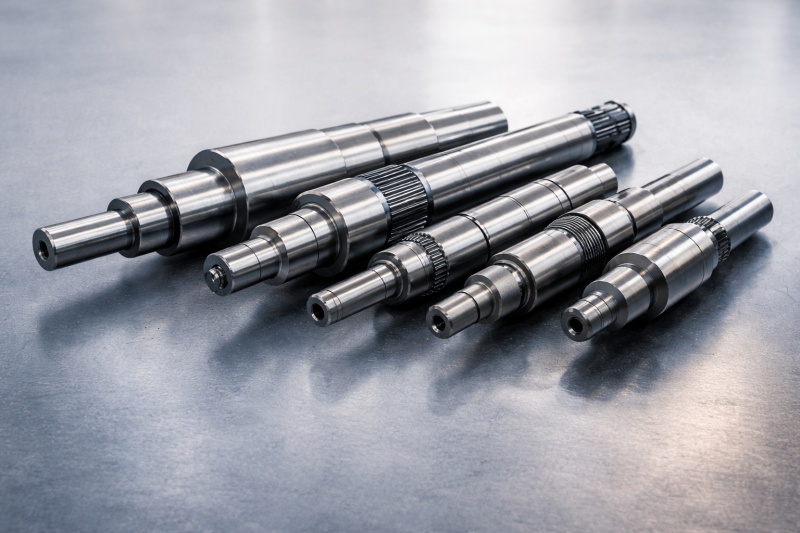
Motor shafting refers to the rotating shaft component used inside electric or mechanical motors to transmit torque from the motor to other mechanical elements such as gears, pulleys, couplings, or rotors.
Unlike general-purpose shafts, motor shafts require precise control of:
- Diameter and straightness
- Concentricity and runout
- Surface finish at bearing and seal locations
- Mechanical strength and fatigue resistance
Even small deviations can lead to noise, vibration, premature bearing failure, or reduced motor efficiency.
Why Precision Machining Matters for Motor Shafts
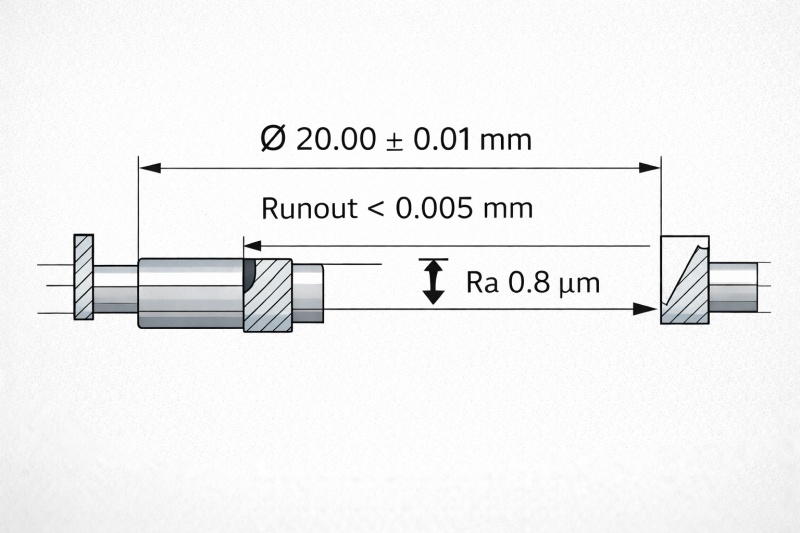
Motor shafts are typically long, slender components that rotate at high speed. This makes them particularly sensitive to deflection, imbalance, and machining-induced stress.
Precision CNC machining allows tight control over:
- Shaft geometry and symmetry
- Tolerance consistency from end to end
- Repeatability across batches
- Surface integrity after heat treatment
For critical motor applications, shaft tolerances are commonly controlled within ±0.01 mm, with bearing surfaces often finished to Ra 0.8–1.6 μm or better.
CNC Machining Processes Used in Motor Shafting
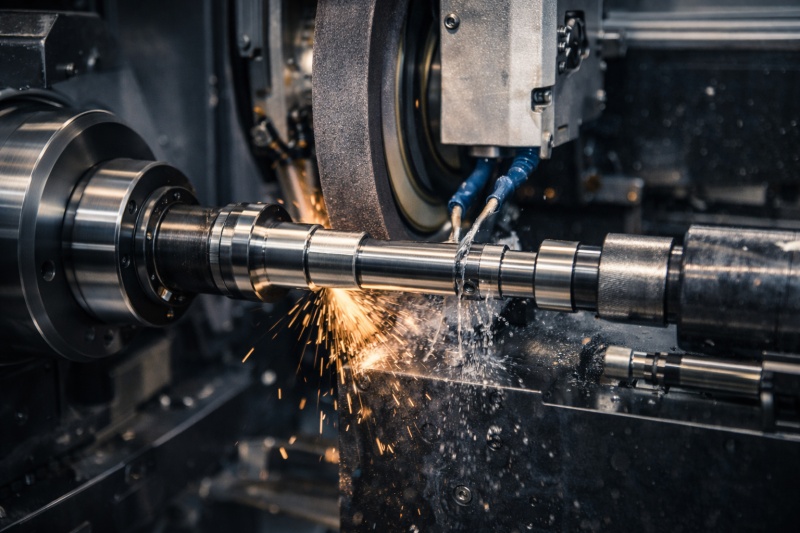
Producing high-quality motor shafting usually involves multiple CNC processes, selected based on shaft geometry, material, and performance requirements.
CNC Turning
Turning is the primary operation for shaping motor shafts. The shaft rotates while cutting tools remove material to achieve precise diameters, shoulders, and stepped features.
For long motor shafts, steady rests and optimized cutting parameters are essential to minimize deflection and maintain concentricity.
CNC Milling
Milling is used to create non-cylindrical features such as keyways, flats, slots, or mounting interfaces. These features are critical for torque transmission and component alignment.
Proper sequencing of milling operations helps avoid distortion and ensures accurate positioning relative to shaft centerlines.
CNC Grinding
Grinding is often required for bearing seats, seal surfaces, or high-precision fits. It improves dimensional accuracy and surface finish beyond what turning alone can achieve.
Internal or external grinding is commonly applied after heat treatment to restore accuracy and surface quality.
CNC Drilling
Drilling may be used to create axial or radial holes for lubrication, weight reduction, or fastening purposes. While not required on all shafts, drilled features must be carefully aligned to avoid imbalance.
Electrical Discharge Machining (EDM)
For hardened materials or complex internal geometries, EDM allows precise feature creation without introducing cutting forces. It is especially useful for splines, keyways, or intricate slots in high-strength motor shafts.
Common Materials Used for Motor Shafting
Material selection directly affects shaft strength, wear resistance, corrosion performance, and cost. The final choice depends on motor load, environment, and service life expectations.
Carbon Steel
Carbon steel, such as 1045, is widely used due to good machinability and balanced strength. It is suitable for many standard electric motor and pump shaft applications and can be heat treated for increased surface hardness.
Alloy Steel
Alloy steels like 4140 or 4340 are selected for higher load capacity, impact resistance, and fatigue strength. These materials are commonly used in industrial motors, gear motors, and heavy-duty machinery.
Stainless Steel
Stainless steels such as 304 or 316 are used when corrosion resistance is critical. They are ideal for motors operating in humid, marine, or chemical environments where rust prevention is essential.
Aluminum
Aluminum motor shafting is chosen for lightweight applications such as small motors, drones, or portable equipment. While easy to machine, aluminum is not suitable for high-load or high-wear conditions.
Titanium
Titanium offers an excellent strength-to-weight ratio and corrosion resistance. It is used in high-performance or aerospace motor applications where weight reduction is critical despite higher machining costs.
Nickel Alloys
Nickel-based alloys like Inconel are used in extreme environments involving high temperature or corrosive conditions, such as turbines or specialized industrial motors.
Cost Factors in Motor Shaft CNC Machining
Motor shafting costs depend on more than just raw material prices. Several manufacturing factors influence the final cost.
Material choice significantly affects both machining time and tool wear. Harder or more abrasive materials increase tooling and processing costs.
Machining complexity also plays a role. Shafts requiring multiple operations, tight tolerances, or advanced processes such as EDM or grinding will cost more than simple turned shafts.
Tooling, inspection, and skilled labor contribute to overall cost, especially for high-precision or low-volume production.
Cost optimization should always balance price with performance and reliability, as shaft failure can be far more expensive than the component itself.
Surface Treatment and Heat Treatment Options
Post-machining treatments enhance motor shaft performance, durability, and service life.
Nitriding
Nitriding diffuses nitrogen into the surface, increasing hardness and fatigue resistance while maintaining core toughness. It is commonly used for wear-resistant motor shafts.
Carburizing
Carburizing increases surface hardness by enriching the outer layer with carbon. This process is suitable for shafts requiring a hard wear surface with a ductile core.
Induction Hardening
Induction hardening selectively hardens specific shaft areas, such as bearing seats or splines, without affecting the entire component.
Anodizing
Anodizing is applied to aluminum motor shafts to improve corrosion resistance and surface hardness while allowing optional color identification.
Electroplating and Coatings
Nickel, zinc, or other coatings add corrosion protection and improve wear resistance in certain environments.
Quality Control in Motor Shaft Manufacturing
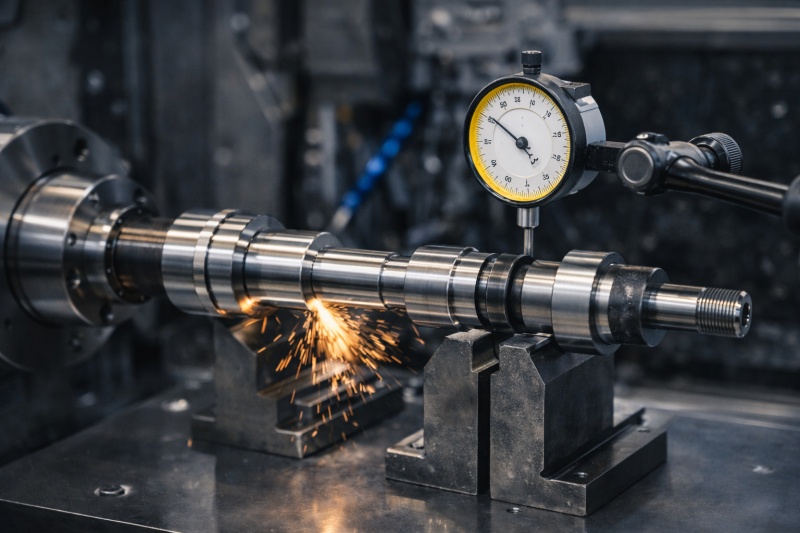
Strict quality control is essential for motor shafting. Inspection typically includes:
- Dimensional verification using CMM or precision gauges
- Runout and concentricity measurement
- Surface roughness testing
- Hardness and material verification
Consistent inspection ensures each shaft meets drawing specifications and performs reliably in its intended motor application.
From Prototype to Production: Custom Motor Shafting
Custom motor shafting often begins with prototypes for testing and validation. Rapid CNC prototyping allows engineers to evaluate fit, balance, and performance before committing to full production.
With optimized machining processes, production can scale from small batches to mass manufacturing while maintaining consistent quality and tight tolerances.
Low MOQ support and fast lead times are especially valuable for motor manufacturers developing new products or upgrading existing designs.
Final Thoughts
Motor shafting may appear simple, but its design and manufacturing require careful engineering and precise execution. From material selection to machining strategy and surface treatment, every decision affects motor performance and longevity.
By working with an experienced CNC machining manufacturer, engineers and buyers can ensure their motor shafts meet exact specifications, perform reliably, and integrate seamlessly into their motor systems.
If you are developing or sourcing custom motor shafting, providing drawings or motor specifications early allows manufacturability review and cost optimization before production begins.
 English
 Deutsch
 Español
 Français
 Português do Brasil
 Italiano