
Table of Contents
In today’s aerospace industry, where the margin between success and catastrophic failure can be measured in microns, aerospace CNC machining stands as the cornerstone of reliable component production. Computer Numerical Control (CNC) machining has fundamentally transformed how aerospace engineers and manufacturers approach the challenge of producing parts that must perform flawlessly under extreme thermal, mechanical, and environmental stress. From turbine blades rotating at tens of thousands of RPM to flight-critical structural brackets bearing multi-axial loads, the precision and repeatability demanded by aerospace applications can only be consistently achieved through advanced CNC machining technologies.
This article provides a comprehensive technical overview of aerospace CNC machining — covering the critical processes, materials, tolerances, and quality standards that define precision manufacturing for aerospace industry applications. It is intended as a resource for aerospace engineers, design teams, and procurement managers evaluating CNC machining aerospace components for both prototyping and production programs.
What Is Aerospace CNC Machining?
Aerospace CNC machining refers to the computer-controlled subtractive manufacturing process used to fabricate components for aircraft, spacecraft, satellites, defense systems, and associated support equipment. Unlike conventional machining, CNC systems operate from digital CAD/CAM models, executing tool paths with sub-micron positional accuracy across multiple axes simultaneously. This capability is essential when producing aerospace components that must conform to extremely tight dimensional specifications and complex geometric profiles.
Modern aerospace machining services typically employ 3-axis, 4-axis, and 5-axis CNC machining centers, each offering increasing geometric flexibility. Five-axis machining, in particular, has become the standard for complex aerospace geometries — enabling the simultaneous control of three linear axes (X, Y, Z) and two rotational axes (A and B) to machine intricate contoured surfaces, undercuts, and compound angles in a single setup. Reducing setups not only improves throughput but eliminates cumulative positioning errors that would otherwise compromise part accuracy.
Why CNC Machining Is Indispensable in Aerospace Manufacturing
The aerospace sector imposes performance requirements that are among the most stringent of any industry. Regulatory frameworks — including AS9100 Rev D, NADCAP, FAA airworthiness standards, and EASA approvals — mandate that every manufactured component meets defined dimensional, metallurgical, and surface integrity criteria with full traceability. Precision machining for aerospace industry applications must therefore address several interdependent requirements simultaneously:
- Dimensional accuracy: Aerospace components routinely require tolerances of ±0.01 mm or tighter on critical features, including bearing bores, sealing surfaces, and mating interfaces.
- Repeatability: Batch production of flight hardware demands that every part in a lot meets the same geometric specification, requiring CNC process stability across long production runs.
- Material integrity: Machining operations must not introduce residual stresses, heat-affected zones, or surface micro-cracks that could initiate fatigue failure under cyclic loading.
- Surface finish: Aerodynamic surfaces, sealing faces, and tribological contact zones require specific surface roughness values (Ra), often in the range of 0.4 to 1.6 µm.
- Full traceability: All materials, tooling, process parameters, and inspection records must be documented and traceable to support airworthiness certifications and maintenance records.
CNC machining satisfies all of these requirements by combining rigid machine structures, high-precision spindles, advanced cutting tool geometries, and closed-loop feedback systems — producing parts with the consistency and accuracy that manual or conventional machining methods simply cannot achieve at scale.
Key Aerospace Components Produced by CNC Machining
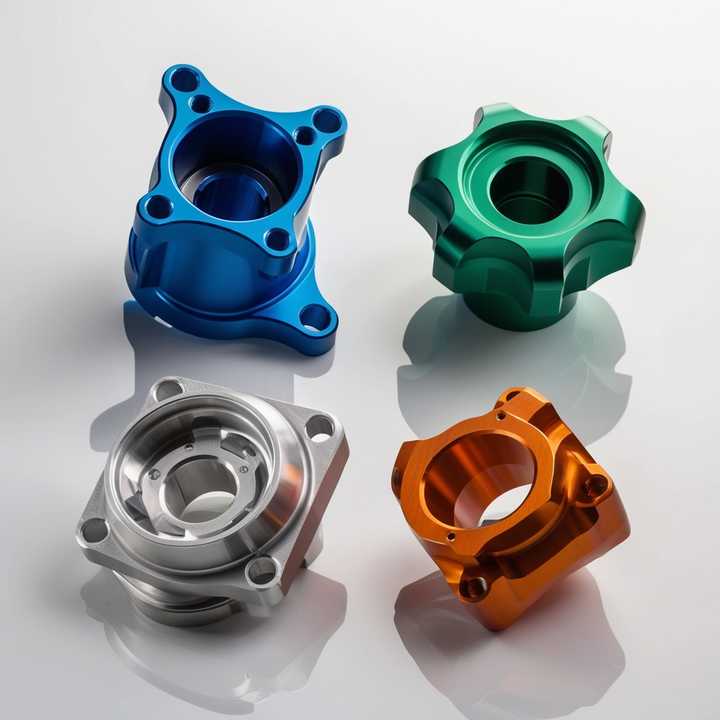
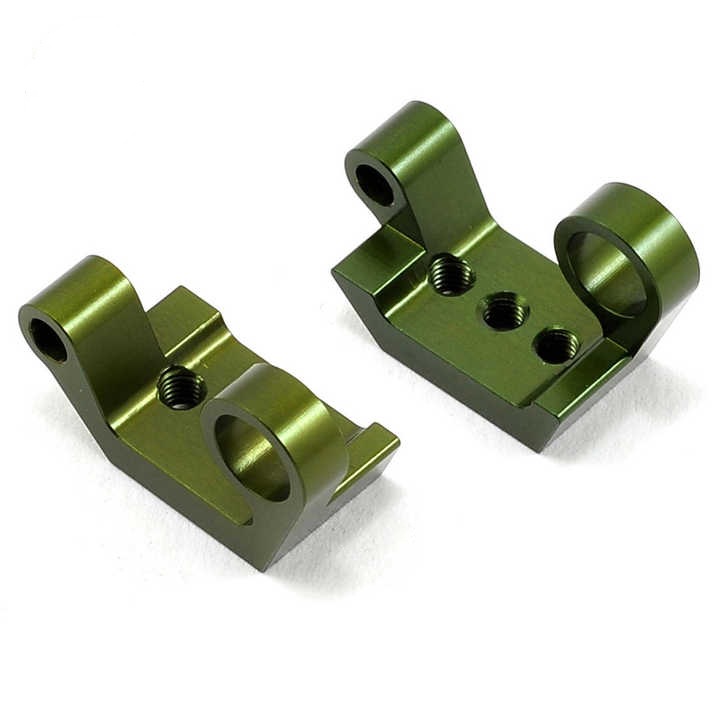
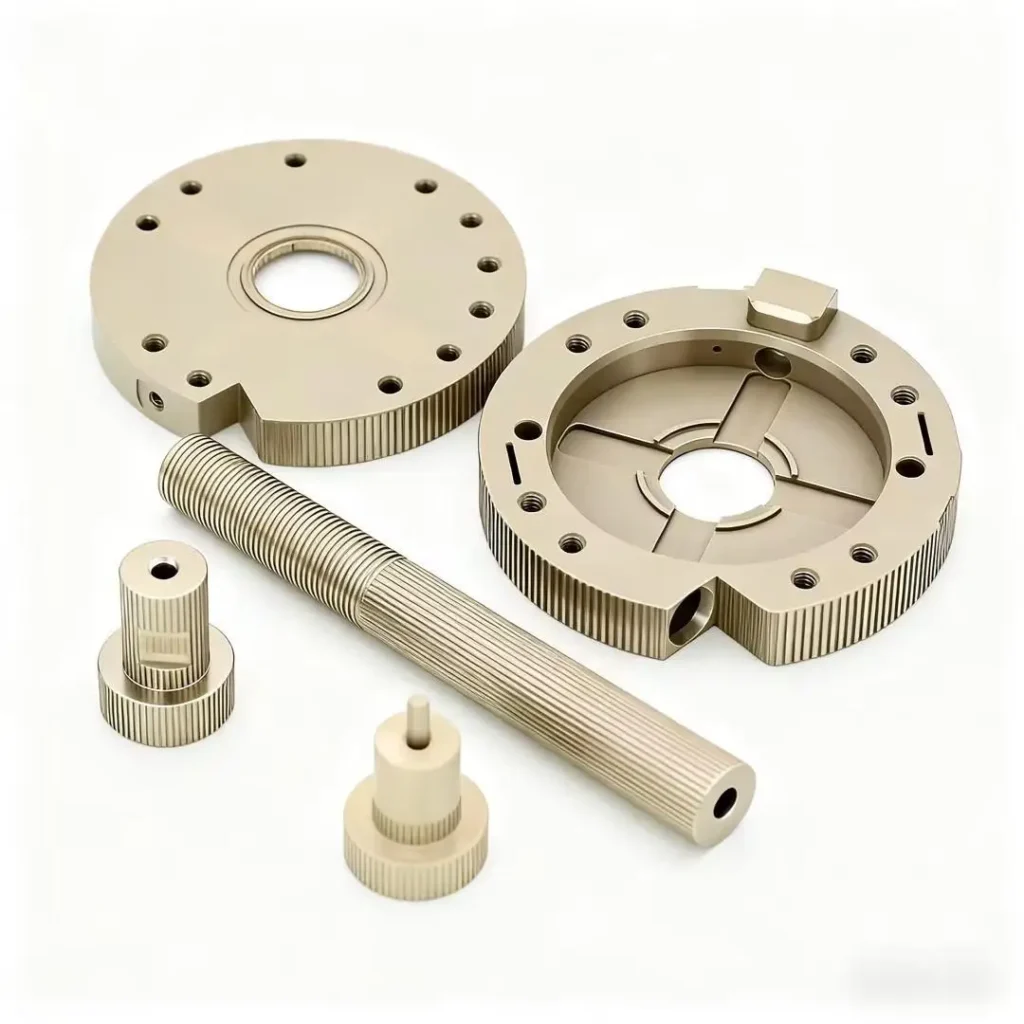
In modern aircraft and spacecraft, CNC machining produces a wide variety of aerospace components.
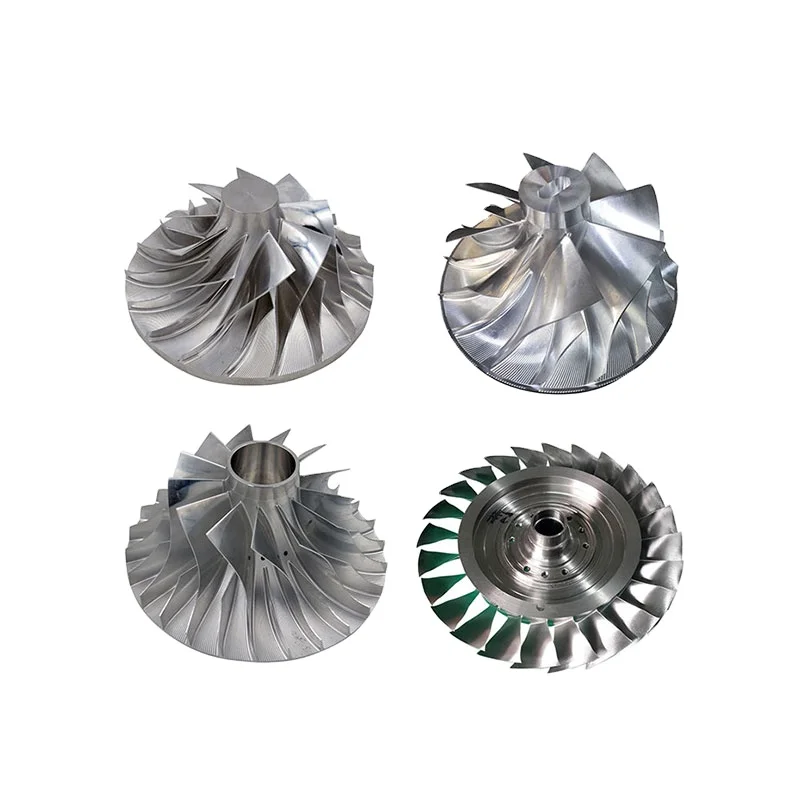
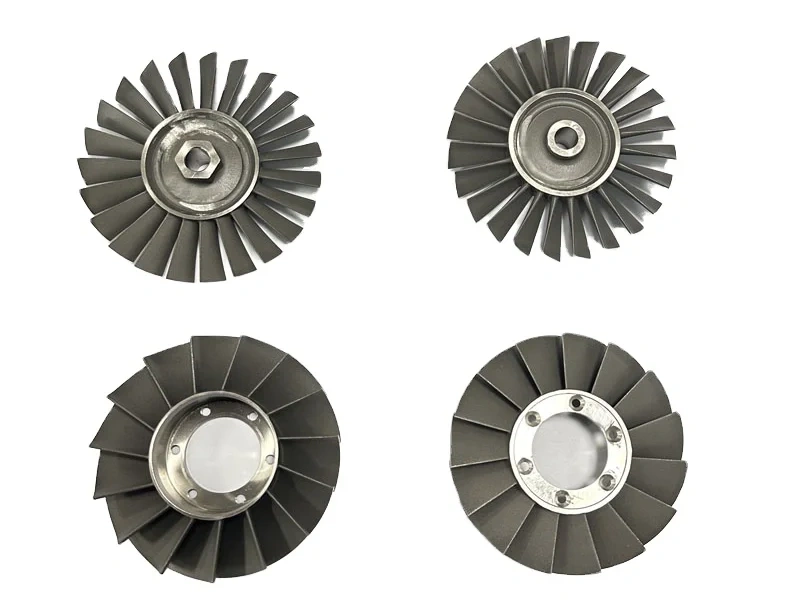
The following are some of the aerospace component series manufactured by Dongguan Huade Precision Manufacturing Co., Ltd. in the field of aerospace precision machining:
Engine and Turbomachinery Components
Turbine discs, compressor blades, impellers, combustion chamber housings, and nozzle guide vanes demand exceptional precision due to the extreme operating conditions — temperatures exceeding 1,000°C and rotational speeds above 50,000 RPM. CNC machining of nickel superalloys and titanium alloys is required to achieve the tight airfoil profiles and bore tolerances that govern aerodynamic efficiency and mechanical integrity.
Landing Gear and Actuation Components
Actuator bodies, trunnion pins, drag struts, and torque links are machined from high-strength steel and titanium alloys. These components must withstand large dynamic impact loads during landing operations, making dimensional accuracy in bore-to-bore relationships and surface hardness critical to fatigue life.
Avionics and Electronic Housings
Electronic enclosures, mounting brackets, heat sink structures, and connector housings are precision machined from aluminum alloys to provide EMI shielding, thermal management, and structural support for flight-critical electronics. These parts often require complex internal features and fine thread forms machined to MIL-spec requirements.
Hydraulic and Pneumatic System Components
Valve bodies, manifolds, fittings, and pump housings are produced with extremely fine bore finishes and tight form tolerances to ensure leak-free performance in high-pressure hydraulic circuits. Sealing surfaces typically require Ra values below 0.8 µm to achieve reliable sealing under system pressures exceeding 3,000 psi.
Aerospace Materials: Properties, Challenges, and Machinability
Material selection is one of the most consequential decisions in aerospace component design. The performance requirements — high strength-to-weight ratio, fatigue resistance, corrosion resistance, and thermal stability — narrow the field to a relatively small set of engineering alloys, each presenting distinct machining challenges.
| Material | Tensile Strength | Primary Applications | Machinability |
| Aluminum 7075-T6 | 572 MPa | Structural frames, wing ribs, brackets | Excellent — high speeds, sharp tooling |
| Aluminum 6061-T6 | 310 MPa | Enclosures, fittings, non-primary structure | Excellent |
| Titanium Ti-6Al-4V | 950 MPa | Engine parts, landing gear, fasteners | Challenging — low thermal conductivity |
| Inconel 718 | 1,240 MPa | Turbine discs, combustion components | Difficult — rapid tool wear |
| 4340 Steel | 1,080 MPa | Landing gear, shafts, high-load brackets | Good with proper tooling |
| PEEK / ULTEM | N/A | Electrical insulation, lightweight brackets | Good — low cutting forces |
Aluminum 7075: The Benchmark Aerospace Structural Alloy
Aluminum 7075-T6 is one of the highest-strength aluminum alloys commercially available and remains a benchmark material for aerospace structural components. With a tensile strength of approximately 572 MPa and a density of just 2.81 g/cm³, it delivers an exceptional strength-to-weight ratio that is critical for weight-sensitive airframe applications. Its relatively good machinability — characterized by high permissible cutting speeds, low cutting forces, and excellent chip control — makes it well-suited for high-volume CNC machining of complex structural geometries. However, machining-induced residual stresses must be carefully managed in thin-wall sections to prevent post-machining distortion.
Titanium Ti-6Al-4V: Strength and Biocompatibility at Elevated Temperatures
Titanium alloy Ti-6Al-4V (Grade 5) is the workhorse of aerospace titanium applications, combining high tensile strength (approximately 950 MPa), excellent corrosion resistance, and good performance at elevated temperatures. Its low modulus of elasticity relative to steel also contributes to greater fatigue resistance in dynamic loading conditions. Machining titanium presents significant challenges: the material’s low thermal conductivity causes heat to concentrate at the cutting edge rather than being carried away with the chip, dramatically accelerating tool wear. Effective CNC machining of Ti-6Al-4V requires sharp carbide or ceramic tooling, conservative cutting parameters, and aggressive flood coolant application — all of which must be carefully optimized for each specific component geometry.
Machining Tolerances in Aerospace Applications
Tolerances in aerospace machining are not assigned arbitrarily — they are derived from engineering functional requirements including clearance fits for rotating assemblies, interference fits for structural joints, sealing requirements for fluid systems, and aerodynamic profile accuracy for lifting surfaces. Understanding the hierarchy of tolerance classes is essential for both designers and procurement managers evaluating aerospace machining services.
| Industry Standard: General aerospace machining tolerances range from ±0.05 mm for non-critical features to ±0.005 mm or tighter for precision bores, critical mating surfaces, and flight-safety-critical dimensions. Surface roughness requirements typically range from Ra 3.2 µm for general machined surfaces to Ra 0.4 µm or better for sealing and tribological interfaces. |
Achieving and maintaining these tolerances across production lots requires a disciplined approach to process control. This includes temperature-controlled machining environments (typically 20 ± 1°C), high-precision spindle systems with thermal compensation, rigid workholding fixtures designed to minimize part deflection under cutting forces, and systematic in-process gauging using coordinate measuring machines (CMMs) and calibrated gauging instruments.
Tolerance stack-up analysis is another critical discipline in aerospace component design. Because complex assemblies consist of many individual machined parts, the cumulative effect of individual part tolerances must be statistically analyzed to ensure that the assembled system performs within its specified operating envelope. CNC machining service providers with strong aerospace engineering capability can collaborate with customers on tolerance optimization — identifying opportunities to relax non-critical tolerances to reduce cost while maintaining tighter control where it is functionally required.
CNC Machining Processes for Aerospace Components
Modern aerospace precision machining employs a range of CNC processes, often in combination, to achieve the required geometry, surface finish, and material properties on a single component:
- 5-Axis Milling: The primary process for complex aerospace geometries, enabling machining of impeller blades, structural ribs, and turbine components in a single setup, eliminating repositioning errors and reducing total cycle time.
- CNC Turning and Turn-Milling: Used for shafts, pins, bushings, and rotationally symmetric components. Combined turn-mill centers can produce complex features in a single clamping, including off-axis holes, flats, and threads.
- High-Speed Machining (HSM): Particularly effective for aluminum aerospace structures, HSM employs high spindle speeds (up to 30,000+ RPM), high feed rates, and light depth-of-cut passes to maximize material removal rates while minimizing cutting forces and heat generation — critical for thin-wall structures.
- Electrical Discharge Machining (EDM): Used for producing fine features, small holes, and complex internal geometries in hardened materials where conventional cutting tools cannot access or maintain the required accuracy.
- Precision Boring and Honing: Applied to bearing bores, hydraulic cylinder bores, and other precision cylindrical features requiring fine surface finish and tight form tolerances (roundness, cylindricity).
- Thread Milling and Tapping: Produces precision threaded interfaces in aerospace hardware to MIL-S-7742 and NAS standards, ensuring reliable fastener engagement under dynamic loading.
Quality Control and Inspection in Aerospace CNC Machining
Quality control in aerospace machining services is not a final inspection step — it is a systemic discipline embedded throughout the entire manufacturing process. Leading aerospace CNC machining suppliers implement a multi-layered quality management system aligned with AS9100 Rev D, encompassing incoming material verification, in-process statistical process control (SPC), first article inspection (FAI), and final dimensional and non-destructive evaluation (NDE).
First Article Inspection Reports (FAIR), prepared in accordance with AS9102, document the complete dimensional and material verification of the first production article before series production is authorized. FAIRs provide customers with objective evidence that the supplier’s manufacturing process is capable of consistently producing parts that conform to the engineering drawing and specification.
CMM inspection using high-accuracy probing systems (typically with measurement uncertainty below 2 µm) is the backbone of dimensional verification for aerospace components. Modern CMM software enables the direct comparison of measured point clouds against nominal CAD geometry, producing GD&T reports that clearly communicate conformance status for every critical characteristic. For complex geometries such as turbine blade airfoils, structured light scanning and CT scanning are increasingly employed to provide full-surface geometric verification.
- Material certification: Mill certificates with full chemical composition and mechanical property data traceable to heat/lot numbers.
- Non-destructive testing (NDT): Fluorescent penetrant inspection (FPI), magnetic particle inspection (MPI), and ultrasonic testing (UT) are applied to flight-critical components per applicable NADCAP-accredited procedures.
- Surface integrity verification: Measurement of surface roughness (Ra, Rz) and, for critical applications, residual stress measurement and microstructural examination to confirm the absence of machining-induced anomalies.
- Geometric Dimensioning & Tolerancing (GD&T): Full evaluation of form, orientation, location, and runout tolerances per ASME Y14.5 to confirm functional conformance beyond simple dimensional measurements.
Why Partner with Dongguan Huade Precision Manufacturing Co., Ltd.?
For aerospace engineers and procurement managers seeking a capable, responsive, and precision-focused CNC machining partner, Dongguan Huade Precision Manufacturing Co., Ltd. offers a compelling combination of technical capability, competitive economics, and supply chain agility that is increasingly difficult to find from a single source.
| Precision Capability: Huade achieves machining tolerances of ±0.01 mm across a wide range of aerospace alloys and component geometries, supported by high-precision multi-axis CNC machining centers and rigorous in-process quality control. |
Huade’s aerospace machining services are built around the recognition that different phases of a development program have different requirements. During early design and development phases, rapid iteration on prototype geometries is essential to validate design concepts and assess producibility before committing to production tooling. Huade’s 2–3 day prototyping capability allows engineering teams to compress development cycles significantly, receiving machined prototypes in materials representative of production intent within days of releasing a CAD model. This capability is particularly valuable in competitive aerospace development programs where time-to-test is a critical program parameter.
As programs transition from development to production, cost efficiency and schedule reliability become the primary procurement drivers. Huade’s low minimum order quantity (MOQ) policy allows aerospace OEMs and Tier 1 suppliers to order exactly the quantities required — whether for qualification test articles, low-rate initial production, or full-rate series supply — without the working capital burden of holding excessive finished goods inventory. This flexibility is especially valuable for specialty components that are program-specific and may have irregular or mission-driven demand profiles.
From a technical standpoint, Huade brings deep practical expertise in the machining of aerospace-grade aluminum alloys (including 7075-T6 and 6061-T6), titanium alloys (Ti-6Al-4V), and engineering polymers such as PEEK and ULTEM. The team’s experience with the specific challenges of each material — tool selection, cutting parameter optimization, workholding strategy, and post-machining distortion control — translates directly into first-time quality and dimensional conformance on complex aerospace geometries.
Procurement managers will also benefit from Huade’s streamlined quoting and order management processes, which are designed to support the documentation and traceability requirements of aerospace supply chains. Material certifications, dimensional inspection reports, and process records are provided as standard deliverables with every aerospace order, supporting customer quality management systems and airworthiness documentation requirements.
Selecting the Right Aerospace CNC Machining Partner
When evaluating potential suppliers for CNC machining aerospace components, procurement teams should assess capabilities across several key dimensions beyond simple price and lead time:
- Demonstrated tolerance capability: Can the supplier provide process capability data (Cpk ≥ 1.67) on critical dimensions from recent aerospace production runs?
- Material and process expertise: Does the supplier have documented experience machining your specific alloys and achieving your required surface finish specifications?
- Quality management system: Is the supplier certified to AS9100 Rev D or working toward certification? What inspection equipment and metrology capabilities do they operate?
- Prototyping responsiveness: Can the supplier turn around functional prototypes in representative materials within the timeframe your development schedule requires?
- Supply chain flexibility: Can the supplier accommodate variable lot sizes, schedule adjustments, and engineering changes without prohibitive cost or lead time penalties?
- Documentation and traceability: Does the supplier provide complete material certifications, inspection records, and manufacturing records in a format compatible with your quality management system?
Dongguan Huade Precision Manufacturing Co., Ltd. is positioned to satisfy all of these criteria, offering aerospace precision machining with ±0.005-0.01 mm accuracy, rapid 2–3 day prototyping, flexible low MOQ ordering, and a commitment to quality documentation that supports the demanding traceability requirements of aerospace programs worldwide.
Conclusion
Aerospace CNC machining is not simply a manufacturing process — it is a critical enabling technology that underpins the safety, performance, and reliability of every flight-critical system. The combination of multi-axis machining capability, advanced process control, rigorous quality management, and deep material expertise that defines world-class aerospace machining services is what separates acceptable from exceptional in this demanding industry.
For engineering teams and procurement professionals seeking a precision machining partner who understands the exacting requirements of aerospace manufacturing — from the tight tolerances demanded by engine components to the rapid iteration cycles of modern aerospace development programs — Dongguan Huade Precision Manufacturing Co., Ltd. delivers technically robust and highly competitive solutions.
We achieve milling precision of ±0.01 mm and turning precision of ±0.005 mm, with prototypes deliverable in just 2–3 days, and support the entire process from concept design through to mass production, providing comprehensive support for your aerospace projects. If you have any requirements for CNC machined components, please fill in the form below, and we will serve you wholeheartedly.
 English
 Deutsch
 Español
 Français
 Português do Brasil
 العربية