
In modern manufacturing, precision fasteners and small cylindrical components are essential for industries such as aerospace, electronics, robotics, and industrial equipment. One of the most reliable ways to produce these high-accuracy parts is through aluminum screw machining.
This advanced CNC turning process allows manufacturers to create complex threaded components, miniature precision parts, and custom fasteners with tight tolerances and excellent surface finishes. From aluminum machine screws used in electronic assemblies to aluminum Swiss screw machined parts required for high-precision applications, screw machining provides unmatched accuracy and repeatability.
This guide explains how aluminum screw machining works, its advantages, and why CNC machining remains the preferred method for producing precision aluminum fasteners and components.
What Is Aluminum Screw Machining?

Precision aluminum screw machining using CNC turning technology to manufacture aluminum machine screws and threaded components.
Aluminum screw machining is a precision manufacturing process that uses CNC lathes or Swiss-type turning machines to transform aluminum bar stock into finished threaded parts or cylindrical components.
The process typically involves:
- bar feeding
- CNC turning
- threading
- drilling
- milling features
- finishing operations
Unlike traditional manual turning methods, modern CNC screw machining allows manufacturers to produce parts with extremely tight tolerances, often reaching ±0.01 mm precision.
Because aluminum is lightweight, corrosion-resistant, and easy to machine, it is one of the most commonly used materials for screw machining operations.
Typical products created through aluminum screw machining include:
- aluminum machine screws
- threaded fasteners
- miniature shafts
- connectors
- precision pins
- electronic hardware components
These parts are widely used in industries where precision, durability, and reliability are critical.
Why Aluminum Is Ideal for Screw Machining
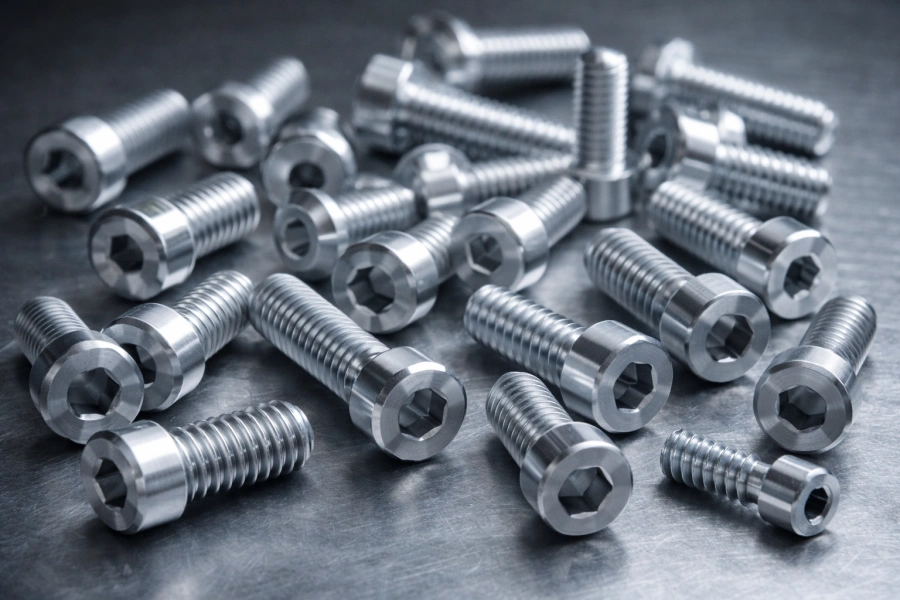
High precision aluminum machine screws manufactured by CNC machining for robotics, aerospace, and industrial assemblies.
Material selection plays a major role in machining performance and final part quality. Aluminum offers several advantages that make it particularly suitable for screw machining operations.
Excellent Machinability
Aluminum alloys are known for their excellent machinability compared with harder metals such as stainless steel or titanium. This allows manufacturers to achieve faster cutting speeds, smoother finishes, and reduced tool wear.
Lightweight but Strong
Aluminum has a high strength-to-weight ratio, making it ideal for applications where reducing weight is important. Industries such as aerospace, robotics, and electronics frequently rely on aluminum components to improve efficiency while maintaining structural integrity.
Corrosion Resistance
Many aluminum alloys naturally form a protective oxide layer, improving corrosion resistance without requiring extensive surface treatment.
Thermal and Electrical Conductivity
Aluminum’s conductivity makes it suitable for electrical components, heat sinks, and electronic fasteners where heat dissipation is important.
Because of these advantages, aluminum remains one of the most popular materials used in precision screw machining.
Applications of Aluminum Machine Screws
Aluminum machine screws are widely used in assemblies where lightweight fastening solutions are required.
Compared with steel fasteners, aluminum screws offer:
- reduced weight
- corrosion resistance
- excellent machinability
- compatibility with aluminum components
Common applications include:
Electronics and Electrical Equipment
Aluminum machine screws are frequently used in electronic enclosures, connectors, and circuit board assemblies where lightweight fastening solutions are required.
Robotics and Automation Systems
Robotic systems require precision components with consistent tolerances. CNC-machined aluminum screws provide reliable fastening for robotic joints, housings, and motion systems.
Aerospace Components
Weight reduction is critical in aerospace engineering. Aluminum fasteners help reduce overall aircraft weight while maintaining strength and reliability.
Automotive Components
Many automotive manufacturers use aluminum machine screws in interior systems, lightweight assemblies, and electric vehicle components.
Because CNC machining can maintain consistent tolerances across large batches, aluminum machine screws can be manufactured with excellent repeatability.
Standard Bolt Sizes Chart (Metric & Imperial)
When designing or selecting aluminum machine screws, engineers often need a quick reference for common metric and imperial bolt sizes.
To make this easier, we prepared a downloadable Standard Bolt Sizes Chart that includes metric sizes (M3–M20), thread pitch, across flats, and equivalent imperial sizes.
This chart is commonly used in CNC machining, mechanical design, and fastener manufacturing.
Download the full chart here:
📥Download the Metric & Imperial Bolt Sizes Chart (PDF)
What Are Aluminum Swiss Screw Machined Parts?
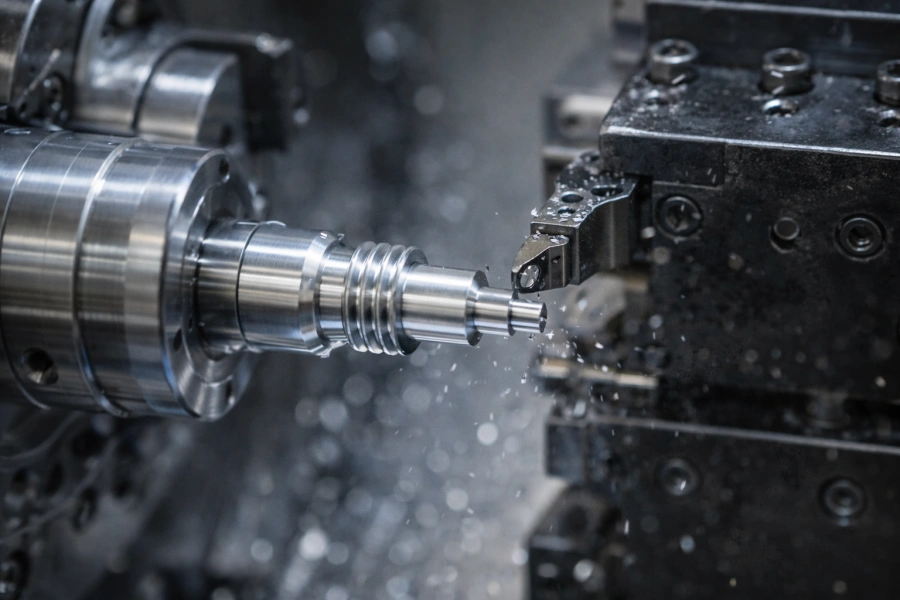
High-precision aluminum Swiss screw machined parts produced using CNC Swiss turning technology for aerospace, robotics, and electronics.
While conventional CNC lathes are capable of producing many threaded parts, extremely small or complex components often require Swiss screw machining.
Aluminum Swiss screw machined parts are produced using Swiss-type CNC lathes, which provide superior stability during machining operations.
Unlike traditional lathes, Swiss machines support the material very close to the cutting tool, minimizing vibration and improving dimensional accuracy.
This design allows Swiss machining to produce extremely precise parts, particularly those with:
- small diameters
- long slender geometries
- complex features
- tight tolerances
Common aluminum Swiss screw machined parts include:
- miniature screws
- precision shafts
- medical device components
- sensor connectors
- electronic pins
- aerospace fasteners
Swiss machining is particularly valuable for producing high-volume precision components that require extremely consistent tolerances.
Advantages of Aluminum Swiss Screw Machining
Swiss screw machining offers several advantages compared with conventional turning methods.
Higher Precision
Swiss-type machines allow manufacturers to produce extremely tight tolerances due to improved tool stability and reduced vibration.
Excellent Surface Finish
Because the material is supported close to the cutting tool, Swiss machining can achieve smoother surface finishes compared with traditional turning processes.
Efficient High-Volume Production
Swiss screw machining is ideal for producing large quantities of small precision parts while maintaining consistent quality.
Ability to Machine Complex Features
Swiss machines can perform multiple operations in a single setup, including turning, milling, drilling, and threading.
This capability significantly reduces production time and improves overall manufacturing efficiency.
CNC Screw Machining Process for Aluminum Parts
Producing precision aluminum screw machined parts typically involves several stages.
1. Material Selection
Common aluminum alloys used in screw machining include:
- Aluminum 6061
- Aluminum 7075
- Aluminum 2024
- Aluminum 5052
Each alloy offers different properties such as strength, corrosion resistance, or machinability.
2. CNC Turning
The aluminum bar stock is fed into a CNC lathe or Swiss machine where the basic cylindrical shape is formed.
3. Threading Operations
Threads are created using specialized cutting tools or thread rolling techniques depending on the design requirements.
4. Secondary Machining Operations
Additional features such as slots, holes, or cross-drilled openings may be added through milling or drilling operations.
5. Surface Finishing
Many aluminum screw machined parts receive additional surface treatments, including:
- anodizing
- sandblasting
- polishing
- plating
These finishing processes enhance corrosion resistance and improve the visual appearance of the final components.
Choosing a Reliable Aluminum Screw Machining Supplier
Selecting the right manufacturing partner is critical when producing precision components such as aluminum machine screws or Swiss screw machined parts.
A reliable CNC machining supplier should offer:
- advanced CNC turning and Swiss machining equipment
- strict quality control systems
- precision tolerance capability (such as ±0.01 mm)
- rapid prototyping and flexible production capacity
- experience working with multiple aluminum alloys
At Dongguan Huade Precision Manufacturing Co., Ltd., we specialize in precision CNC machining services, including aluminum screw machining, custom aluminum fasteners, and high-precision Swiss screw machined parts.
Our advanced CNC machining capabilities allow us to deliver:
- rapid prototypes within 2–3 days
- tight tolerances up to ±0.01 mm
- flexible low-volume and mass production
- custom machining solutions for global clients
If you are looking for a trusted manufacturing partner for precision aluminum components, our engineering team is ready to support your project from prototype to full production.
Visit our website www.hdproto.com or contact our team to discuss your machining requirements.
FAQ About Aluminum Screw Machining
What is aluminum screw machining used for?
Aluminum screw machining is commonly used to manufacture precision fasteners, aluminum machine screws, miniature shafts, connectors, and other cylindrical components used in aerospace, robotics, electronics, and industrial equipment.
What are aluminum Swiss screw machined parts?
Aluminum Swiss screw machined parts are precision components produced using Swiss-type CNC lathes. These machines allow manufacturers to produce small, complex parts with extremely tight tolerances and excellent surface finishes.
Why choose aluminum for screw machining?
Aluminum offers excellent machinability, lightweight properties, corrosion resistance, and strong mechanical performance, making it ideal for producing precision screw machined components.
What tolerance can CNC screw machining achieve?
High-precision CNC screw machining processes can achieve tolerances as tight as ±0.01 mm, depending on part geometry and material.
Can aluminum screw machining be used for prototypes?
Yes. Aluminum screw machining is commonly used for rapid prototyping and small production runs because it does not require expensive tooling like injection molding.
 English
 Deutsch
 Español
 Français
 Português do Brasil