
In high-stakes CNC machining projects where reliability under stress is paramount, distinguishing bronze vs copper (or copper vs bronze) can determine component longevity and performance. Bronze, an alloy blending copper with tin and sometimes other elements, delivers amplified hardness and resistance to wear, outshining pure copper in environments prone to abrasion or environmental attack. This analysis emphasizes variances in visual traits, resilience, and utility, particularly for parts demanding robust corrosion defense, such as in marine assemblies or friction-heavy mechanisms.
At Dongguan Huade Precision Manufacturing Co., Ltd., we craft precision CNC components from bronze and copper alloys for industries spanning marine engineering, industrial automation, medical devices, and aerospace. Drawing from extensive production runs, we’ve seen bronze consistently extend operational life in challenging setups. Here, we dissect the essential contrasts to refine your material decisions.
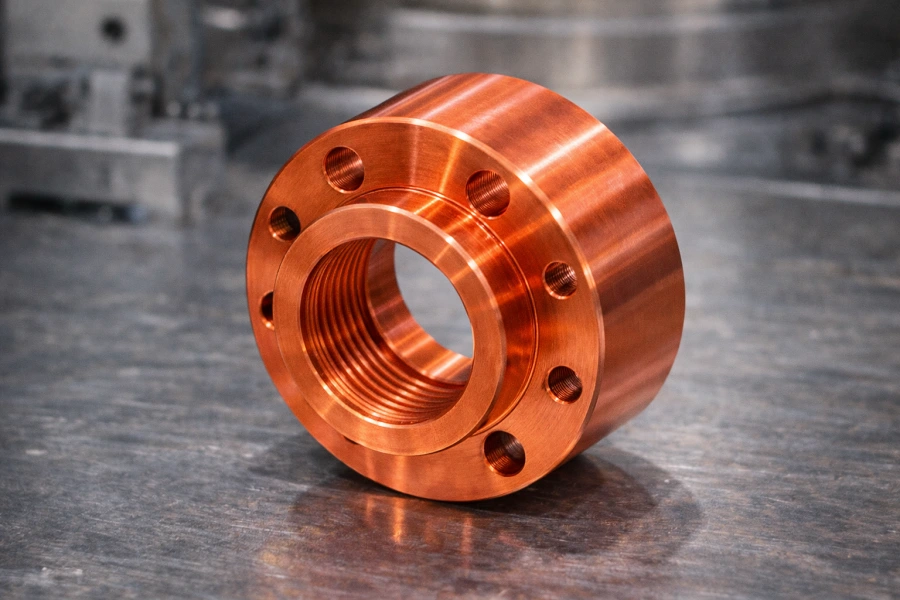
High-conductivity copper component machined with tight tolerances and a bright reddish-orange finish.
Fundamental Material Contrasts
1. Formulation and Aesthetic Profile (Bronze vs Copper Color)
Copper stands as a nearly pure element (up to 99.9% Cu), exhibiting a striking reddish-orange sheen that evolves into a greenish patina through oxidation. Bronze emerges as a copper-dominant alloy (typically 80-90% Cu) fortified with tin (5-12%) and additives like aluminum, phosphorus, or silicon, resulting in a subdued reddish-brown or yellowish-brown finish with a more uniform, aged patina. The bronze vs copper color disparity positions bronze for applications favoring a sophisticated, weathered look, while copper appeals in designs requiring initial brilliance and natural aging effects.
2. Resistance to Degradation and Harsh Environments
Bronze’s tin infusion forms a resilient oxide barrier, granting exceptional defense against saltwater pitting, chemical erosion, and biofouling—often surpassing copper in marine or acidic exposures. Pure copper relies on its patina for protection but may experience localized weakening in aggressive media. In CNC machined scenarios involving fluid contact or outdoor deployment, bronze minimizes downtime from material breakdown.
3. Mechanical Robustness, Abrasion Tolerance, and Structural Integrity
With tensile strengths ranging from 400-800 MPa (alloy-specific), bronze offers superior hardness and anti-galling qualities compared to copper’s more modest 220 MPa rating. This makes bronze less prone to deformation in dynamic loads. Copper’s higher ductility aids in forming but falters under repeated friction or impact.
4. Heat and Current Transmission
Copper boasts top-tier thermal conductivity (~401 W/m·K) and electrical efficiency (near 100% IACS), ideal for heat-dissipating or conductive roles. Bronze’s alloying reduces these to 15-30% IACS and lower thermal rates, prioritizing structural endurance over transfer capabilities.
5. Processing Dynamics in CNC Operations
Copper’s malleability facilitates smooth milling but can lead to adhesive buildup on tools, necessitating lubricants. Bronze variants like phosphor bronze (e.g., C510) enable crisp chip formation for efficient high-speed turning, though aluminum-infused types (e.g., C630) require carbide tooling to handle increased hardness without chatter.
Practical Deployments in Precision CNC
Seafaring and Anti-Corrosive Assemblies
Bronze prevails in saltwater-resistant fittings, impellers, and hull components, where its alloy stability thwarts erosion far better than copper. CNC techniques allow intricate threading and sealing for leak-proof marine valves. 👉 For deeper insights into bronze machining performance, see
CNC Machining Bronze: Precision Solutions for Durable Bronze Parts
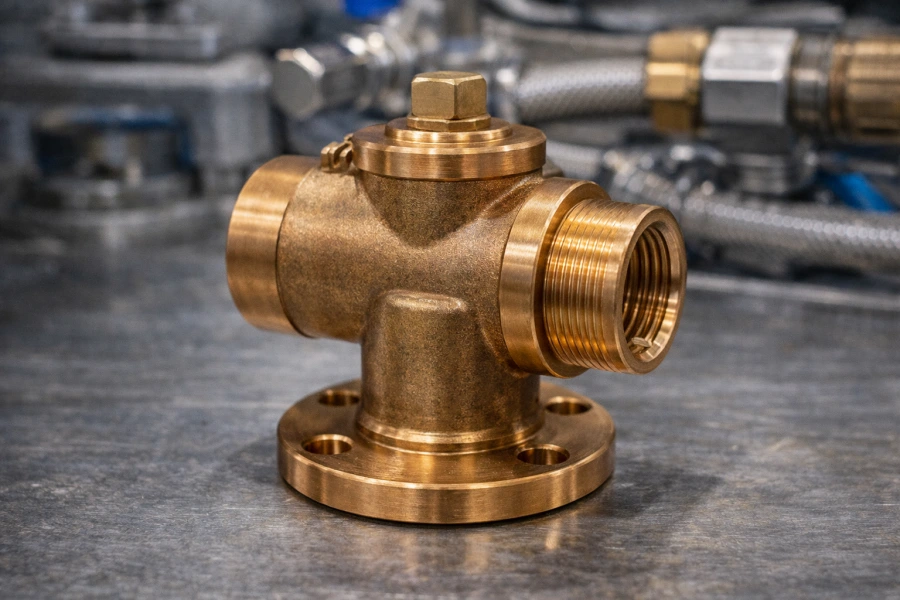
Bronze marine-grade fitting designed for seawater corrosion resistance and long-term durability.
Friction Interfaces and Load-Supporting Elements
Tin-enhanced bronzes shine in self-lubricating sleeves, thrust bearings, and gear blanks, reducing seizure in rotating machinery. Precision CNC ensures micron-level clearances to optimize low-friction performance.
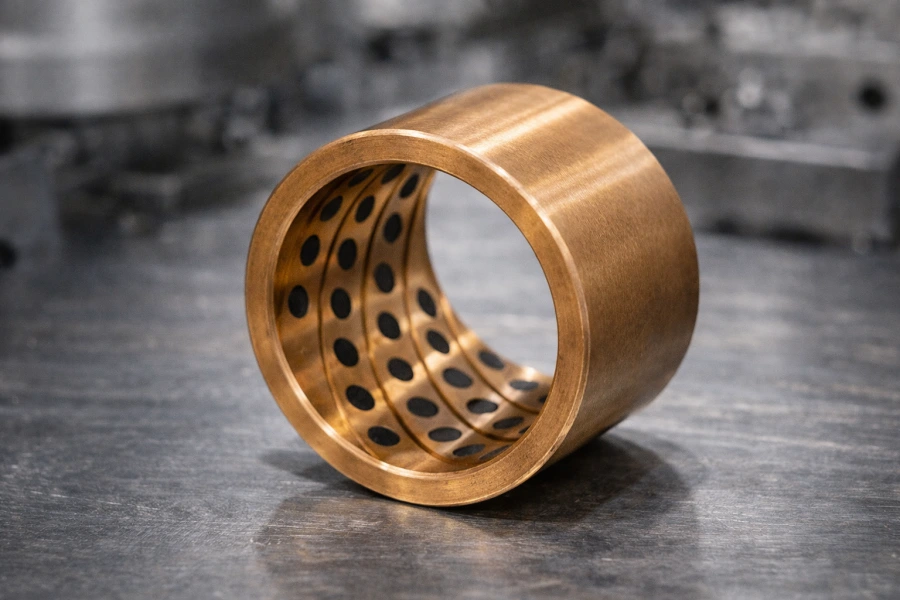
Bronze bushing featuring graphite plugs for enhanced wear resistance and low-friction performance.
Ornamental and Custom Adornments
For bronze vs copper jewelry elements or decorative hardware, copper’s warm reddish glow suits contemporary, antimicrobial accents, while bronze’s deeper tones enhance heirloom-style engravings or medallions with enduring patina.
CNC-fabricated bronze elements: durable bushings and seawater fittings exemplifying bronze’s edge in resilience-focused manufacturing over copper.
Streamlined Comparison Chart
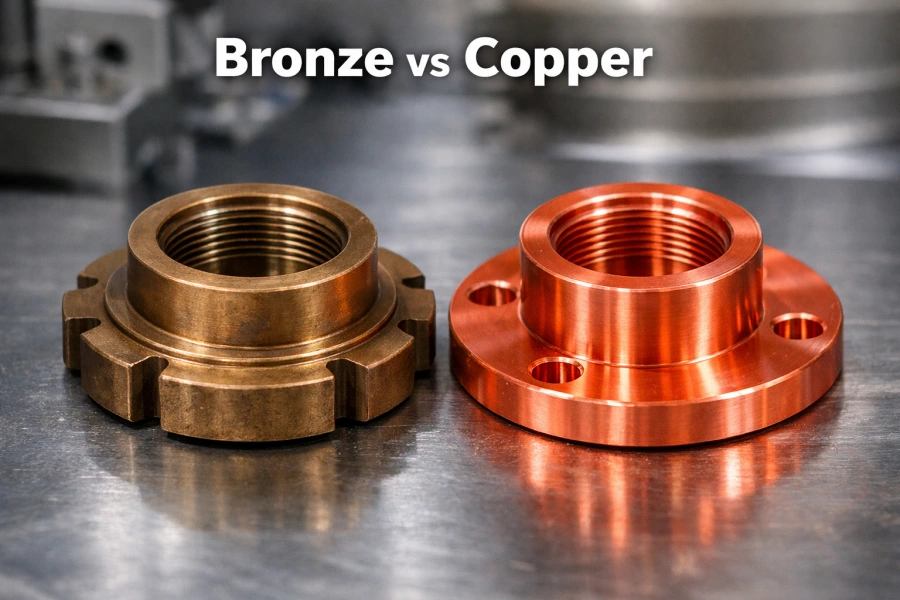
Comparative view of bronze and copper machined components highlighting tonal and material differences.
| Attribute | Bronze (Alloy Variants) | Pure Copper | Edge for CNC Resilient Builds |
|---|---|---|---|
| Hue | Subdued reddish-brown / yellowish | Vivid reddish-orange | Bronze (weathered elegance) |
| Degradation Defense | Superior (saltwater/chemical) | Reliable (patina-based) | Bronze |
| Robustness / Rigidity | Elevated (400-800 MPa) | Balanced (~220 MPa) | Bronze |
| Abrasion Endurance | High | Moderate | Bronze |
| Current/Heat Flow | Reduced (15-30% IACS) | Peak (~100% IACS) | Copper |
| CNC Processing Ease | Variable (good chip control) | Smooth (ductile, tool adhesion) | Bronze for tough alloys |
Optimal Selection for Resilient Builds
Favor bronze for CNC parts emphasizing corrosion immunity, frictional durability, and mechanical fortitude—crucial in bearings, marine hardware, or extended-wear fixtures. Employ copper when unmatched conductivity or malleable forming takes precedence.
At Dongguan Huade Precision Manufacturing Co., Ltd., our advanced CNC setups manage bronze’s variable hardness with optimized feeds and specialized tooling, achieving tolerances down to ±0.002 mm and polished finishes. We provide alloy recommendations, prototype validation, and scalable output. Connect for tailored advice or a project assessment—empower your designs with the right metal today!
 English
 Deutsch
 Español
 Français
 Português do Brasil
 Italiano