
Table of Contents
CNC milling and turning are among the most essential subtractive manufacturing processes in today’s rapidly advancing field of precision engineering.
Each method has its own unique advantages — turning specializes in producing perfectly symmetrical cylindrical parts, while milling excels at shaping complex contours and irregular surfaces.
When these two processes are combined in a single workflow, they unlock new levels of manufacturing efficiency and part accuracy.
This integrated approach, known as CNC milling and turning services or turning-milling machining, is transforming how industries from aerospace to new energy and robotics design, prototype, and mass-produce complex metal components.
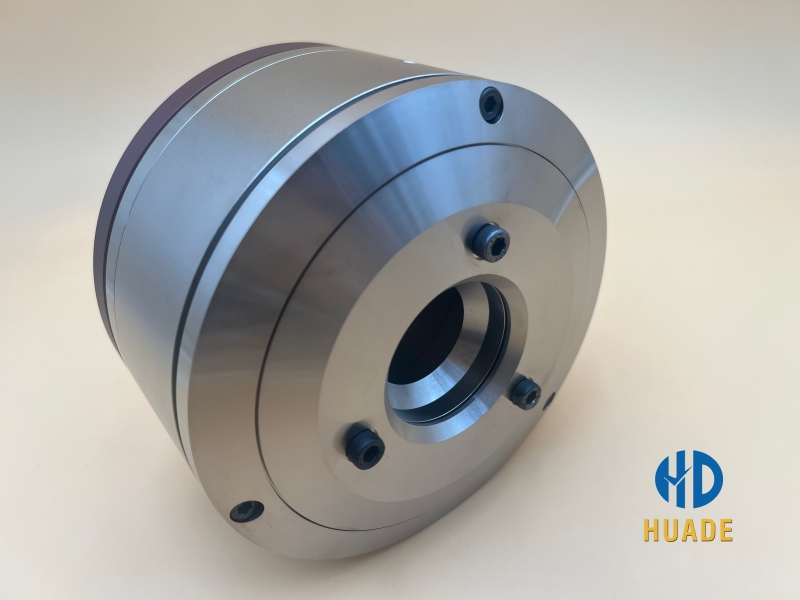
1. Understanding CNC Milling and Turning
CNC turning uses a rotating workpiece and stationary cutting tools to shape metals into precise circular geometries such as shafts, bushings, and connectors.
CNC milling, on the other hand, involves rotating cutting tools to remove material from a stationary workpiece, creating slots, holes, cavities, and 3D contours.
When these two processes are integrated into one machine, multiple surfaces of a component can be machined in a single setup — achieving precision as tight as ±0.005mm or better, while reducing cycle times and improving dimensional consistency.
2. Advantages of Combined Milling and Turning
CNC turning-milling integration isn’t just a technical upgrade — it’s a strategic advantage for modern manufacturing.
a. Higher Efficiency
Traditional setups require transferring semi-finished turned parts to a separate milling machine, increasing handling time and alignment risks.
By contrast, CNC milling and turning centers perform both operations in a single clamping, significantly reducing setup time and ensuring smooth workflow transitions.
b. Superior Accuracy
By eliminating manual repositioning, hybrid machines maintain strict tolerances and concentricity between turning and milling features.
This precision is critical for parts like new energy hydraulic valve bodies, aerospace connectors, and optical housings.
c. Lower Cost
Shorter production cycles directly translate to lower per-part costs, especially in medium- and high-volume runs.
Optimized tool paths also minimize tool wear and material waste, further improving cost efficiency.
3. CNC Milling and Turning vs Single-Process Machining
Some may think using separate machines allows for greater flexibility — but that’s not always the case.
Here’s how integrated machining compares:
| Category | Milling-Turning Integration | Separate Processing |
|---|---|---|
| Clamping | One setup | Multiple setups |
| Accuracy | High (same coordinate system) | Lower (reposition errors) |
| Labor Demand | Low | High |
| Cycle Time | Short | Long |
| Overall Cost | More economical | Higher |
In short, CNC turning-milling machining combines the speed of turning with the versatility of milling, resulting in unmatched manufacturing performance.
4. Ideal Parts for CNC Milling and Turning
Certain parts are especially suitable for this integrated process — typically those that require cylindrical symmetry with side features or multi-face geometries.
Common examples include:
- Shafts with cross-holes or keyways
- Flanges with bolt patterns
- Couplings and bushings
- Hydraulic and pneumatic connectors
- Sensor housings and valve bodies
These parts often demand tight tolerances (±0.01mm) and smooth surface finishes (Ra < 0.5μm) — both easily achievable through precision CNC milling and turning services.

5. Suitable Materials for Turning-Milling Machining
At Dongguan Huade Precision Manufacturing Co., Ltd., our advanced CNC machines handle a wide range of metals and alloys — each selected for its performance in hybrid processes:
- Stainless Steel (304, 316, 17-4PH) – Corrosion-resistant and ideal for medical and food equipment.
- Aluminum Alloys (6061, 7075) – Lightweight and highly machinable, used in aerospace frames and new energy components.
- Monel and Inconel Alloys – High strength at elevated temperatures, perfect for chemical and marine industries.
- Copper and Brass – Excellent for electrical and fluid connectors.
- Titanium – Combines high strength and low weight, used in aerospace and new energy systems.
By utilizing optimized tool paths and adaptive cutting speeds, we ensure excellent chip control and surface integrity across all materials.
6. How CNC Milling and Turning Improve Productivity
Modern CNC turning-milling centers integrate multiple spindles and tool turrets, all controlled by advanced CNC software. The result:
- Fewer setups and faster cycle times
- Simultaneous multi-axis machining (X, Y, Z, C, and B axes)
- Automatic tool changers for continuous operation
- Real-time quality monitoring through smart sensors
These advancements help part manufacturers shorten lead times without compromising precision — a key advantage for industries requiring rapid prototyping or mass production.
7. Industry Applications
CNC milling and turning are indispensable for producing complex mechanical components across many industries:
- Aerospace: turbine shafts, fuel system fittings, and structural brackets
- New Energy: precision drive shafts, bearing housings, and transmission components
- Medical: surgical instruments, orthopedic implants, and dental connectors
- Robotics: motor mounts, gearboxes, and precision couplings
- Industrial Equipment: pump rotors, flanges, and hydraulic manifolds
Each of these applications demands exceptional accuracy and repeatability — the core strengths of Huade Precision manufacturing.
8. Why Choose Huade Precision for CNC Milling and Turning Services
Huade Precision combines JOFO CNC drilling machines, Mazak turning-milling centers, and a team of experienced engineers with strict quality inspection to deliver top-class results:
- ISO 9001:2015 Certified Quality Management
- Machining tolerance up to ±0.01mm
- Rapid prototyping in 2–3 days for urgent projects
- Low MOQ and flexible production
- Surface finishing options: anodizing, polishing, plating, sandblasting, and more
Whether you need CNC turned parts, milled components, or full CNC turning and milling services, our team ensures your designs are transformed into reality quickly and reliably.
9. From CNC Turning to Full Machining Integration
Already using CNC turning?
Upgrading to milling-turning integration provides a smoother path to complete part manufacturing.
By combining these two workflows, Huade Precision helps customers reduce sourcing and production costs by over 30%.
For more details, visit our dedicated page:
👉 CNC Turning Services
10. Conclusion: Future-Ready Integrated Machining
CNC milling and turning represent the next evolution of precision manufacturing — merging the strengths of both processes into one intelligent system.
From prototypes to mass production, Huade Precision enables engineers to achieve greater speed, accuracy, and cost control.
📩 Contact us today to discuss your CNC turning and milling project and receive a fast, customized quote.
 English
 Deutsch
 Español
 Français
 Português do Brasil
 Italiano