
A CNC milling machine is a computer-controlled machine tool used to precisely remove material from a workpiece to create custom parts and components. It’s one of the most versatile and widely used technologies in modern manufacturing—capable of machining metals, plastics, composites, and more with high accuracy, repeatability, and efficiency.
Unlike manual milling machines, CNC (Computerized Numerical Control) milling machines operate based on digital instructions, enabling consistent production of complex geometries—from one-off prototypes to high-volume runs—across virtually every industrial sector.
What Does “CNC Milling Machine” Mean?
“CNC” stands for Computerized Numerical Control. This means the machine’s movements—spindle speed, tool path, axis travel—are all governed by programmed code (typically G-code), eliminating the need for manual operation and minimizing human error.
A standard CNC milling machine typically includes:
- A rotating spindle that holds cutting tools
- Multiple linear and/or rotary axes (commonly 3-, 4-, or 5-axis configurations)
- A workholding system (vices, fixtures, or custom jigs)
- A CNC controller that interprets and executes machining programs
This setup allows precise, automated material removal to achieve tight tolerances and complex 3D shapes.

Advanced 5-axis CNC milling center in action, precisely machining a complex part using high-pressure coolant to ensure accuracy.
How Does CNC Milling Work?
The process follows a digital workflow:
- Design: Engineers create a 3D model using CAD (Computer-Aided Design) software.
- Programming: CAM (Computer-Aided Manufacturing) software converts the CAD model into toolpaths and generates machine-readable G-code.
- Setup: The raw material is securely clamped, and tools are loaded.
- Machining: The CNC machine executes the program, cutting away material layer by layer.
- Inspection: Finished parts are checked for dimensional accuracy, surface finish, and compliance with specifications.
Modern multi-axis CNC mills can machine undercuts, angled features, and intricate contours in a single setup—reducing handling and improving precision.
Materials Commonly Machined by CNC Milling
CNC milling handles a broad spectrum of engineering materials:
- Metals: Aluminum (e.g., 6061, 7075), stainless steel (304, 316), mild steel, brass, copper, titanium
- Plastics: ABS, POM (Delrin), PEEK, Nylon, PC, PTFE
- Composites: G10, carbon fiber-reinforced panels (with appropriate tooling)
- Others: Wood, foam, and wax (often for patterns or prototypes)
Material choice depends on mechanical requirements, environmental conditions, cost, and machinability.

CNC manufacturing expert with 15+ years of experience. William helps engineering teams turn prototypes into stable production parts through DFM optimization, tolerance planning, machining strategy selection, and inspection-driven quality control.
william@hdproto.comFor any CNC-machined part — whether shafts, housings, brackets, manifolds, or structural components — the foundation of reliable manufacturing starts with clean geometry, well-defined datums, and machining-friendly features that minimize re-clamping risks.
We support function-driven tolerances (down to ±0.01 mm when required) and offer full inspection options including CMM reports, thread gauges, and surface-finish verification to ensure repeatability from prototype to production.
CONTACT OUR EXPERT NOWCNC Milling Machine vs CNC Milling: What’s the Difference?
- CNC milling machine: Refers to the physical equipment—the hardware.
- CNC milling: Refers to the process or service of machining parts using such a machine.
Someone researching “CNC milling machine” is likely exploring technology fundamentals. Someone searching for “CNC milling services” usually has a part ready for production and needs a reliable manufacturer.
Industrial Applications: Across Every Sector
Thanks to its flexibility and precision, CNC milling is used in nearly every manufacturing industry:
- Automotive & E-Mobility: Engine components, brackets, housings, EV battery trays
- Electronics: Heat sinks, enclosures, connectors, semiconductor tooling
- Medical Devices: Surgical instruments, imaging components, diagnostic equipment parts
- Industrial Machinery: Gears, shafts, frames, automation fixtures
- Consumer Products: Appliance parts, sporting goods, custom hardware
- Aerospace & Defense: Structural brackets, drone frames, and yes—CNC machining aircraft parts and UAV parts—where high strength-to-weight ratios and strict tolerances are critical
This cross-industry relevance makes CNC milling a cornerstone of modern precision manufacturing.
Precision, Tolerances, and Surface Finish
Typical CNC milling tolerances range from ±0.05 mm to ±0.1 mm, with high-end setups achieving ±0.01 mm under controlled conditions. Surface roughness typically falls between Ra 0.8 µm to Ra 3.2 µm, though finer finishes are possible with specialized tooling or post-processing.
Common post-machining treatments include:
- Bead blasting or anodizing (for aluminum)
- Plating or powder coating (for corrosion resistance)
- Heat treatment (to enhance hardness)
- Precision grinding (for ultra-tight tolerances)
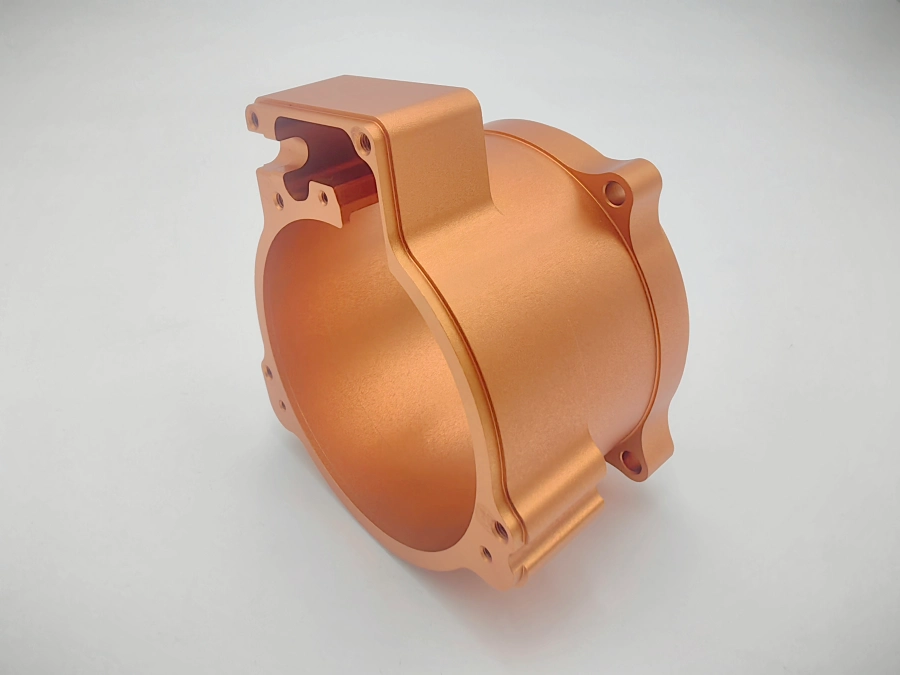
High-precision CNC machined aluminum structural components with complex geometries, showcasing superior surface finish and tight tolerances.
When Should You Outsource CNC Milling?
Investing in in-house CNC equipment requires significant capital, skilled operators, and maintenance resources. Most businesses—startups, SMEs, and even large firms—choose to outsource to specialized partners when they need:
- Fast turnaround on prototypes
- Access to multi-axis capabilities without capital expenditure
- Scalable production (from 1 to 10,000+ parts)
- Expertise in material selection and design for manufacturability (DFM)
A trusted CNC machining partner brings not just machines—but engineering insight, quality systems, and supply chain reliability.
CNC Milling: A Foundational Technology for Modern Industry
CNC milling bridges digital design and physical reality. It empowers innovation by turning concepts into functional, high-performance parts—quickly, accurately, and cost-effectively—no matter the industry.
Whether you’re building a new medical device, an industrial robot, or a next-gen consumer gadget, CNC-machined components often form the backbone of your product’s reliability and performance.
Frequently Asked Questions (FAQ)
Q: What’s the typical lead time for CNC-machined parts?
A: From 3–5 days for prototypes to 2–4 weeks for larger batches, depending on complexity and volume.
Q: Can you machine both metals and plastics?
A: Yes. We routinely machine aluminum, steel, stainless steel, brass, and engineering plastics like POM, PEEK, and ABS.
Q: Do you offer design feedback before production?
A: Absolutely. We provide free DFM (Design for Manufacturability) reviews to help optimize your part for cost, quality, and lead time.
Q: What file formats do you accept?
A: STEP (.stp), IGES (.igs), or native SolidWorks/AutoCAD files are preferred.
Q: Do you handle small batches or just high-volume orders?
A: We support everything from 1-piece prototypes to medium-volume production runs—no job too small or too complex.
Need High-Quality CNC-Machined Parts?
If you’re looking for a reliable, flexible, and technically capable partner for your precision CNC milling needs—whether it’s aluminum brackets, stainless steel shafts, plastic enclosures, automation components, or yes, even CNC machining aircraft parts and UAV structural elements—Dongguan Huade Precision Manufacturing Co., Ltd. is ready to support you.
With advanced 3-, 4-, and 5-axis CNC milling centers, strict quality control, and experience across automotive, electronics, medical, industrial, and aerospace sectors, we deliver consistent precision, fast turnaround, and responsive service—from prototype to production.
External reference: CNC Process Journal, an independent technical journal covering CNC machining process insights from prototype to production.
🔧 Get a free quote or DFM review today
🌐 Visit us at: hdproto.com
 English
 Deutsch
 Español
 Français
 Português do Brasil
 Italiano