
The sound of a failing prototype is something an engineer never forgets. It’s not just a break; it’s a sharp, echoing crack that reverberates through the mechanical testing lab. A few years ago, we were running a dynamic load test on a new suspension control arm. The customer had originally opted for a high-end cast component, but the failure was catastrophic. That was the day we realized that for this level of stress, only forged aluminum parts could provide the structural integrity required.
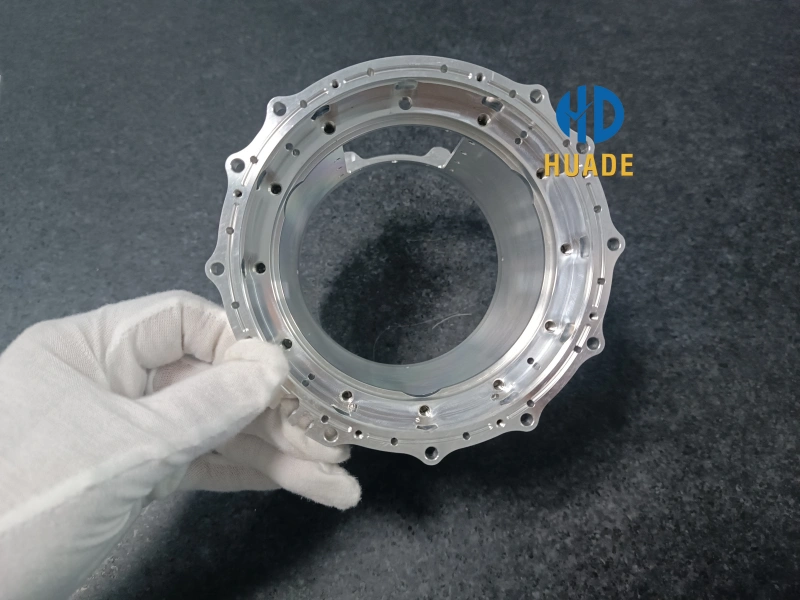
When we put the broken pieces under the microscope, the culprit was obvious: micro-porosity. This experience is why many Tier-1 manufacturers are moving away from castings and toward aluminum alloy forgings for critical components.
What is Forged Aluminium and Why Does It Outperform Billet?
When a client asks, “what is forged aluminium?” I usually take them away from the CAD screen and into the lab. To understand it, you have to look at the metal’s DNA.
Casting is like freezing water into an ice cube; the grain structure is random and prone to voids. Machining from billet is like carving a sculpture out of a block of wood; the wood has a straight grain, but as you carve curves, you cut across those natural grain lines, creating weak points.
Forged aluminum parts, however, are created by taking a solid-state alloy and using immense pressure to force it into a die. We aren’t melting the metal; we are “moving” it. This process creates a “grain flow” that follows the exact geometry of the part. Where the part bends, the internal fibers of the metal bend with it. This is why aluminum forging parts can be up to 30% lighter than their cast counterparts while offering significantly higher fatigue strength.
The Shop Floor Reality: Creating High-Quality Aluminum Alloy Forgings
To truly appreciate the process, you have to step off the clean engineering floor and walk into the forge. I remember taking a client’s engineering team to visit our production line. It is an environment defined by heat, rhythm, and immense power.
We watched as glowing, cylindrical billets of 7075-T6 alloy were pulled from the induction heater. An automated arm placed the hot slug onto the bottom half of a hardened steel die. Then, the mechanical press came down with 2,500 tons of force.
Watching the creation of aluminum forging parts is mesmerizing because you are witnessing the subjugation of metal. The shop floor foreman, an industry veteran, always says: “You can’t fake this kind of strength! We’re packing the molecules so tight they have no choice but to hold together.”
By utilizing closed-die forging, we eliminate any internal porosity. This is why aluminum alloy forgings are the gold standard for aerospace and high-speed automotive applications—there are no hidden “bubbles” waiting to cause a crack under pressure.
The Engineering Challenge: CNC Machining Forged Aluminum Parts
There is a common misconception that once a part comes out of a forging press, it’s finished. In reality, forging is a “near-net shape” process. While it provides incredible internal strength, a massive forging press cannot hold the ±0.01mm tolerances required for modern assemblies.
This is where the synergy between forging and precision machining becomes critical. As an engineer, managing the transition from the brutal force of the forge to the microscopic precision of a 5-axis CNC mill is a delicate art. Here is why your choice of a machining partner matters:
1. Fixturing Complex Geometries
Unlike a square block of raw billet, forged aluminum parts have organic, flowing curves and draft angles. Holding these parts rigidly inside a CNC machine without crushing the surface takes clever engineering. We often design custom hydraulic fixtures that cradle the specific contours of the forging to prevent vibration (chatter) during the cutting process.
2. Dimensional Stability and Residual Stress
When you machine a massive amount of material away from a standard billet, the part often “warps” due to released internal stresses. However, aluminum alloy forgings are remarkably stable. Because the forging process has already shaped the material close to its final dimensions, the CNC tools only need to remove a minimal “skin.” This ensures that the part stays true to the blueprint after it is unclamped.
3. Tool Life and Surface Finish
The dense, refined grain structure of aluminum forging parts actually improves the “machinability” of the metal. It produces predictable, crisp chips and allows for a superior surface finish—often reaching a mirror-like Ra 0.4 or better without the need for extensive polishing.
Why Every Detail Matters in Your Next Project
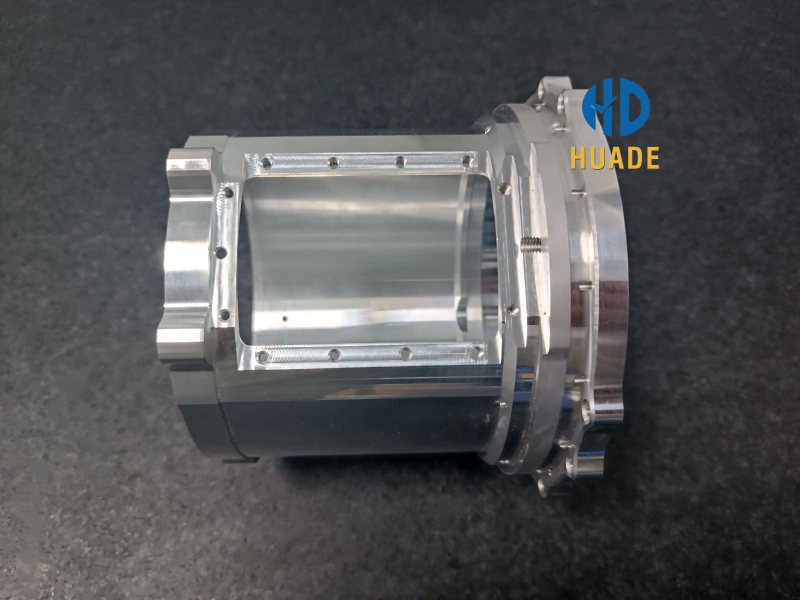
Advanced CNC machining allows us to transform raw aluminum alloy forgings into complex, lightweight components for aerospace and automotive applications.
In the world of high-stakes engineering, the choice of material and process isn’t just a line item on a budget; it’s a safety and performance decision. When you choose forged aluminum parts, you are investing in a component that has been physically engineered at the molecular level to withstand stress.
I’ve seen projects saved by this transition. We’ve replaced heavy steel components with aluminum alloy forgings that reduced weight by 40% while actually increasing the service life of the machine. But those results only happen when the forging is backed by world-class precision machining.
Partnering with Dongguan Huade Precision Manufacturing Co., Ltd.
At Dongguan Huade Precision Manufacturing Co., Ltd., we understand that “good enough” is never enough for your critical projects. We specialize in the entire lifecycle of precision parts, bridging the gap between raw forging strength and flawless CNC execution.
Based in the heart of China’s manufacturing hub, Dongguan Huade Precision Manufacturing Co., Ltd. provides end-to-end support for your most complex forged aluminum parts. Our facility is equipped with state-of-the-art multi-axis CNC centers designed to handle the unique challenges of machining aluminum forging parts, ensuring that every component meets the most stringent aerospace and automotive standards.
Whether you are in the middle of a prototype failure or planning a high-volume production run, our team of expert engineers is ready to help you optimize your design for both strength and manufacturability.
Would you like a technical consultation on how to transition your current cast or billet designs into high-performance forged aluminum parts? Contact us today.
 English
 Deutsch
 Español
 Français
 Português do Brasil
 العربية