
Introduction
An herb grinder is a tool designed to break dried herbs into smaller, consistent pieces — making them easier to use for smoking, rolling, vaporizing, cooking, or aromatherapy. Whether you’re a retail store owner, private-label brand, or enthusiast, understanding what makes a great herb grinder will help you choose or source the right product.

CNC manufacturing expert with 15+ years of experience. William helps engineering teams turn prototypes into stable production parts through DFM optimization, tolerance planning, machining strategy selection, and inspection-driven quality control.
william@hdproto.comFor any CNC-machined part — whether shafts, housings, brackets, manifolds, or structural components — the foundation of reliable manufacturing starts with clean geometry, well-defined datums, and machining-friendly features that minimize re-clamping risks.
We support function-driven tolerances (down to ±0.01 mm when required) and offer full inspection options including CMM reports, thread gauges, and surface-finish verification to ensure repeatability from prototype to production.
CONTACT OUR EXPERT NOWIn this complete guide, you’ll learn how herb grinders work, the different types, optimal sizes, material choices, and how to use one properly — all structured to help both consumers and businesses.
What Is an Herb Grinder?

An herb grinder (sometimes called a dry herb grinder) is typically a cylindrical tool with interlocking pieces and sharp internal teeth that shred herbs into uniform particles. This makes herbs easier to burn or vaporize evenly and improves airflow and flavor.
Most grinders include:
- A grinding chamber with teeth or pegs
- A lid or top piece
- A lower compartment to collect ground material
- Optional mesh screens for filtering fine particles (kief)
Types of Herb Grinders
Herb grinders come in many different styles to suit different users and preferences:
1. Two-Piece Grinders
A simple design with just a lid and grinding chamber. The herbs are ground and collected in the bottom half. These are straightforward and great for beginners.
2. Three-Piece Grinders
Three-piece grinders add a storage chamber under the grinding teeth. This separates ground herbs from unprocessed material, making them more user-friendly.
3. Four-Piece Grinders (Most Popular)
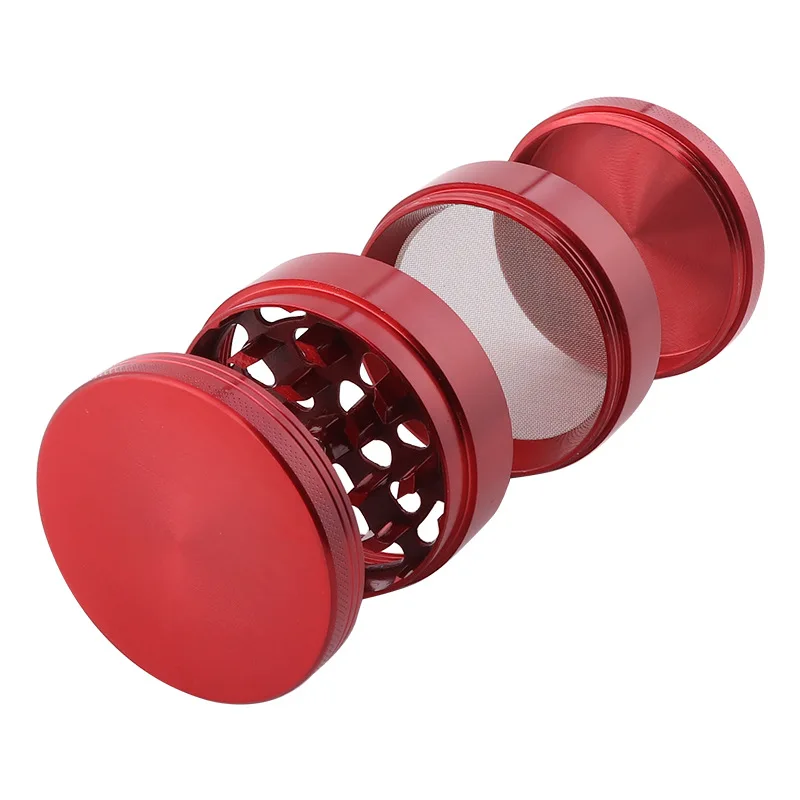
The most common design includes:
- Lid with teeth
- Grinding plate
- Mesh screen
- Bottom compartment (for fine powder/kief)
The mesh screen allows pollen or trichomes to fall through into a separate chamber, useful for advanced users and collectors.
4. Electric Grinders
Electric or battery-powered grinders automate the process and deliver quick results with minimal effort. They are ideal for users who want convenience over manual operation.
Materials Matter: Metal vs Plastic vs Wood
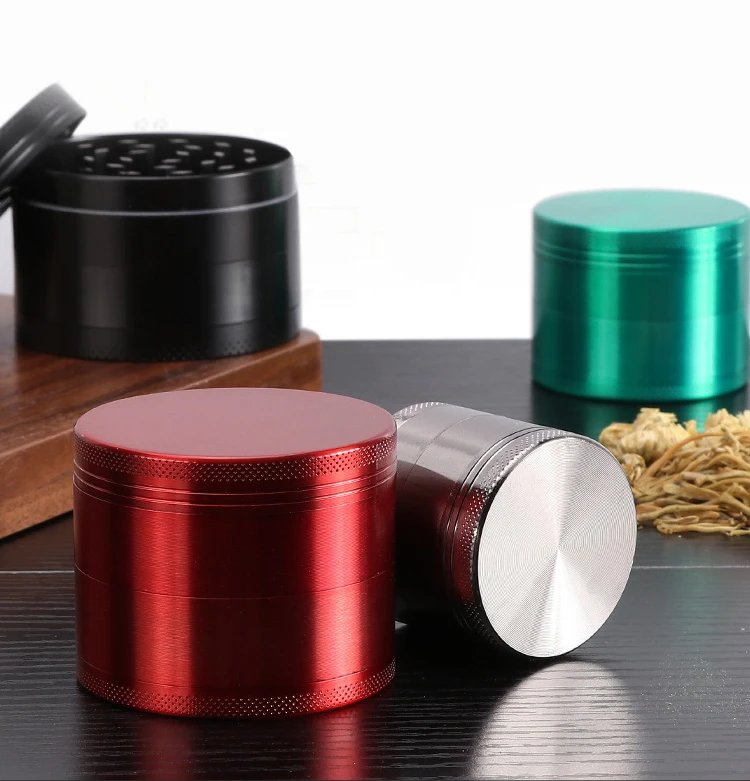
Herb grinders can be made from different materials, each with pros and cons:
Metal Grinders
- Durable and long-lasting
- Consistent grinding performance
- Often anodized or CNC machined
- Most common in premium herb grinders
Metal grinders are widely regarded as the standard for quality and durability — especially when designed for repeated use.
Plastic Grinders
- Lightweight and affordable
- Less durable
- Best for beginners or occasional use
Wood Grinders
- Unique aesthetic
- Nostalgic feel
- Less consistent grind and harder to clean
Metal models — especially aluminum and zinc alloys — are the most popular choice for brands and resale markets.
Herb Grinder Sizes & How to Choose
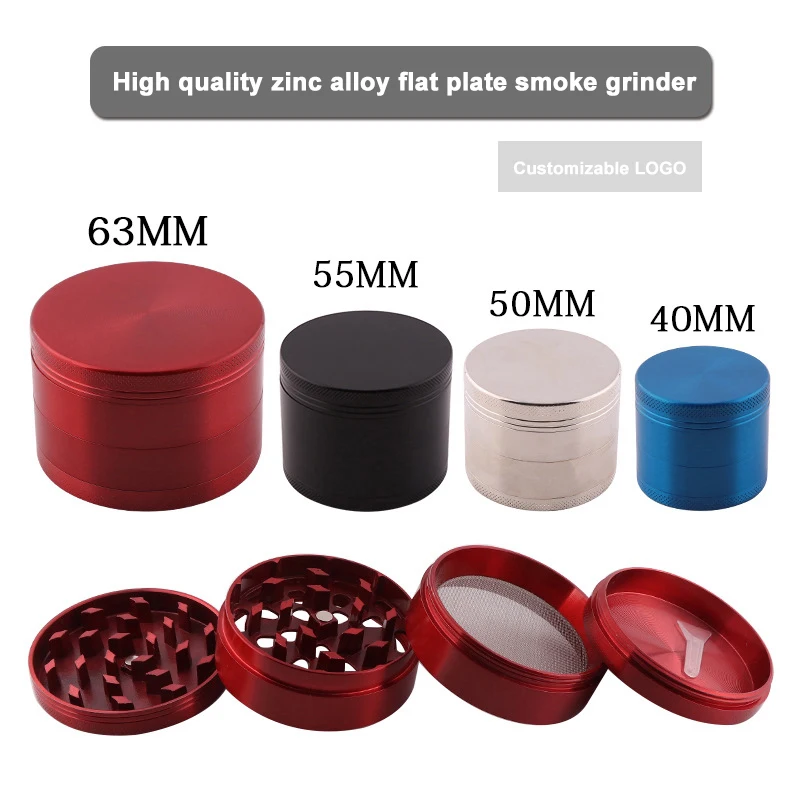
When choosing an herb grinder, size plays a big role in performance and convenience:
| Size | Best For | Notes |
|---|---|---|
| Small (~40mm) | Portability | Easy to carry, ideal for travel |
| Medium (~50mm) | Everyday use | Balanced size for daily consumption |
| Large (~55–63mm) | Heavy users | Bigger capacity, easier grip and torque |
Smaller grinders are perfect for personal travel and pocket carry, while larger sizes are easier to handle and good for bulk preparation.
How an Herb Grinder Works

Using an herb grinder is simple:
- Break up large pieces of dried herb — ensure they are dry for best results
- Place herb in the grinding chamber
- Attach the lid and twist back and forth
- Twist until desired consistency is reached
- Open and collect ground herb
Grinding increases surface area, improves airflow when burning or vaporizing, and ensures a more even, consistent experience each time.
Parts of a Herb Grinder Explained
Grinding Teeth
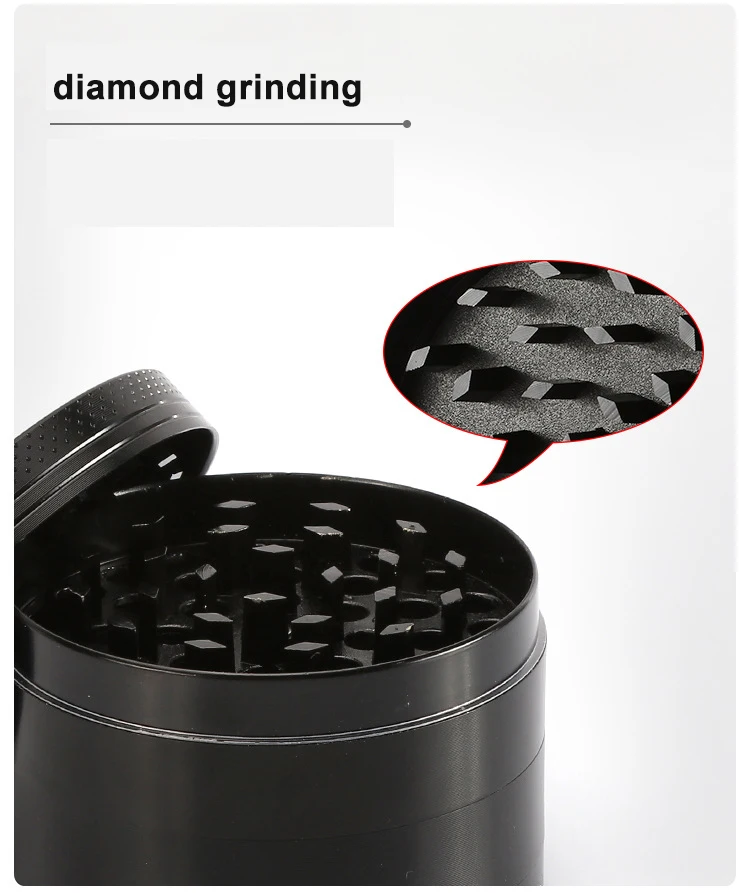
Most grinders use diamond-shaped or pyramid-shaped teeth designed to shred herbs efficiently. More teeth generally provide a finer grind.
Mesh Screen
In multi-chamber grinders, the screen filters fine powder (often called kief). This can be collected separately and used later.
Storage Chamber
The bottom compartment where ground herbs or pollen accumulate. Some high-end models include tools or scrapers to easily retrieve collected material.
Benefits of Grinding Herbs
Grinding herbs offers several advantages:
- Even burn and airflow — enhances smoking quality
- Improved flavor and potency — distributed trichomes enrich aroma
- Consistent particle size — easier to handle and use
- Better rolling and packing performance
Tips for Best Grinding Results
To get the most consistent results:
- Don’t overfill your grinder
- Ensure herbs are dry
- Clean regularly to avoid buildup
- Twist back and forth gently to prevent jamming
Using a magnetized lid helps keep the device closed during use and reduces spills. (This is a common feature in quality 4-piece designs.)
Why Metal Herb Grinders Are Preferred
Metal grinders — especially zinc alloy and aluminum — offer:
- Longevity
- Stronger teeth
- Better grind consistency
- More customization options for logo and branding (important for private-label/brand owners)
These qualities make metal herb grinders ideal for retailers and resale markets.
Conclusion
Herb grinders are essential for anyone who wants a smooth, consistent herb experience — whether for smoking, vaporizing, or culinary use. Choosing the right type and size depends on your needs, but high-quality metal grinders with multiple chambers offer the best balance of performance and versatility.
If you are sourcing herbs grinders for your brand, consider size options like 40mm, 50mm, 55mm, and 63mm, and prioritize metal designs with strong teeth and mesh screens for the best user experience.
About Dongguan Huade Precision Manufacturing Co., Ltd.

At Dongguan Huade Precision Manufacturing Co., Ltd., we specialize in manufacturing high-quality metal herb grinders, custom tobacco grinders, and CNC-machined smoking accessories. With advanced production equipment, strict quality control, and OEM/ODM experience, we support brands, wholesalers, and e-commerce sellers who need durable, customizable, and market-ready grinder products.
We offer:
- Custom logo engraving (laser, embossing, color printing)
- Multiple sizes: 40mm, 50mm, 55mm, 63mm
- Zinc alloy / aluminum CNC precision production
- 2-piece, 3-piece, and 4-piece herb grinder options
- Private label packaging & bulk manufacturing
- Fast sampling and global shipping
If you are building your own brand or sourcing grinders for resale, we can manufacture the exact models you need with stable quality and competitive pricing.
📩 Contact us today to get a quote or request samples — and let’s create your next best-selling herb grinder together.
 English
 Deutsch
 Español
 Français
 Português do Brasil
 Italiano