
As CNC machining technology evolves, precision is everything. Whether you’re crafting components for aerospace, automotive, or industrial machinery, the quality of each part can make or break the final product. One technique that stands out for its accuracy and versatility is high precision spline forming. This advanced process, often executed using CNC (Computer Numerical Control) machining, ensures that parts meet exact specifications with minimal error. Paired with finishing techniques like lapping and polishing, spline forming becomes a cornerstone of modern engineering. In this 1500-word guide, we’ll dive deep into what high precision spline forming entails, its applications in CNC machining, and how lapping and polishing enhance the process. Let’s explore how these methods deliver unparalleled results for your next project.
What Is High Precision Spline Forming?
High precision spline forming is a specialized manufacturing process used to create splines—grooves or ridges machined into a shaft or component to transmit torque or motion. These splines are critical in assemblies where rotational force needs to be transferred efficiently, such as in gearboxes, drive shafts, and couplings. Unlike traditional methods that might rely on manual shaping or less accurate tools, high precision spline forming leverages CNC technology to achieve tight tolerances, often within microns.
The process begins with a raw material—typically steel, aluminum, or titanium—loaded into a CNC machine. Using pre-programmed software, the machine cuts or forms the spline teeth with extraordinary accuracy. This precision is vital because even a slight deviation can lead to mechanical failure or inefficiency. High precision spline forming stands out due to its ability to produce complex geometries, maintain consistency across large production runs, and reduce waste, making it a go-to choice for industries demanding reliability.
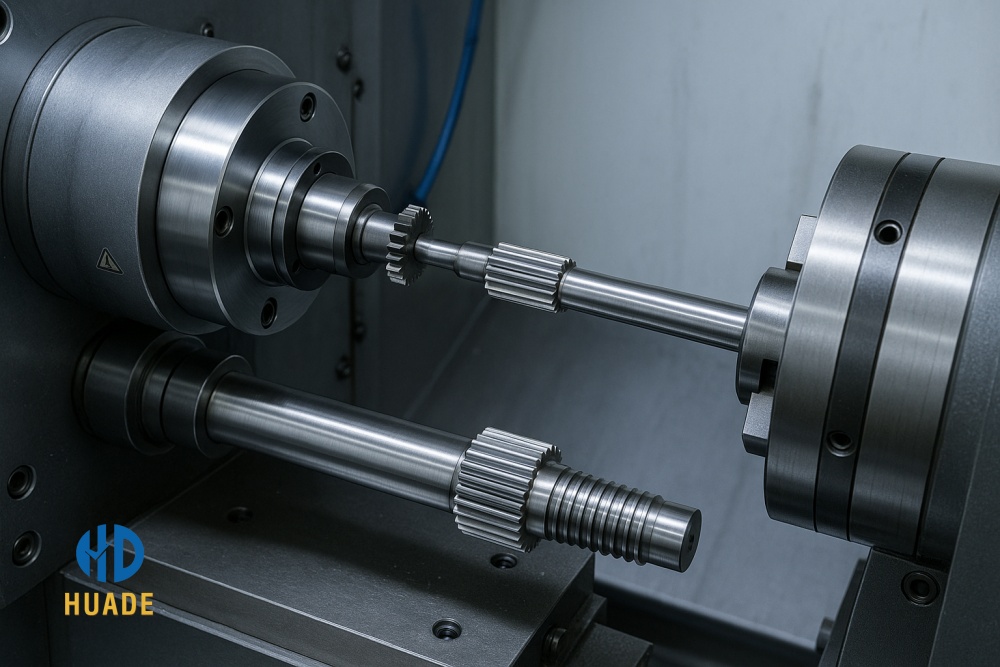
The Role of CNC Machining in Spline Forming
CNC machining is the backbone of high precision spline forming. By integrating computer-aided design (CAD) and computer-aided manufacturing (CAM), CNC machines offer unparalleled control over the cutting and forming process. Here’s how CNC enhances spline forming:
- Accuracy: CNC machines follow digital blueprints with micron-level precision, ensuring each spline tooth matches the design specifications.
- Repeatability: Whether you’re producing one part or a thousand, CNC ensures uniformity, which is critical for mass production.
- Versatility: From straight-sided splines to involute profiles, CNC machines can handle various spline types, adapting to diverse industry needs.
This synergy between CNC technology and spline forming allows manufacturers to tackle projects that were once considered too challenging. For instance, aerospace components often require splines that withstand extreme conditions, and CNC machining delivers the precision needed to meet those standards.
Applications of High Precision Spline Forming
The versatility of high precision spline forming makes it indispensable across multiple industries. Here are some key applications:
1. Automotive Industry
In automotive manufacturing, splines are found in transmissions, differentials, and steering systems. High precision spline forming ensures these components can handle the high torque and stress of daily operation, improving vehicle performance and longevity.
2. Aerospace Engineering
Aerospace demands parts that are both lightweight and strong. Splines formed with CNC precision are used in aircraft actuators and landing gear assemblies, where failure is not an option.
3. Industrial Machinery
Heavy machinery, such as pumps and compressors, relies on splines to transfer power efficiently. High precision spline forming ensures these machines operate smoothly, reducing downtime and maintenance costs.
4. Medical Devices
Even the medical field benefits from this technology. Surgical tools and imaging equipment often contain precisely formed splines to ensure accurate movement and reliability.
Each of these applications highlights the importance of precision in spline forming, a task perfectly suited to CNC machining’s capabilities.
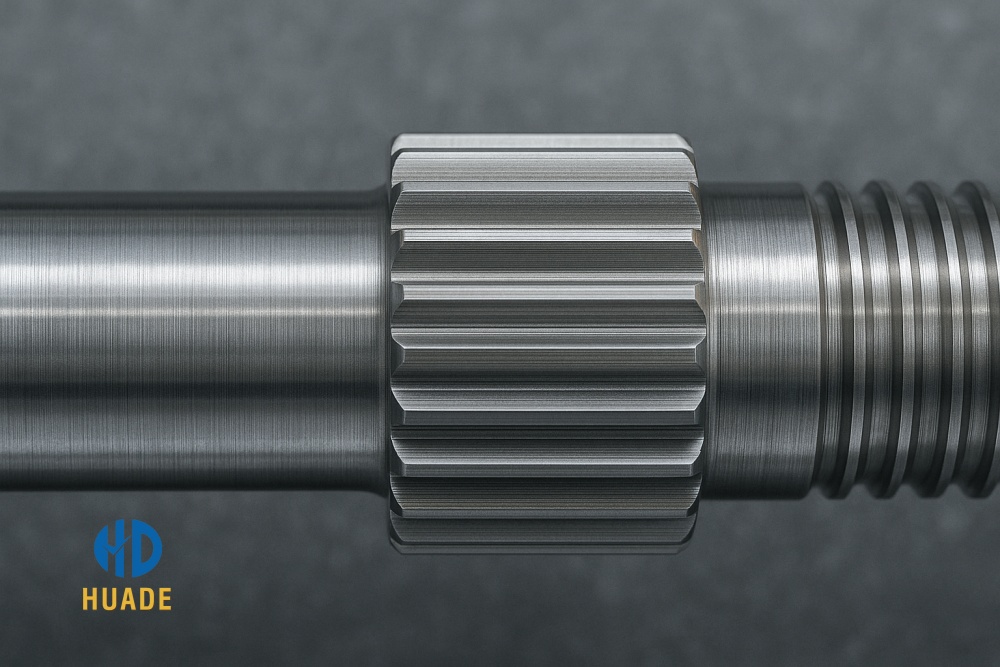
The Importance of Lapping and Polishing in Spline Finishing
While high precision spline forming creates the initial shape, the surface finish can significantly impact a part’s performance. This is where lapping and polishing come into play. These post-machining processes refine the spline’s surface, removing imperfections and enhancing functionality.
What Is Lapping?
Lapping is a controlled abrasive process that uses a lapping compound to smooth a part’s surface. For splines, lapping ensures that the teeth are free of burrs or microscopic irregularities that could cause friction or wear. The process involves rubbing the part against a precision lap, often under light pressure, to achieve a mirror-like finish. This is particularly important for splines that operate in high-speed or high-load environments.
What Is Polishing?
Polishing takes lapping a step further by using finer abrasives to create an even smoother surface. This process not only improves aesthetics but also reduces friction, which can extend the lifespan of the spline and the assembly it’s part of. Polished splines are often used in applications where cleanliness and corrosion resistance are critical, such as in medical or food processing equipment.
Benefits of Lapping and Polishing
- Improved Fit: A smoother surface ensures better mating with other components, reducing play and enhancing torque transmission.
- Reduced Wear: Eliminating surface defects minimizes wear over time, increasing the part’s durability.
- Enhanced Performance: Lower friction leads to more efficient operation, which is crucial in high-precision applications.
Together, lapping and polishing transform a well-formed spline into a high-performance component, making them essential steps in the CNC machining workflow.
How High Precision Spline Forming and Finishing Work Together
The relationship between high precision spline forming and finishing techniques like lapping and polishing is symbiotic. The initial forming process sets the foundation by creating the spline’s geometry with CNC precision. However, the surface quality achieved during forming alone may not meet the stringent requirements of certain industries. This is where lapping and polishing step in to refine the part.
For example, a spline formed for an automotive transmission might start with a roughness average (Ra) of 1.6 micrometers. After lapping and polishing, this can be reduced to 0.1 micrometers or less, depending on the application. This level of refinement ensures the spline operates silently and efficiently, a critical factor in vehicle comfort and safety.
CNC machines can also be programmed to prepare parts for these finishing processes. By leaving a slight oversize on the spline teeth, manufacturers allow room for material removal during lapping, ensuring the final dimensions align with the design. This integrated approach maximizes efficiency and quality, showcasing the power of combining advanced machining with skilled finishing.
Challenges in High Precision Spline Forming
Despite its advantages, high precision spline forming comes with challenges that manufacturers must address:
- Material Hardness: Harder materials like titanium or hardened steel can wear down cutting tools faster, requiring frequent replacements.
- Tool Wear: The precision required means even minor tool wear can affect accuracy, necessitating regular maintenance.
- Complex Geometries: Intricate spline designs demand advanced CNC programming and skilled operators to avoid errors.
Overcoming these challenges requires state-of-the-art equipment, high-quality materials, and experienced technicians. Investing in the right technology and training ensures that high precision spline forming meets industry standards every time.
Future Trends in Spline Forming and Finishing
As technology evolves, so does the field of high precision spline forming. Here are some trends to watch:
- Automation: Increased use of robotic systems and AI-driven CNC machines will streamline production and reduce human error.
- Advanced Materials: The rise of composite materials and superalloys will push the boundaries of what spline forming can achieve.
- Sustainability: Manufacturers are exploring eco-friendly lubricants and energy-efficient processes to reduce environmental impact.
These innovations will likely make spline forming even more precise and accessible, further solidifying its role in CNC machining.
Why Choose High Precision Spline Forming for Your Project?
If you’re in the market for CNC-machined parts, high precision spline forming offers numerous benefits. From ensuring tight tolerances to enabling complex designs, this process delivers components that meet the highest standards. When paired with lapping and polishing, the result is a part that performs reliably under demanding conditions.
At Dongguan Huade Precision Manufacturing Co., Ltd, we specialize in high precision spline forming and advanced finishing techniques. For more information on industry standards, check out the ISO Standards for CNC Machining. Our state-of-the-art CNC machines and skilled team ensure that every part we produce exceeds expectations. Whether you need splines for automotive, aerospace, or industrial applications, we’ve got you covered. Contact us today to discuss your project and see how we can help bring your vision to life.
Bringing It All Together
High precision spline forming is more than just a machining process—it’s a gateway to creating durable, efficient, and high-performing components. Supported by CNC technology and refined through lapping and polishing, this technique addresses the needs of modern industries with remarkable accuracy. By understanding its applications, benefits, and challenges, you can make informed decisions for your manufacturing projects. As technology advances, the future of spline forming looks brighter than ever, promising even greater precision and innovation.
Ready to explore how high precision spline forming can benefit your next CNC machining project? Reach out to us for expert guidance and top-quality results.
 English
 Deutsch
 Español
 Français
 Português do Brasil
 Italiano