A hydraulic manifold block can look perfect on the outside and still cause headaches in the field. Most problems don’t come from one obvious mistake. They come from small, avoidable gaps in design intent and manufacturing control—unclear thread standards, sealing faces treated like “general machining,” burrs hiding at cross-drilled intersections, or chips left inside passages.
Many engineers use the term manifold block for hydraulic systems when they’re looking for leak-free sealing, burr control, and clean internal passages.
This checklist is written for engineers and buyers who want repeatable, leak-free assembly. Use it before you release the drawing, and again before you approve a machining plan.
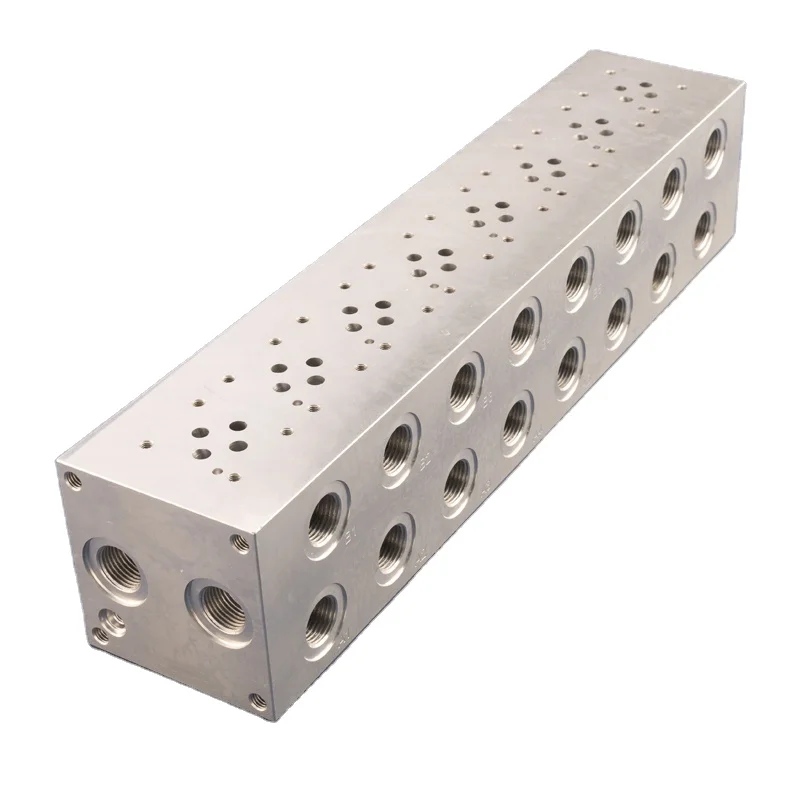
Hydraulic Manifold Block Basics (Pressure, Media, Failure Modes)
Hydraulic manifolds operate under high pressure, with media that can carry contamination. Add temperature cycles, vibration, and long service intervals, and even minor defects become real system risks.
Common failure modes are predictable. Slow port leaks. Leaks at valve mounting faces. Pressure drop that looks like a “valve problem” but is actually a restricted passage. Unstable actuator motion because flow paths aren’t balanced. In many cases, the root cause is not the fitting itself—it’s burrs, face quality, or internal cleanliness.
A good hydraulic block manifold is a combination of flow network + sealing system + cleanliness control. Treat it that way from the start.
Design Checklist Before You Release the Drawing
If your drawing does not clearly define what is critical, suppliers will guess. Guessing creates variation. Variation creates leaks.
Choose the sealing method first
Decide how each interface seals before you finalize ports and faces. This one decision drives surface finish, groove geometry, edge treatment, and inspection requirements.
If an interface uses O-rings, the groove quality and edge condition are non-negotiable. If it seals on a face, flatness and surface finish become performance requirements, not cosmetics. If it relies on taper threads, assembly torque and thread quality become more sensitive, and field repeatability may drop.
For manifolds that will be serviced, choose sealing approaches that can survive repeated assembly without turning into “trial-and-error sealing.”
Lock thread standards (NPT vs BSPP vs ORB)
Thread confusion is a top reason manifolds fail during assembly. Mixed standards are common in global supply chains, so your drawing must remove ambiguity.
Before release, confirm:
- Which ports are NPT, BSPP, ORB, metric, or other standards
- Whether sealing occurs on the thread, on a washer, on an O-ring, or on a face
- Any required chamfer/lead-in features to protect seals during assembly
- If thread class/fit needs a specific callout for critical ports
If your team is still deciding, make the decision early. Changing thread standards late often triggers redesign of wall thickness, port spacing, and cross-drill intersections.
Define datums and critical faces
A hydraulic manifold can meet basic dimensions and still leak because relationships between faces and ports weren’t controlled as a system.
Your datum strategy should reflect assembly reality:
- What face is the primary mounting reference?
- Which face(s) are sealing-critical?
- Which ports must align tightly to valve interfaces or plates?
If a valve mounts to the manifold, treat that mounting face as a critical sealing interface. Define its relationship to other functional features. In many manifold block design projects, controlling critical faces consistently is more valuable than tightening every dimension everywhere.

CNC manufacturing expert with 15+ years of experience. William helps engineering teams turn prototypes into stable production parts through DFM optimization, tolerance planning, machining strategy selection, and inspection-driven quality control.
william@hdproto.comFor any CNC-machined part — whether shafts, housings, brackets, manifolds, or structural components — the foundation of reliable manufacturing starts with clean geometry, well-defined datums, and machining-friendly features that minimize re-clamping risks.
We support function-driven tolerances (down to ±0.01 mm when required) and offer full inspection options including CMM reports, thread gauges, and surface-finish verification to ensure repeatability from prototype to production.
CONTACT OUR EXPERT NOWCNC Machining Strategy That Prevents Leaks
Most hydraulic manifold issues are manufacturing-predictable. The goal is to design a machining route that reduces burr creation, protects sealing faces, and ensures internal cleanliness.
Drill sequencing to control burrs
Cross-drilled intersections are burr factories. Burrs can restrict flow, break loose, and contaminate valves. A robust plan is not “deburr later.” It’s a sequence that minimizes burr formation and ensures access for removal.
A practical strategy typically includes:
- Drill sequencing designed to reduce burr size at intersections
- Cross-drill planning to maintain tool access for internal deburring
- Process gates where chips are removed before the next operation
- Optional borescope checks for high-risk passages during early builds
If the manifold includes long passages or tight intersections, treat burr control as a functional requirement, not a finishing step.
Surface finish targets for seals
Sealing faces and grooves deserve dedicated attention. Even if a face is flat, the wrong finish or edge condition can create leak paths or cut seals.
Good practice includes:
- Finish operations planned for sealing faces (not “whatever tool was already in the spindle”)
- Edge breaks that remove sharpness without damaging sealing geometry
- Groove edges protected during handling and cleaning
If your system is sensitive, document which faces are “seal-critical” so the supplier can prioritize them during fixturing and finishing.
Inspection & Leak-Test Options
Inspection should match risk. Don’t inspect everything equally—inspect what creates leaks and assembly failure.
A typical inspection plan includes:
- Thread gauges for all specified ports
- Checks for flatness and surface condition on sealing faces
- Positional checks for critical ports relative to assembly datums
- CMM inspection for manifolds with multiple critical relationships or tight GD&T
Leak testing can be added when failure cost is high or when the assembly is difficult to diagnose after installation. Many teams leak-test during development, then rely on validated process controls for later batches unless the application requires ongoing verification.
Cleanliness is part of inspection in hydraulic systems. If chips remain inside passages, a perfect CMM report won’t prevent field failures.
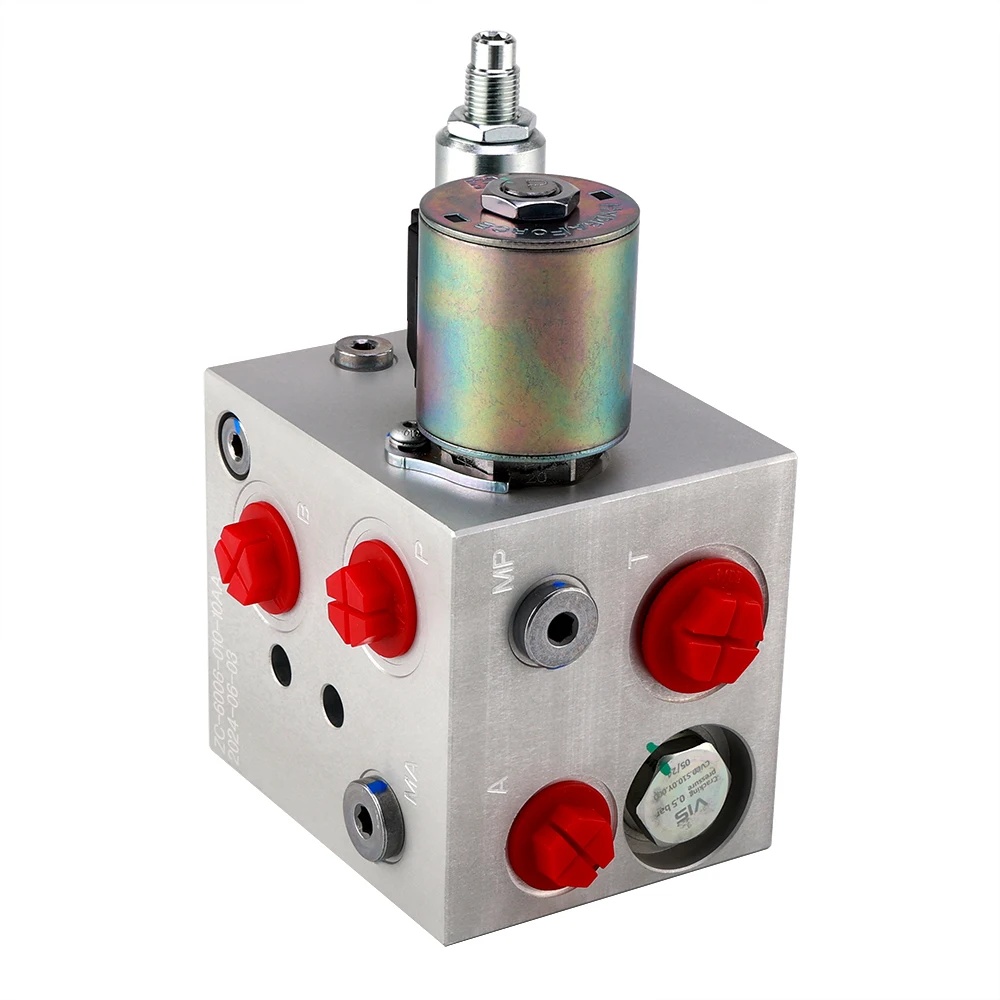
DFM Request
If you want leak-free results without over-tightening every tolerance, start with a DFM review focused on risk features: ports, seals, datums, cross-drill intersections, and cleaning access.
For a practical review, send:
- STEP + drawing
- Operating pressure range and media
- Thread/port standards and sealing method
- Highlighted sealing faces and any critical GD&T
- Any known problems (leaks, pressure drop, contamination)
For a broader overview of types, materials, cleaning, and inspection, see our manifold block machining guide.
Hydraulic Manifold Block FAQ
FAQ: What’s the most common cause of leaks in hydraulic manifold blocks?
Not the thread itself—usually burrs, poor face flatness, damaged seal grooves, or contamination left inside cross-drilled passages.
FAQ: Should I use NPT or O-ring ports?
If you need repeatable sealing and serviceability, O-ring style ports are often more robust than taper threads, but selection depends on the system standard and space.
FAQ: Do tighter tolerances always mean a better hydraulic manifold?
No. Tighten what controls sealing and assembly (critical faces, datums, valve interfaces). Keep other features functional to avoid unnecessary cost and lead time.
FAQ: How do you reduce burr risk in cross-drilled passages?
It starts with drill sequencing and tool access planning, then a defined internal deburring method, and finally verified cleaning so chips can’t remain trapped.
FAQ: What should I include in “Project Details / Requirements” for a fast quote?
Material, quantity, pressure range, media, thread/port standards, sealing method, critical faces/GD&T, and whether you need CMM report or leak testing.
Work with Dongguan Huade Precision Manufacturing Co., Ltd.
At Dongguan Huade Precision Manufacturing Co., Ltd., we machine high-precision CNC parts and complex assemblies, including manifold blocks that require controlled sealing faces, burr-free passages, and inspection-driven quality. If you share your drawings and requirements, our engineers can propose a manufacturing and inspection plan that fits your application.
 English
 Deutsch
 Español
 Français
 Português do Brasil
 Italiano