
A manifold block looks simple—just a rectangular block with ports and drilled passages. In reality, it’s a pressure-bearing “traffic controller” for fluid, air, vacuum, or grease. When it’s machined well, systems run clean, stable, and leak-free. When it’s machined poorly, the symptoms can be brutal: mysterious pressure loss, intermittent valve behavior, contamination, and the kind of leaks that only appear after a few heat cycles.
This guide explains manifold block machining from an engineering-first perspective: how to think about design, machining strategy, sealing, deburring, cleaning, and inspection so your manifold performs reliably in real-world conditions.
What Is a Manifold Block and Why It Matters
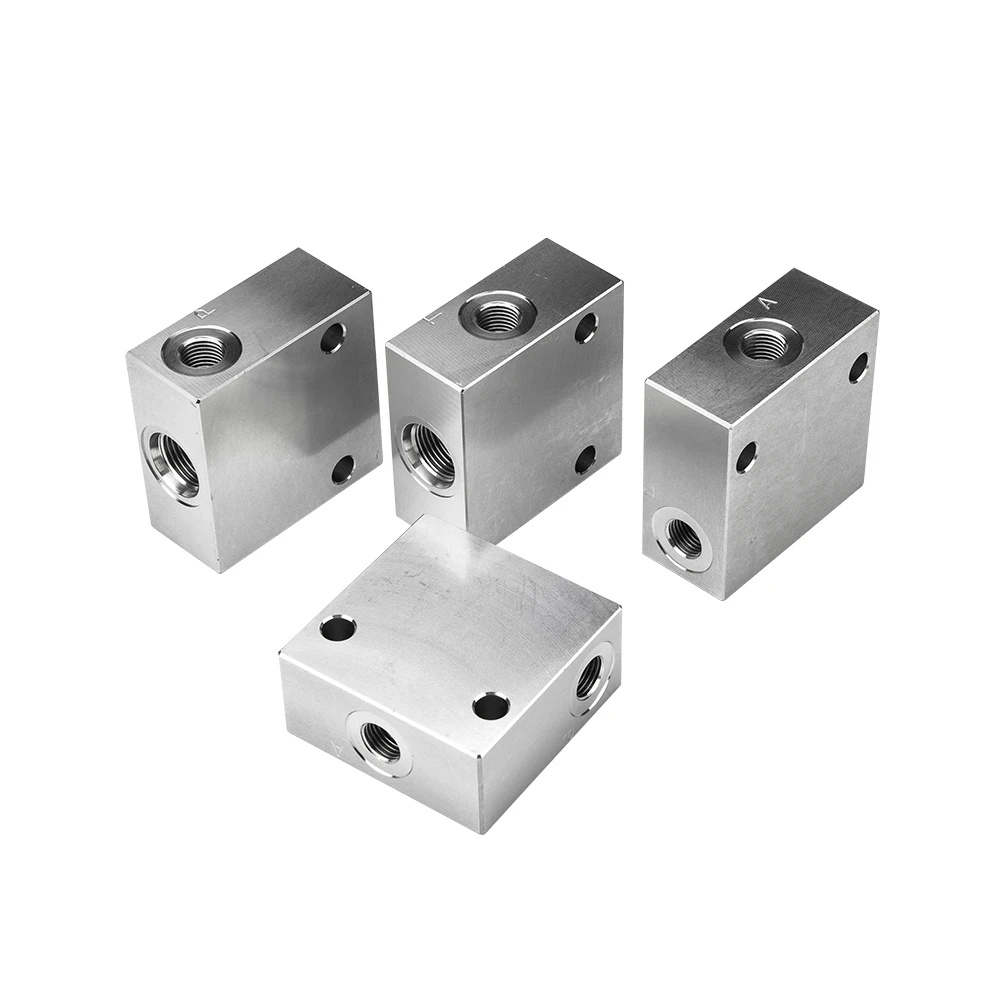
A manifold block is a machined component that routes flow between pumps, valves, actuators, sensors, and reservoirs. Instead of using many fittings and hoses, a manifold integrates passages and ports into one compact part. The benefits are obvious—fewer leak points, tighter packaging, faster assembly—but the risks are also higher because a single internal defect can affect the whole system.
Unlike many parts where cosmetics matter most, manifold blocks are judged by functional outcomes: stable flow, consistent sealing, and clean internal passages. The machining process must prioritize these outcomes, not just hit basic dimensions.
Common Manifold Block Types (Hydraulic, Pneumatic, Air, Vacuum, Grease)
Different media create different failure modes. Knowing the application early will guide material selection, port standards, sealing design, and inspection methods.
Hydraulic manifold block
High pressure, oil contamination sensitivity, and thermal cycling. Burr control, sealing face quality, and cleaning are critical.
Pneumatic manifold block
Lower pressure but often higher cycle frequency. Small leaks are common and can be hard to diagnose. Port thread quality and O-ring groove integrity matter.
Air manifold block
Used for distribution and balancing. Flow path smoothness and consistent port geometry matter more than ultra-tight tolerances everywhere.
Vacuum manifold block
Leak-tight performance is everything. Tiny burrs, scratches, or porosity can become real vacuum leaks even when the part looks perfect.
Grease manifold block
Clog-sensitive. Internal chips or burrs can migrate and block channels, causing uneven lubrication and equipment wear.
Manifold Block Design Rules Engineers Should Lock Down Early
Many manifold issues start at the design stage—not because the design is “wrong,” but because the drawing doesn’t communicate what matters most. The best results come when design intent is clear.
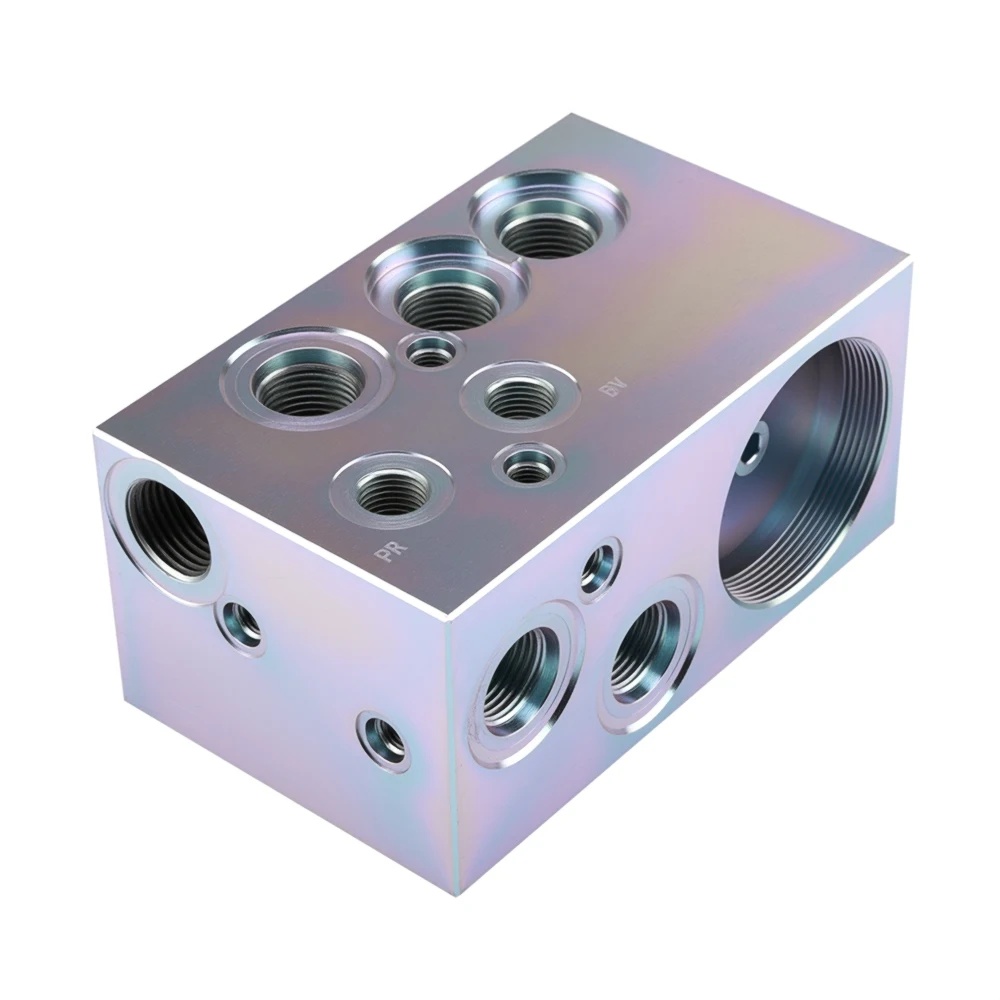
Port layout, flow paths, and pressure drop
A manifold isn’t just “holes connecting to holes.” Port placement and passage routing affect pressure drop, flow balance, and response time. Sharp transitions, thin webs, or awkward cross-drill intersections can create turbulence or trap debris.
If performance is sensitive, it helps to identify which flow paths are critical. Those passages may need smoother transitions, more controlled drilling strategy, or additional cleaning verification.
Thread standards and sealing methods (O-ring, face seal, NPT/BSPP)
Before finalizing ports, decide how the system will seal.
O-ring-based ports and face seals tend to be more repeatable and service-friendly. Taper threads can work, but they are more sensitive to machining variation and assembly technique. If your manifold uses mixed standards (for example, BSPP + ORB + NPT across different interfaces), document it clearly. “Thread confusion” is a common root cause of field leaks.
It’s also smart to call out any ports that must remain burr-free at the entry and at internal intersections—especially where seals and seats are sensitive.
Datums, flatness, and leak paths
Manifold blocks often mount valves, plates, sensors, or subassemblies. Sealing faces and mounting faces should be tied to a datum scheme that makes assembly reliable.
Flatness and parallelism on sealing faces are not cosmetic requirements—they define whether O-rings and gaskets will load evenly. A manifold can pass basic dimensional checks and still fail in service if a sealing face has a subtle wave, tool marks in the wrong direction, or a burr near a groove.
CNC Machining Process for Manifold Blocks
A manifold block can look easy on paper but difficult in production. The difference between success and frustration often comes down to drilling strategy, burr control, and cleaning discipline.
Drilling, cross-drilling, reaming, and deburring strategy
Cross-drilled passages are the heart of most manifold blocks—and also the biggest risk. Every intersection is a burr opportunity, and every burr is a future contamination event or flow restriction.
A robust plan usually includes:
- A drilling sequence designed to reduce burr size at intersections
- Appropriate tool selection for deep holes and cross-holes
- Reaming where needed for precision valve interfaces or critical fits
- A defined internal deburring process (not “deburr as needed”)
- Verification steps for high-risk geometries (for example, borescope checks on critical passages)
The goal is not only “no sharp edges,” but also no loose chips or feather burrs waiting to break off.
Surface finish for sealing faces
Sealing faces deserve a dedicated machining approach. A face can be flat but still seal poorly if the surface finish is wrong for the sealing method, or if machining marks are oriented in a way that encourages leak paths.
For valve mounting faces and gasket/O-ring interfaces, surface finish requirements should match the seal type, pressure range, and expected disassembly cycles. If the assembly relies on consistent compression, face quality is a performance requirement, not an aesthetic one.
Cleaning and contamination control
A manifold block is only as good as its internal cleanliness. Even a perfectly machined block can fail if chips remain inside and later migrate into valves, or if assembly contamination damages seals.
A real cleaning plan typically includes:
- Chip evacuation steps during machining
- Final internal cleaning using validated methods
- Drying that prevents residue and corrosion
- Packaging that keeps ports and passages clean until assembly
- Documentation when the application is contamination-sensitive
For hydraulic and vacuum applications, internal cleanliness should be treated as part of manufacturing, not a post-process afterthought.

CNC manufacturing expert with 15+ years of experience. William helps engineering teams turn prototypes into stable production parts through DFM optimization, tolerance planning, machining strategy selection, and inspection-driven quality control.
william@hdproto.comFor any CNC-machined part — whether shafts, housings, brackets, manifolds, or structural components — the foundation of reliable manufacturing starts with clean geometry, well-defined datums, and machining-friendly features that minimize re-clamping risks.
We support function-driven tolerances (down to ±0.01 mm when required) and offer full inspection options including CMM reports, thread gauges, and surface-finish verification to ensure repeatability from prototype to production.
CONTACT OUR EXPERT NOWInspection & Documentation (CMM, thread gauges, leak tests)
A good manifold inspection plan combines dimensional verification with functional risk control.
Typical inspection elements include:
- Thread gauge verification on all critical ports
- Datum-based checks for flatness, parallelism, and positional accuracy where sealing and mounting matter
- CMM measurement for complex manifolds with multiple critical surfaces or tight GD&T needs
- Optional leak testing when the application demands it (pressure decay, bubble testing, or other appropriate methods)
- Process documentation to ensure repeatability across batches
If your manifold block is part of a regulated system or critical equipment, inspection reports help protect both engineering and procurement teams from repeat failures.
When to Choose Aluminum vs Steel vs Stainless
Material choice isn’t just about cost. It affects sealing behavior, corrosion resistance, strength, weight, and machinability.
Aluminum
Great for weight, machining speed, and many pneumatic/air manifolds. Also common in hydraulic manifolds when properly designed and protected. Watch for corrosion depending on environment and media.
Steel
Useful for higher mechanical strength or wear resistance. Often chosen for specific hydraulic applications where durability is critical.
Stainless steel
A good option for corrosive environments, harsh cleaning regimes, or media compatibility requirements. Harder to machine than aluminum, but worth it when corrosion or contamination risk is high.
Selecting the wrong material can create long-term issues that no tolerance adjustment can fix, especially in corrosive or high-temperature environments.
Request a DFM Review for Your Manifold Block
Manifold blocks reward careful manufacturing. Small decisions—drill sequencing, internal deburring access, sealing face strategy, and cleaning verification—often determine whether a system runs smoothly or becomes a recurring service problem.
If you’re developing a new design or struggling with leakage, contamination, or inconsistent assembly, a short DFM review can prevent weeks of rework.
Send your STEP file and key requirements, and we’ll help you identify the highest-risk features before you commit to production.
FAQ: What information should I send for a manifold block quote?
Send STEP + drawing, pressure range, media (oil/air/vacuum/grease), port/thread spec, sealing method, and any critical flatness or positional tolerances.
FAQ: What tolerances are typical for manifold blocks?
Most ports and faces can be functional-tolerance driven. Sealing faces and critical datums often require tighter control, while flow passages can be looser if pressure drop is acceptable.
FAQ: How do you prevent internal burrs in cross-drilled passages?
Use a deburring plan tied to drill sequence, tool access, and inspection. For critical passages, add borescope checks and validated cleaning steps.
Get Your Manifold Block CNC Machining Quote Within 24 Hours
Our engineering team doesn’t just “make to print”—we analyze your STEP files for potential leak points and porting optimizations. Please upload your requirements below for a manifold block quote, including a Free DFM review. We specialize in high-pressure hydraulic and pneumatic applications with zero-leakage guarantees.
 English
 Deutsch
 Español
 Français
 Português do Brasil
 Italiano