
In today’s fast-paced manufacturing landscape, where precision and reliability underpin everything from automotive assembly lines to aerospace structures, metal hinges emerge as critical components that enable seamless motion and structural integrity. These seemingly simple devices—often overlooked in grand engineering narratives—bear the weight of innovation, quite literally. Consider the automotive sector alone: door hinges must endure millions of cycles while withstanding environmental extremes, contributing to a market projected to grow from $5.2 billion in 2025 to $8.9 billion by 2035 at a compound annual growth rate of 5.5%. This growth underscores a broader industry shift toward durable, high-performance hinge metal solutions that integrate advanced materials like aluminum and stainless steel. As engineers grapple with demands for lighter, stronger, and more cost-effective parts, the choice between sheet metal hinges, CNC metal hinges, and heavy-duty variants becomes a strategic decision with far-reaching implications.
This review delves into the engineering principles behind metal hinges, comparing manufacturing processes such as sheet metal fabrication and CNC machining with data-backed insights. We’ll explore mechanisms, performance metrics, durability factors, cost analyses, failure cases, and real-world applications, providing actionable guidance for engineers, buyers, and sourcing managers. By integrating surface engineering principles—like corrosion resistance and wear mitigation—we aim to equip decision-makers with the tools to select precision metal hinges that align with project needs.
Mechanism: The Core of Hinge Functionality
At its essence, a metal hinge operates on a simple pivot mechanism, where two leaves connected by a pin allow rotational movement around a fixed axis. However, the devil is in the details. Sheet metal hinges, formed by bending thin sheets of metal through processes like laser cutting and stamping, excel in high-volume production due to their simplicity and speed. These hinges typically involve materials like cold-rolled steel, which provides uniform thickness and enhanced strength, ideal for applications requiring minimal weight.
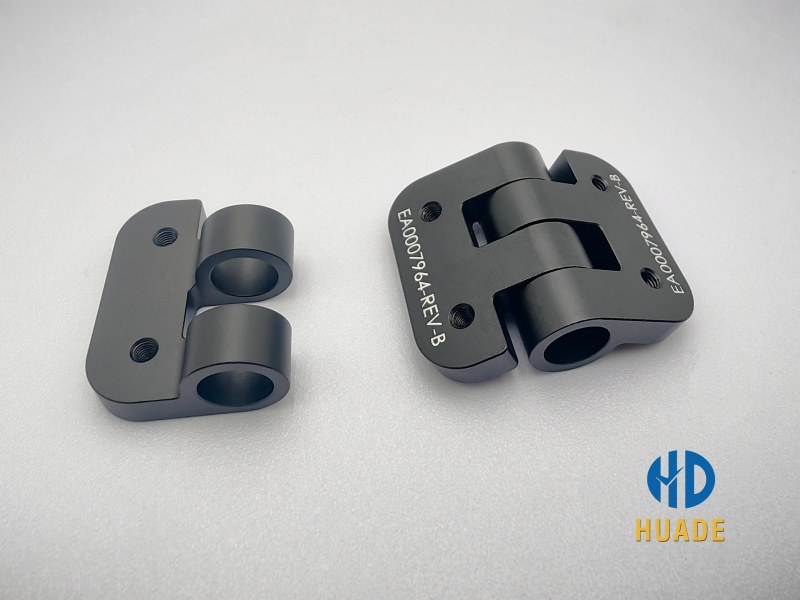
In contrast, CNC metal hinges leverage computer numerical control machining for intricate designs, enabling tolerances as tight as ±0.005 inches. This process involves milling or turning solid blocks of hinge metal, such as aluminum or stainless steel, to create custom geometries. For instance, in a real manufacturing scenario for aerospace doors, CNC machining allows for integrated features like threaded holes or spherical pivots, reducing assembly steps and potential failure points. Precision metal hinges produced this way often incorporate advanced kinematics, distributing stress evenly across the pivot to minimize friction— a principle rooted in tribology, where surface finishes like anodizing on aluminum hinges enhance lubricity.
Heavy-duty metal hinges, such as weld-on or continuous types, amplify this mechanism for load-bearing roles. Made from robust hinge metal like carbon steel, they handle shear forces exceeding 1,000 pounds, with pivot hinges offering zero torque assistance to ensure operator control in industrial gates.
Types, Uses, Components, and Considerations of Hinges
Performance: Metrics That Matter
Performance in metal hinges is quantified through metrics like cycle life, load capacity, and operational smoothness. Stainless steel hinges, prized for their corrosion resistance, achieve cycle ratings up to millions under ANSI/BHMA standards, outperforming aluminum counterparts in humid environments. Data from industrial testing shows stainless steel variants maintaining 95% of their initial torque after 500,000 cycles, thanks to their high chromium content forming a passive oxide layer.
Aluminum hinges, lighter by up to 30% than steel, shine in weight-sensitive applications, with a density of 2.7 g/cm³ versus steel’s 7.8 g/cm³. However, in a comparative scenario for automotive doors, aluminum’s lower modulus of elasticity (70 GPa vs. 200 GPa for steel) demands thicker sections to match stiffness, potentially offsetting weight savings. CNC metal hinges elevate performance by enabling custom alloys; for example, 6061 aluminum offers a yield strength of 276 MPa, suitable for precision metal hinges in electronics enclosures.
Heavy-duty metal hinges, often certified for min_faves loads like 500 pounds per hinge, incorporate features like ball bearings for reduced friction, improving efficiency by 15-20% in high-use settings. Engineers should prioritize finite element analysis (FEA) simulations to predict performance under dynamic loads, ensuring hinge metal selection aligns with operational demands.
Durability: Withstanding the Test of Time
Durability hinges—pun intended—on material choice and surface engineering. Stainless steel hinges boast superior longevity in corrosive environments, with grades like 316 resisting pitting in marine applications for over 20 years. Cold-rolled steel variants in heavy-duty metal hinges contribute to a 5% weight reduction in automotive use while enhancing fatigue resistance.
Aluminum hinges, while susceptible to galvanic corrosion when paired with dissimilar metals, gain durability through anodizing, increasing surface hardness to 400 HV. In real scenarios, like outdoor enclosures, untreated aluminum may fail after 5-7 years, whereas treated versions last 15+. Sheet metal hinges, bent from 1-3 mm gauges, offer good durability for light-duty tasks but require coatings like powder epoxy to combat wear.
Precision metal hinges from CNC processes excel in durability due to minimized internal stresses; milling avoids the work-hardening issues in stamped sheet metal hinges. Overall, durability metrics favor stainless steel for harsh conditions, with failure rates dropping 30% compared to aluminum in salt spray tests.
Custom Metal High Precision CNC Machining Hinge Pin CNC Machinery Parts with Thread
Cost: Balancing Investment and Value
Cost comparisons reveal stark differences: aluminum hinges typically range from $2-5 per unit, cheaper than stainless steel’s $4-8 due to lower raw material prices ($2-5/kg for aluminum vs. $3-6/kg for stainless). However, lifecycle costs tell a fuller story. Stainless steel’s superior durability reduces replacement frequency, making it 20-30% more cost-effective over 10 years in corrosive settings.
Sheet metal hinges, produced via high-speed fabrication, cost 30-50% less in bulk than CNC metal hinges, which incur higher setup fees for custom runs. For heavy-duty metal hinges, premium materials like brass add 15-20% to costs but justify it in high-vibration applications. Buyers should use total cost of ownership (TCO) models: for a 1,000-unit order, CNC precision metal hinges might add $0.50/unit in machining but save $2/unit in assembly efficiencies.
Failure Cases: Lessons from Engineering Mishaps
Common failures include fatigue cracking, corrosion-induced seizure, and overload deformation. In one documented case, aluminum hinges on marine vessels failed due to galvanic corrosion, leading to structural collapse after 18 months. Heavy-duty metal hinges in industrial doors often succumb to misalignment, causing pin wear and noise; studies show improper installation accounts for 40% of failures.
Sheet metal hinges may buckle under unexpected loads if gauge thickness is underspecified—increasing from 5mm to 5.5mm can boost load capacity by 20%. Precision metal hinges avoid many issues through FEA-optimized designs, but over-tight tolerances can lead to binding in thermal expansion scenarios. Mitigation involves material pairing (e.g., stainless steel pins in aluminum leaves) and regular lubrication.
Real-World Applications: From Theory to Practice
Metal hinges find diverse applications. In automotive, stainless steel hinges enable quiet, durable doors, with cycle lives exceeding 100,000 opens. Aerospace relies on CNC metal hinges for lightweight aluminum variants in access panels, reducing fuel consumption by 1-2%. Heavy-duty metal hinges secure industrial enclosures, supporting loads in manufacturing plants where vibration resistance is key.
Consumer electronics use precision metal hinges in laptops for smooth 180-degree rotation, while sheet metal hinges dominate furniture for cost efficiency. In medical devices, stainless steel ensures sterility and longevity. Sourcing managers should evaluate suppliers via ISO certifications, prioritizing those offering rapid prototyping for custom hinge metal solutions.
For engineers selecting hinges: Assess load (heavy-duty for >500 lbs), environment (stainless for corrosion), and volume (sheet metal for mass production vs. CNC for precision). Buyers, factor TCO; a 10% upfront premium on stainless steel can yield 25% savings long-term.
In conclusion, mastering metal hinges requires a blend of material science and manufacturing acumen. For those seeking expert CNC machining services that elevate precision metal hinges, aluminum hinges, and stainless steel variants, Dongguan Huade Precision Manufacturing Co., Ltd delivers cutting-edge solutions tailored to your needs. Explore our capabilities and request a quote at hdproto.com today.
 English
 Deutsch
 Español
 Français
 Português do Brasil
 Italiano