Freigabepaket prüfen
Alloy choice affects machinability, corrosion performance, regulatory needs and plating behavior. Name the grade instead of using brass as a generic callout.
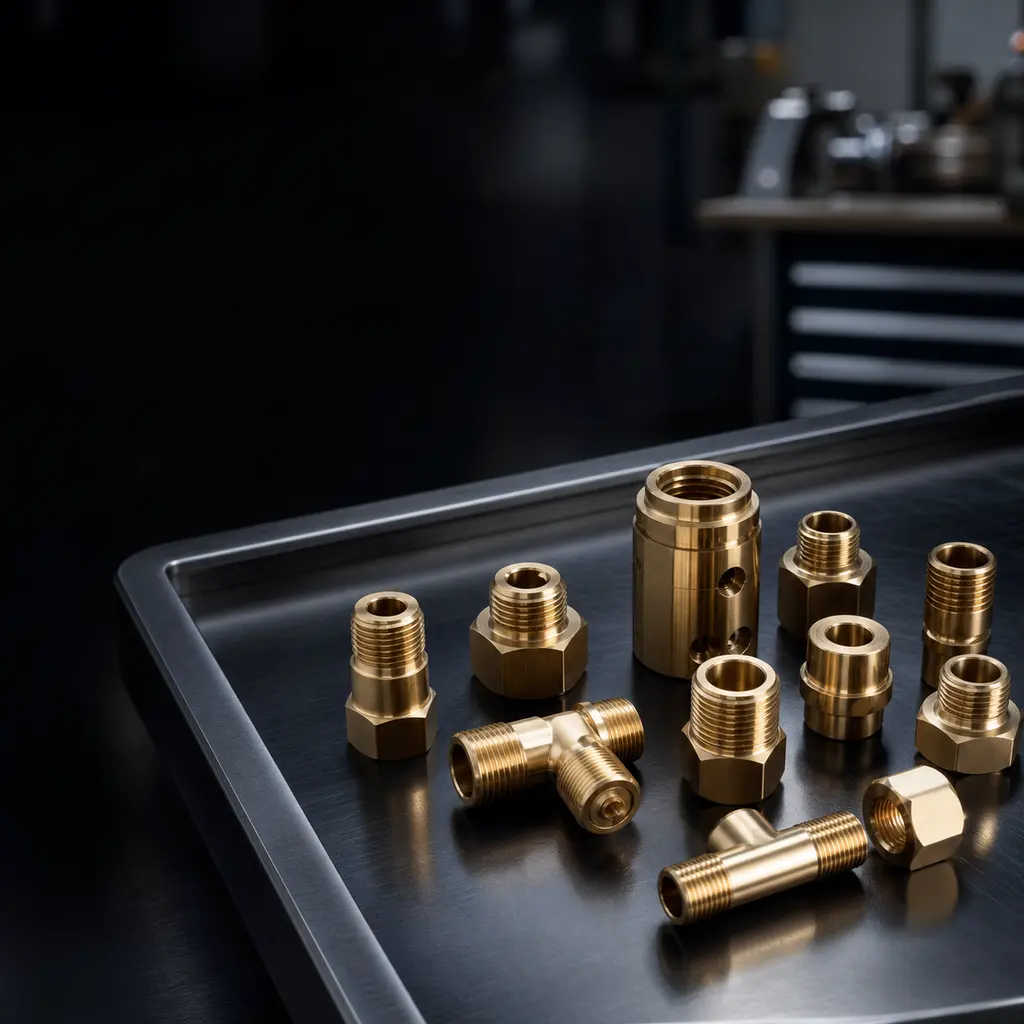
Messing-Drehteile
Wir fertigen Messing-Drehteile für Fittings, Buchsen, Kontakte und Baugruppen, bei denen Gewinde, Oberflächen und Wiederholbarkeit zählen.
Angebot anfordernMessing ist passend, wenn gute Zerspanbarkeit, Leitfähigkeit, Korrosionsverhalten oder eine hochwertige Oberfläche gefordert sind.
Manufacturing route
Alloy choice affects machinability, corrosion performance, regulatory needs and plating behavior. Name the grade instead of using brass as a generic callout.
Threads, bores and sealing faces are related to the datum that matters in the mating assembly, not simply to the easiest diameter to inspect.
The route combines bar work, chucking, drilling, boring and live tooling based on the part’s geometry and quantity.
Measurements focus on thread standard, minor and major diameters, concentricity, bore condition and any plating allowance.
Eine klare Zeichnungsrevision und Abnahmekriterien halten jede Wiederholserie unter Kontrolle.
Dichtflächen, Presssitze, Gewinde und Sichtflächen sollten früh als kritische Merkmale markiert werden.
Menge, Lieferaufteilung und Oberflächenfinish müssen gemeinsam kalkuliert werden.
Application decisions
Electrical and signal components commonly depend on controlled bore condition, thread engagement, contact surfaces and a plating specification. The RFQ should distinguish cosmetic plating from a functional contact or corrosion requirement.
A fitting drawing should identify the thread standard, sealing strategy, port geometry and pressure-test requirement. These relationships matter more than a generic “brass fitting” label.
Cross holes, flats, slots and drive features change both setup and inspection. Include their datum relationship to threads or bores so the manufacturing route can protect the functional orientation.
Engineering decision matrix
These are the inputs that change process routing, inspection effort and the usefulness of the completed part. They are not universal specifications; the drawing and service environment remain the source of acceptance requirements.
| Decision | What to review | Risk if omitted | Useful RFQ input |
|---|---|---|---|
| Brass alloy | Match machinability, corrosion exposure, lead-content requirements and plating behavior to the application. | A generic brass callout can select an alloy unsuited to water exposure, compliance needs or the finish route. | Name the grade and any material certificate or compliance requirement. |
| Thread and mating interface | Define standard, class, gauge requirement and the feature used as the functional datum. | A nominal thread note alone does not establish acceptance or orientation to a port or bore. | Provide thread callout, mating component details and any gauge or leak-test requirement. |
| Sealing or electrical surface | Identify seal lands, contact zones, roughness needs and surfaces that must remain uncoated. | Late finish decisions can change fit, conductivity or sealing behavior. | Mark functional surfaces, roughness targets, plating type and masking boundaries. |
| Secondary milling features | Plan flats, cross holes, slots and drive features relative to turned datums. | Unspecified orientation can lead to an acceptable-looking part that does not clock correctly in assembly. | Dimension secondary features from the relevant thread, bore or locating face. |
Fittings, threaded inserts, connector shells, valve components, adapters, pins, sleeves and small precision bodies are common applications when the geometry is predominantly rotational.
Yes. Flats, cross holes, slots and drive features can be added with live tooling or secondary machining when the part design requires them.
Yes. Coating type and thickness can affect fit, conductivity and masking decisions, especially on threads, contact surfaces and precision bores.