If you are comparing a China CNC machining service with local machine shops or online manufacturing platforms, the first question is rarely “Can they make the part?” Most serious buyers want to know whether the supplier can protect drawings, understand tolerance intent, communicate clearly, inspect parts properly, and ship without painful surprises.
That is exactly the pattern you see in buyer discussions such as this Reddit CNC thread about online Chinese CNC machining services. The conversation is not only about low prices. It is about trust: customs, shipping cost, NDA concerns, quality risk, design feedback, and whether an overseas quote that looks attractive will still make sense after the first article arrives.
Table of Contents
- Why Buyers Look at China CNC Machining
- What Reddit Buyers Worry About
- How to Screen a China CNC Machining Service
- RFQ Checklist for Accurate Quotes
- Quality Control Before Shipping
- Shipping, Customs, and Total Landed Cost
- Red Flags and Green Flags
- FAQ
Why Buyers Look at China CNC Machining
China remains one of the strongest regions for CNC machining because the supplier base is deep. A qualified factory can combine CNC milling, CNC turning, surface finishing, inspection, assembly, and international logistics under one roof or within a mature local supply chain.
For buyers sourcing prototypes, low-volume production, or custom metal components, the main advantages are:
- Competitive machining cost for aluminum, stainless steel, brass, copper, titanium, and engineering plastics.
- Faster scaling from prototype to batch production when drawings are stable.
- Access to finishing processes such as anodizing, bead blasting, polishing, black oxide, passivation, powder coating, and plating.
- Flexible engineering support for DFM, tolerance review, and material substitutions.
The tradeoff is that you must qualify the supplier more carefully. A poor sourcing process can turn a cheap quote into a delayed project, rejected batch, or expensive rework.
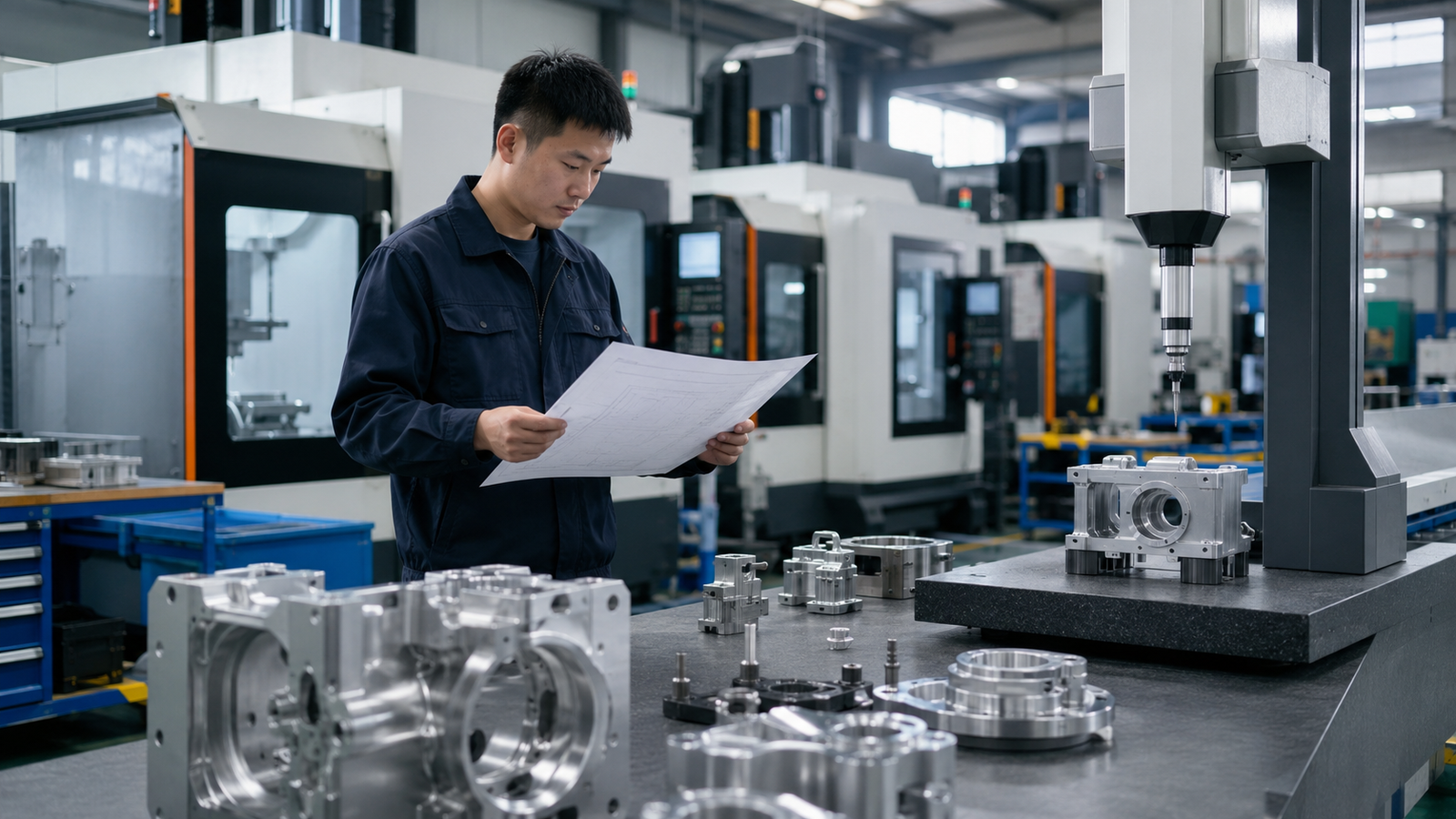
What Reddit Buyers Worry About
The Reddit discussion reflects what many engineers and product teams think privately when they first evaluate overseas machining. The comments center on practical sourcing risk rather than simple country stereotypes.
Price That Looks Too Good
Low price can be legitimate when a shop has efficient equipment, lower overhead, and local material access. But if a quote is dramatically cheaper than every other option, ask what is excluded. The supplier may have skipped inspection time, assumed loose tolerances, ignored finishing requirements, or quoted slow sea freight instead of express delivery.
Communication and Drawing Interpretation
Clear English is helpful, but technical communication matters more. A reliable supplier should ask about critical dimensions, mating surfaces, surface finish, thread standards, material grade, tolerance stack-up, and inspection requirements. If a factory accepts every file instantly without questions, that is not always a good sign.
IP and NDA Concerns
Buyers often worry about sending CAD files overseas. The practical answer is to combine legal protection with sourcing discipline. Use an NDA, remove unnecessary proprietary context from early RFQs, watermark drawings if needed, and avoid sending full product assemblies when only a component quote is required.
Quality Verification
The strongest concern is whether the parts will match the drawing. This is where you should separate “we can make it” from “we can prove it.” Ask for first article inspection, dimensional reports, material certificates when relevant, and clear photos before shipment.
Shipping, Customs, and Timing
Shipping can change the real cost. Small prototype parts may ship efficiently by DHL, FedEx, UPS, or air freight. Heavy parts, large batches, or pallets may require different Incoterms and customs planning. A reliable supplier should help you estimate the landed cost, not only the ex-works machining price.
How to Screen a China CNC Machining Service
Before you send a production order, screen suppliers with the same seriousness you would use for a local vendor.
1. Confirm They Are a Real CNC Factory
Ask for factory photos, machine lists, inspection equipment, and examples of similar parts. A trading company is not automatically bad, but you should know whether you are dealing directly with the manufacturer or through a middle layer.
Look for evidence of:
- 3-axis, 4-axis, or 5-axis CNC machining capability matching your geometry.
- CNC turning or mill-turn capability if the part has rotational features.
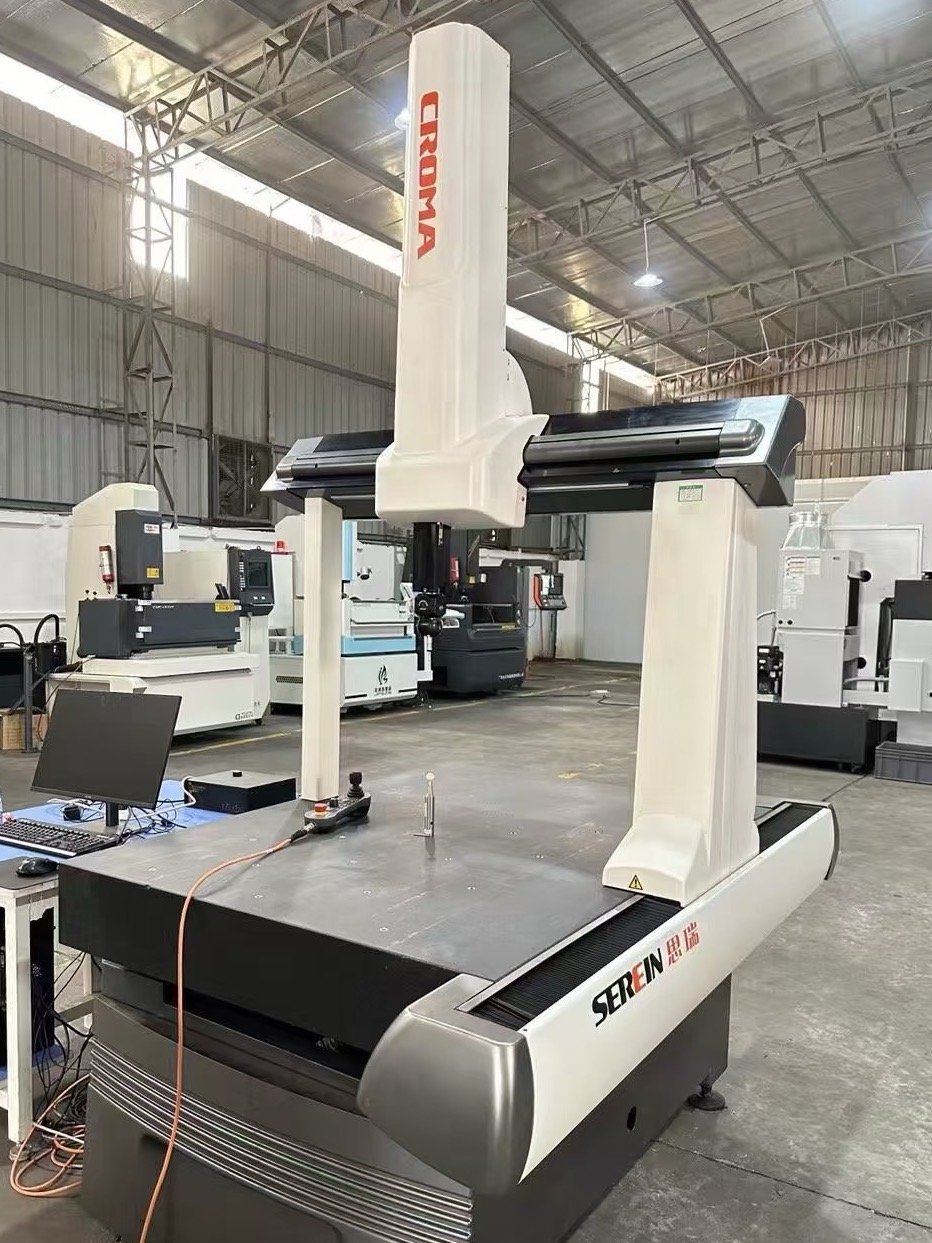
- CMM, height gauges, micrometers, surface roughness testers, or optical inspection tools.
- Experience with your material and finish.
2. Test Their Engineering Response
Send one representative drawing and watch how the supplier replies. Good signs include questions about tolerance priorities, thread depth, burr control, datum references, cosmetic surfaces, and finish masking.
If the supplier only replies with “yes, can make” and a price, ask for a short manufacturability review. A good China CNC machining service should be able to explain cost drivers and suggest changes without weakening the part.
3. Ask for Tolerance Capability by Feature
Do not accept a generic claim such as “we can hold +/-0.005 mm” across the whole part. Tolerance capability depends on feature size, material, machine setup, tool access, thermal stability, and inspection method.
Ask for tolerance confirmation feature by feature:
| Feature Type | Buyer Should Clarify | Supplier Should Confirm |
|---|---|---|
| Bearing bore | Diameter, roundness, surface finish | Machining method and inspection tool |
| Flat sealing face | Flatness, roughness, no scratches | Fixture plan and surface protection |
| Threaded hole | Standard, depth, go/no-go gauge | Tap type and gauge availability |
| Cosmetic surface | Visible area, finish standard | Handling and packaging method |
4. Start With a Prototype or First Article
For a new supplier, do not begin with a full production batch unless the part is low-risk. Start with one prototype, a first article, or a small pilot run. Review the inspection report, photos, finish quality, packaging, and communication speed before approving volume production.
5. Check Whether They Can Scale
A shop that is excellent at one-off prototypes may not be the best fit for 2,000 repeat parts. Ask about fixture strategy, batch inspection plan, material procurement lead time, and how they control revision changes.
RFQ Checklist for Accurate Quotes
The quality of your RFQ determines the quality of the quote. If you send only a STEP file, many suppliers will quote with assumptions. That creates risk later.
Include These Files
- 3D CAD file, such as STEP or IGES.
- 2D drawing with tolerances, datum references, threads, and critical dimensions.
- Material grade and any required standard.
- Surface finish requirements, including color, texture, roughness, and cosmetic expectations.
- Quantity, target lead time, and expected delivery country.
- Inspection requirements, such as CMM report, first article report, or material certificate.
Define What Matters Most
Not every dimension needs tight tolerance. Mark critical-to-function features clearly so the supplier can focus machining and inspection resources where they matter. This improves quality and can reduce cost.
Ask for a Quote Breakdown
Request separate line items for machining, material, finishing, inspection, tooling or fixture cost, and shipping. This makes it easier to compare suppliers fairly.
Quality Control Before Shipping
For overseas CNC machining, pre-shipment verification is essential. Once parts leave the factory, fixing problems becomes slower and more expensive.
First Article Inspection
For new projects, ask the supplier to machine and inspect the first article before completing the full batch. The report should match the drawing, include actual measured values, and highlight any deviation before approval.
Photos and Video
Ask for clear photos of key features, finished surfaces, threads, packaging, and batch quantity. For complex parts, a short video showing inspection or assembly fit can reduce uncertainty.
Material and Finish Verification
For regulated or performance-critical parts, request material certificates. For finishing, define acceptance criteria before production: color range, gloss, coating thickness, masking zones, and allowable cosmetic marks.
Shipping, Customs, and Total Landed Cost
The quoted machining price is only one part of the buying decision. Always calculate total landed cost.
Compare Incoterms
Common Incoterms include EXW, FOB, CIF, DAP, and DDP. For small prototype orders, many buyers prefer express shipping arranged by the supplier. For larger orders, your freight forwarder may be more cost-effective.
Estimate Duties and Import Requirements
Before placing an order, confirm HS code, declared value, destination duties, and whether any special documentation is needed. This is especially important for aerospace, medical, automotive, defense-adjacent, or dual-use components.
Protect Parts in Packaging
Precision machined parts can be damaged by poor packaging. Ask for individual wrapping, thread protection, surface protection, desiccant if needed, and rigid cartons or wooden crates for heavier shipments.
Red Flags and Green Flags
Red Flags
- The supplier refuses to review drawings before quoting.
- The price is much lower but excludes inspection, finishing, or shipping.
- They cannot explain how critical tolerances will be inspected.
- They promise every material, finish, and tolerance without limitation.
- They avoid written confirmation of revisions, lead time, or payment terms.
- They pressure you to order a full batch before a sample.
Green Flags
- The supplier asks technical questions before quoting.
- They provide DFM feedback and identify cost-saving options.
- They can show relevant case studies or similar part experience.
- They offer first article inspection and dimensional reports.
- They discuss shipping terms and packaging before payment.
- They maintain revision control and written order confirmation.
A Practical Supplier Qualification Workflow
Use this workflow when evaluating any China CNC machining service:
- Shortlist three to five suppliers based on capability, material experience, and communication quality.
- Send the same RFQ package to each supplier.
- Compare not only price, but assumptions, lead time, inspection plan, and shipping terms.
- Choose one or two suppliers for prototype or first article production.
- Review physical parts, reports, finish quality, packaging, and delivery performance.
- Approve batch production only after the supplier has proven repeatable execution.
This approach costs more time at the beginning, but it protects the project when production volume grows.
When Huade Is a Good Fit
Huade Precision supports custom CNC machined parts for buyers who need engineering communication, CNC milling, CNC turning, surface finishing, inspection, and international shipment support from China.
We are a strong fit when your project needs:
- Custom aluminum, stainless steel, brass, copper, titanium, or plastic parts.
- Prototype to low-volume or medium-volume production.
- Surface finishing such as anodizing, bead blasting, polishing, passivation, black oxide, powder coating, or plating.
- First article inspection and dimensional reporting.
- Practical DFM feedback before production.
If your drawing is ready, send the STEP file, 2D drawing, quantity, material, finish, and delivery country. If your design is still changing, share the current revision and the features that are most critical to function.
FAQ
Is a China CNC machining service reliable?
Yes, a China CNC machining service can be reliable when you qualify the supplier properly. The key is to verify factory capability, engineering communication, inspection process, shipping terms, and first article quality before placing a large order.
Why are Chinese CNC machining quotes often cheaper?
Quotes can be lower because of local supply chains, equipment utilization, labor cost structure, and competition among factories. However, compare total landed cost, including inspection, finishing, shipping, duties, and possible rework risk.
Should I send my CAD files to a Chinese CNC supplier?
For normal custom part sourcing, sending CAD files is usually necessary. Protect yourself with an NDA, share only the files required for quoting, remove unrelated assembly context, and use clear revision control.
What should I ask before ordering CNC machined parts from China?
Ask about material availability, machining process, tolerance limits, inspection method, finishing process, lead time, shipping method, Incoterms, payment terms, and what happens if parts do not meet the drawing.
How do I avoid quality problems with overseas CNC machining?
Use complete drawings, mark critical dimensions, start with a prototype or first article, request inspection reports, approve samples before batch production, and confirm packaging requirements before shipment.