Custom Aluminum CNC Milling Services
3-axis, 4-axis and 5-axis milling for pockets, thin walls, precision bores, mounting features and cosmetic faces in 6061, 7075 and 6063 aluminum.
Huade provides custom aluminum machining services for housings, brackets, heat sinks, shafts and other CNC aluminium parts. Send your drawing for an engineering review covering alloy, datums, critical tolerances, finishing and inspection.
Project Fit
Prototype to Production
Processes
Milling / Turning
Aluminum alloys
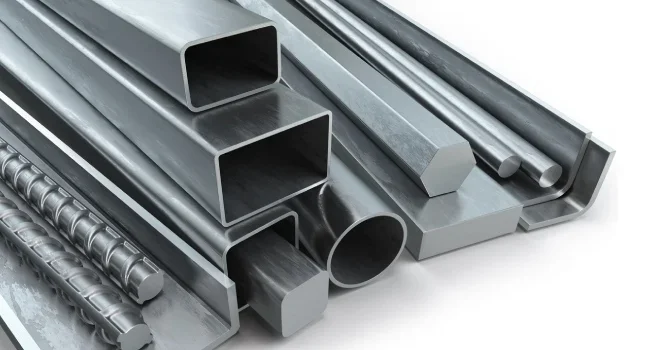
6061 / 7075 / 5052 / 6063 / 2024 / 2017
Order types
Custom prototypes, rapid samples, small batch and production runs
Part types
Housings, enclosures, heatsinks, shafts, spacers and standoffs
Finishes
Clear, black and hard anodizing, bead blasting, polishing and sandblasting
Huade supports aluminum CNC manufacturing from prototype through repeat production. Our custom aluminum machining services combine material review, milling or turning, secondary finishing and dimensional inspection in one drawing-based workflow. For prismatic housings, plates, brackets and heat sinks, compare the details on our CNC milled parts page.
3-axis, 4-axis and 5-axis milling for pockets, thin walls, precision bores, mounting features and cosmetic faces in 6061, 7075 and 6063 aluminum.
Precision turning for shafts, spacers, sleeves, bushings, standoffs, pins, fittings, connectors and threaded aluminium turned parts.
Drawing-based process planning for functional datums, close-tolerance fits, thin walls, threaded features and documented inspection requirements.
Prototype and production support from a direct aluminum parts manufacturer coordinating machining, finishing, inspection and export-ready packing.
Use the alloy-specific pages to compare machinability, deformation risk, finishing options and real project evidence before specifying your material.
CNC 6061 aluminum milling and turning for housings, brackets, heat sinks, fixtures and cosmetic components that need balanced strength, corrosion resistance and anodizing response.
Review Alloy Capability → 7075-T6 / T651High-strength 7075 CNC milling and turning for UAV, aerospace-style, robotics and performance parts where strength-to-weight ratio and fatigue performance drive the material choice.
Review Alloy Capability →Aluminum is a strong fit for lightweight structural parts, thermal components, cosmetic housings and precision turned components. Our team can review manufacturability, tolerance risk, thread strategy, anodizing allowance and visible-surface requirements before machining begins.
Upload Drawings For ReviewCNC aluminum housings and electronics enclosures
Aluminum heatsink milling and thermal plates
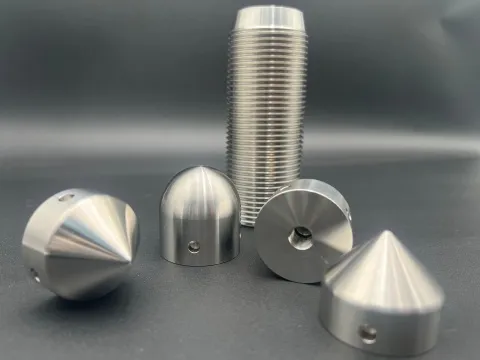
Aluminium turned shafts, spacers and standoffs
Aerospace aluminum brackets and lightweight frames
Automotive aluminum CNC parts and fixtures
Custom black anodized aluminum prototypes
Aluminum combines low weight, good corrosion resistance, useful thermal conductivity and strong machinability. For round components, CNC turning can produce clean diameters, shoulders, grooves, threads and bores efficiently, often with lower per-piece cost than milling a similar rotational geometry.
Common turning alloys include 6061 for balanced strength and finish, 6082 for structural components, 7075 for high-strength lightweight parts and 2011 for highly machinable precision details when the application permits.
6061 is a common starting point for housings, brackets, fixtures and turned components that need good machinability, corrosion resistance and anodizing response.
7075 suits highly loaded, lightweight parts when its higher strength justifies the material cost and the design does not require the same corrosion or welding characteristics as 6061.
Keep wall thickness consistent to reduce distortion after turning.
Avoid unnecessarily deep internal cavities that increase tool wear and cycle time.
Use radiused internal corners instead of sharp corners where the function allows.
Apply tight tolerances only to sealing, bearing, mating and alignment features.
High-precision aluminum turning typically needs diameter checks, thread gauges, concentricity or runout checks, surface roughness measurement and material certification when required. After machining, aluminium turned parts can be bead blasted, clear anodized, black anodized, hard anodized, polished or laser marked depending on the application and drawing notes.
Selecting the right aluminum alloy determines the success of your part. Use this practical reference for CNC machining aluminum 6061 parts, 7075 aluminum machining services, 5052 aluminum sheet machining, 6063 aluminum CNC parts, 2024 aluminum alloy machining and aluminium turned parts.
| Alloy Grade | Yield Strength | Tensile Strength | Hardness |
|---|---|---|---|
| 1100-H14 | ~110 MPa | ~130 MPa | ~32 HB |
| 2011-T3 | ~280 MPa | ~360 MPa | ~95 HB |
| 3003-H14 | ~130 MPa | ~160 MPa | ~42 HB |
| 4032-T6 | ~320 MPa | ~390 MPa | ~120 HB |
| 5052-H32 | ~180 MPa | ~230 MPa | ~60 HB |
| 6061-T6 | ~270 MPa | ~310 MPa | ~93 HB |
| 7075-T6 | ~480 MPa | ~560 MPa | ~150 HB |
* Aluminum hardness is typically measured on the Brinell scale due to its relative softness compared with steel.
Use this cross-reference chart to match American standards with European and Chinese material equivalents.
| AA / ASTM | DIN / EN | GB | Key Characteristics |
|---|---|---|---|
| 6061 | AlMg1SiCu / 3.3211 | 6061 / LD30 | The industry standard. Good weldability, corrosion resistance and anodizing response. |
| 7075 | AlZn5.5MgCu / 3.4365 | 7075 / LC4 | One of the strongest aluminum alloys. High fatigue strength for aerospace and structural parts. |
| 5052 | AlMg2.5 / 3.3523 | 5052 / LF2 | Excellent corrosion resistance and formability for sheet, chassis and marine-adjacent parts. |
Use this matrix to match aluminum alloys with weight reduction, heat transfer, anodized appearance, or high-strength structural loading.
| Application | Recommended Material | Why This Material Works | Typical CNC Process | Finish / Risk Note |
|---|---|---|---|---|
| Aerospace Brackets & Light Frames | 7075-T6 or 6061-T6 | High strength-to-weight ratio keeps assemblies light while maintaining stiffness. | 3-axis / 5-axis milling, drilling | 7075 is less corrosion-resistant than 6061; specify anodizing or conversion coating. |
| EV Battery Housings & Heat Sinks | 6061-T6 or 6063-T5 | Good thermal conductivity and stable machining for fins, covers, and cooling plates. | High-speed milling, pocketing, tapping | Support thin fins and radius internal corners to reduce chatter. |
| Robotics End Effectors | 6061-T6 | Light, easy to machine, and strong enough for grippers and adapter plates. | Milling, boring, thread milling | Use steel inserts for threads that will be assembled repeatedly. |
| Consumer Electronics Housings | 6061-T6 or 5052 | Machines clean cosmetic surfaces and accepts anodizing. | CNC milling, engraving, chamfering | Anodized color can vary by alloy and batch; approve samples for visible parts. |
| Precision Fixtures & Plates | MIC-6 or 6061-T6 | Stable, lightweight plates reduce handling time and fixture weight. | Face milling, dowel holes, threaded features | Choose cast tooling plate when flatness is critical. |
Match the grade to the part's real job first: strength, heat, wear, corrosion, insulation, transparency, or cosmetic finish.
Material choice changes tolerance risk, burr control, wall thickness, thread strategy, and finishing route.
Share the operating environment, mating parts, finish expectations, and inspection requirements with the drawing.
Real aluminum projects using 6061, 7075, cosmetic machining, thin-wall control, turning, painting, polishing, and chrome plating.
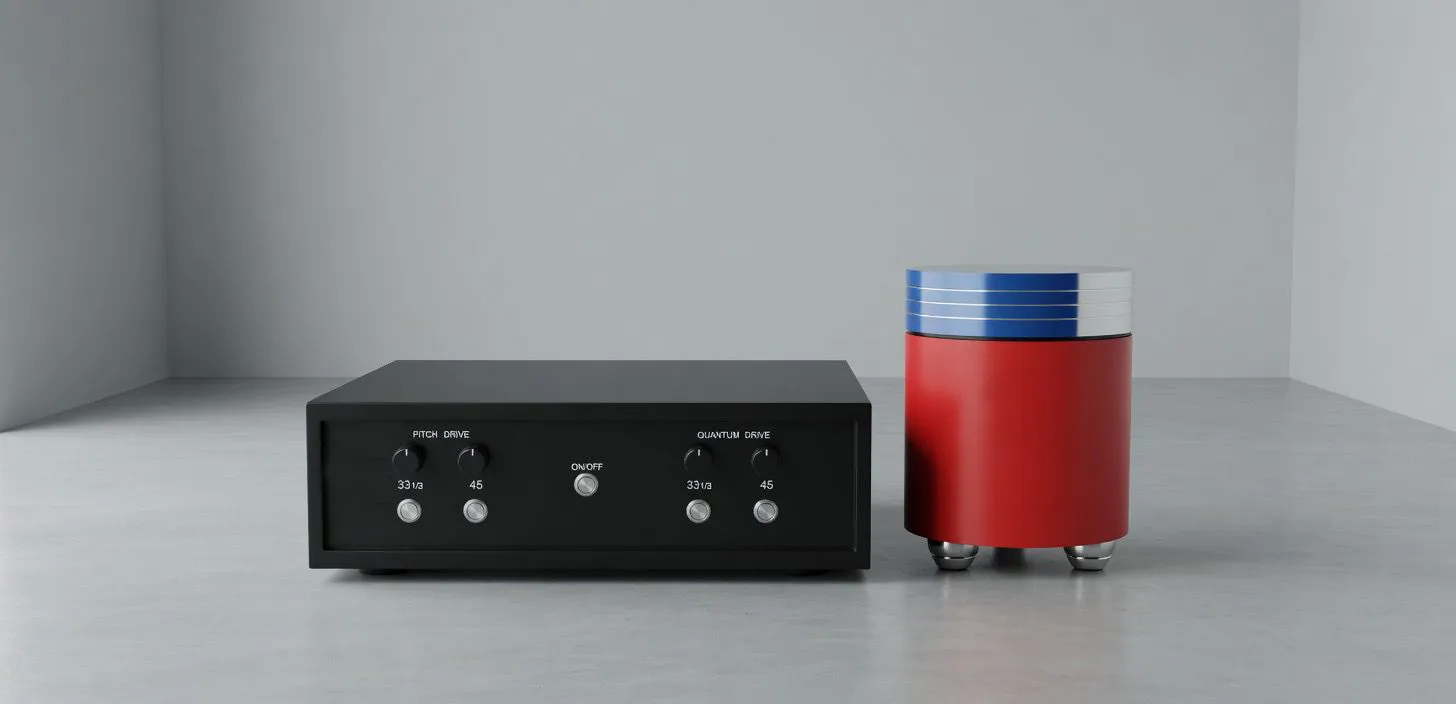
A full visible 6061 aluminum component set combining CNC machining, black baking paint, Ferrari red automotive paint, mirror polishing, and chrome plating.
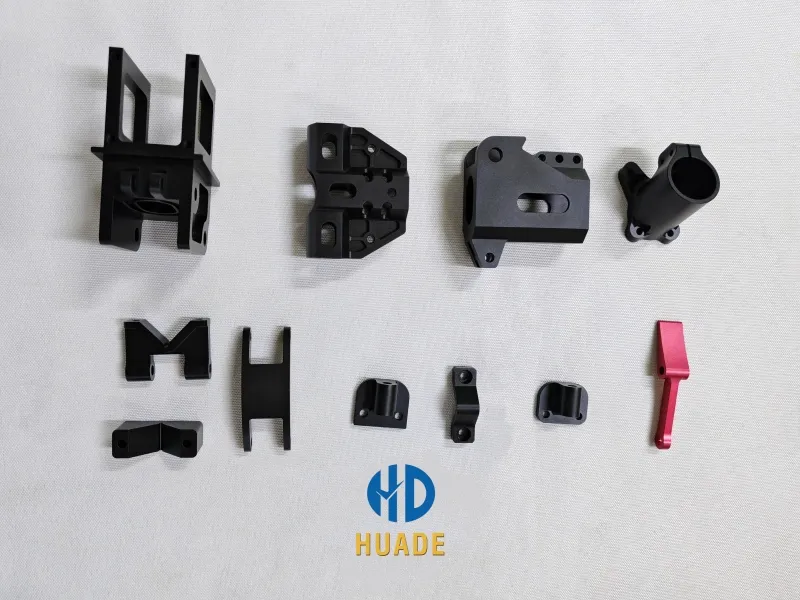
How Huade delivered 5 custom 7075 hollow drone fasteners in 7 days at +/-0.01 mm tolerance before a major drone exhibition.
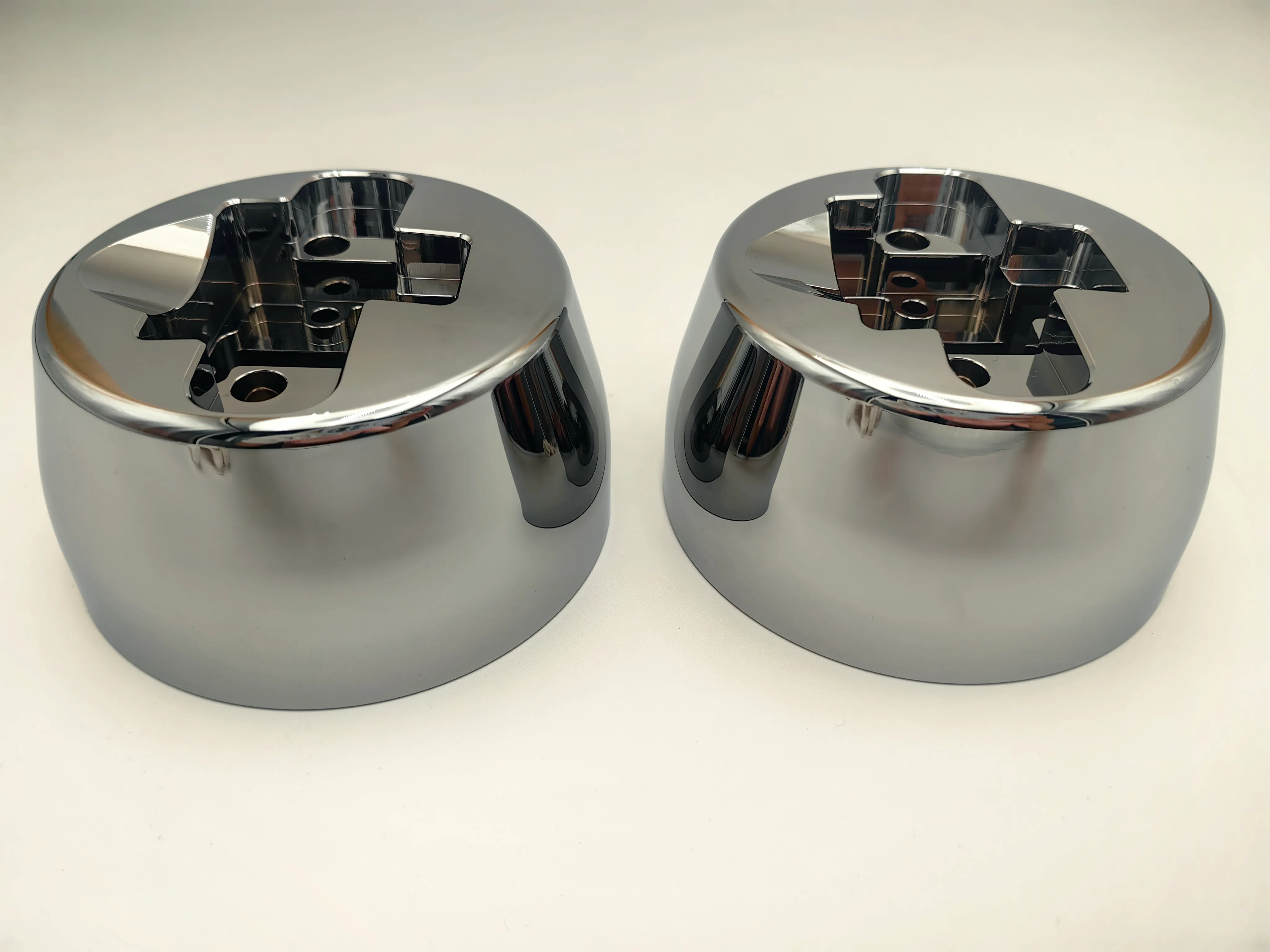
A photo-backed case showing appearance-critical 6061 aluminum machining for premium coffee equipment, with polished surfaces, chrome finishing, and functional internal geometry.
A 4+ year supply relationship built on cosmetic control for thin long curved speaker parts, bare 7075 and 5074 deliveries, and scratch-free visible surfaces.
A useful drawing separates general dimensions from the features that control fit, sealing and appearance. Include these requirements before requesting prototype or repeat-production pricing.
Identify the faces and holes that locate the part in its assembly. Thin walls and deep pockets need a workholding and machining review so inspection reflects the finished part, not only its clamped condition.
For cold-plate parts, housings and manifolds, define flatness, surface roughness, seal grooves and internal burr acceptance. Specify cleanliness and leak-test requirements separately from dimensional inspection.
Mark fits, threads, contact faces and surfaces that require masking. Confirm which dimensions apply after anodizing, and provide an approved appearance sample when cosmetic consistency matters.
Sourcing thermal hardware? Read our AI server liquid-cooling machining guide for cold-plate, manifold and inspection RFQ requirements.
Aluminum's natural oxide layer provides basic protection, but post-processing improves durability, appearance and corrosion resistance.
Protects against corrosion and supports dyed colors such as black, red and blue for cosmetic aluminum parts.
Creates a thicker oxide layer for wear resistance, dielectric behavior and demanding industrial use.
Creates a uniform matte texture and is often used before anodizing visible machined aluminum components.
A complete RFQ helps us price custom aluminum parts accurately and flag design risks early. Include these items when possible.
Send STEP or STP files plus a 2D PDF for critical tolerances, threads, flatness, runout, surface roughness and inspection notes.
Specify the alloy and temper, finish specification, color and masked surfaces. Mark dimensions that must be met after anodizing and request material records where needed.
Share prototype and repeat quantities, mating parts and delivery needs. Define first-article reports, sampling, cleanliness and any separately required assembly or leak testing.
Yes. Huade machines custom aluminum parts in 6061, 7075, 5052, 6063, 2024 and 2017 alloys, including prototypes, turned parts, milled parts, small batches and production components.
Aluminium turned parts are round or rotational components made on CNC lathes or turning centers. Common examples include shafts, spacers, bushings, standoffs, sleeves, pins, connectors and threaded components.
Yes. Common finishing routes include clear anodizing, black anodizing, hard anodizing, bead blasting, sandblasting, polishing and laser marking when required by the drawing.
Send a STEP, STP, IGS or X_T 3D file plus a 2D drawing if tolerances, threads, finish, material grade, inspection points or anodized color are important.
6061 is a common starting point for housings, brackets and general-purpose machined parts. Consider 7075 when the design requires higher strength, then review corrosion exposure, finish and material condition. Specify the approved alloy and temper on the drawing; grades are not interchangeable without approval.
Yes. Huade is a custom aluminum parts manufacturer supporting prototypes, bridge quantities and repeat production with milling, turning, finishing, inspection and export packing coordinated from the drawing.
Huade can review drawing-based cold-plate components, manifold blocks and thermal hardware for CNC machining. Specify the approved alloy, wetted surfaces, seal geometry and inspection criteria. Joining, assembly, leak testing and thermal validation require a separately confirmed scope.
Identify critical dimensions after finishing and mark masking requirements for threads, fits, sealing faces and electrical contacts. Include flatness and surface roughness where needed; a general dimensional tolerance does not define them. Feasibility is confirmed against the material, geometry and inspection plan.
Upload your 3D CAD files today. Our engineering team will review your aluminum alloy, turning or milling scope, tolerance, finish and production quantity, then provide DFM feedback with rapid pricing.