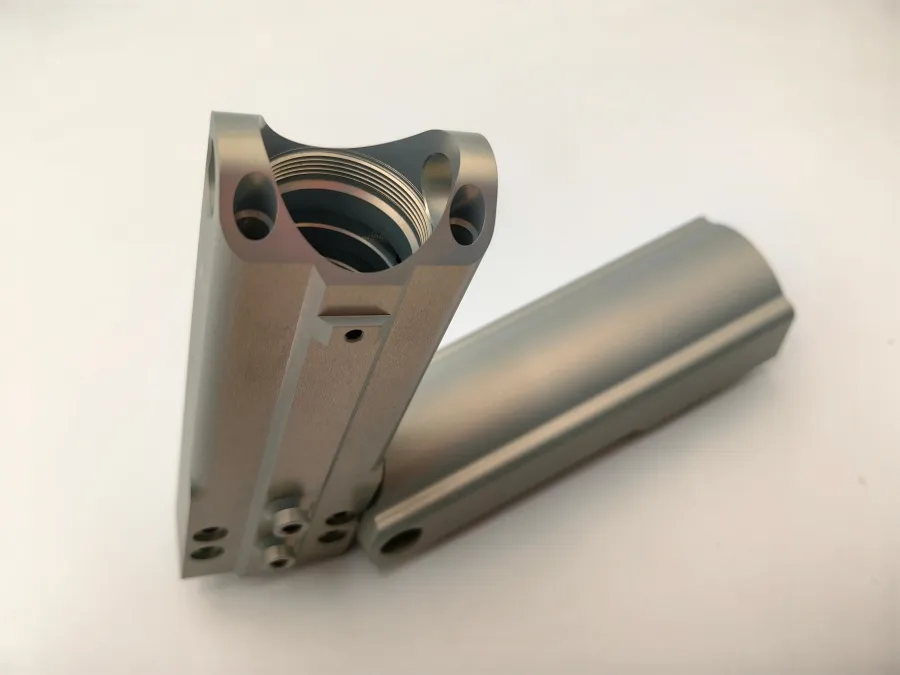
Corrosion Resistance & Strength

CNC Machining
Stainless Steel

Stainless steel is the ultimate choice for parts requiring exceptional corrosion resistance, high tensile strength, and sterile environments. From austenitic 304 and 316L for medical devices to martensitic alloys for high-wear tooling, we deliver uncompromising precision.

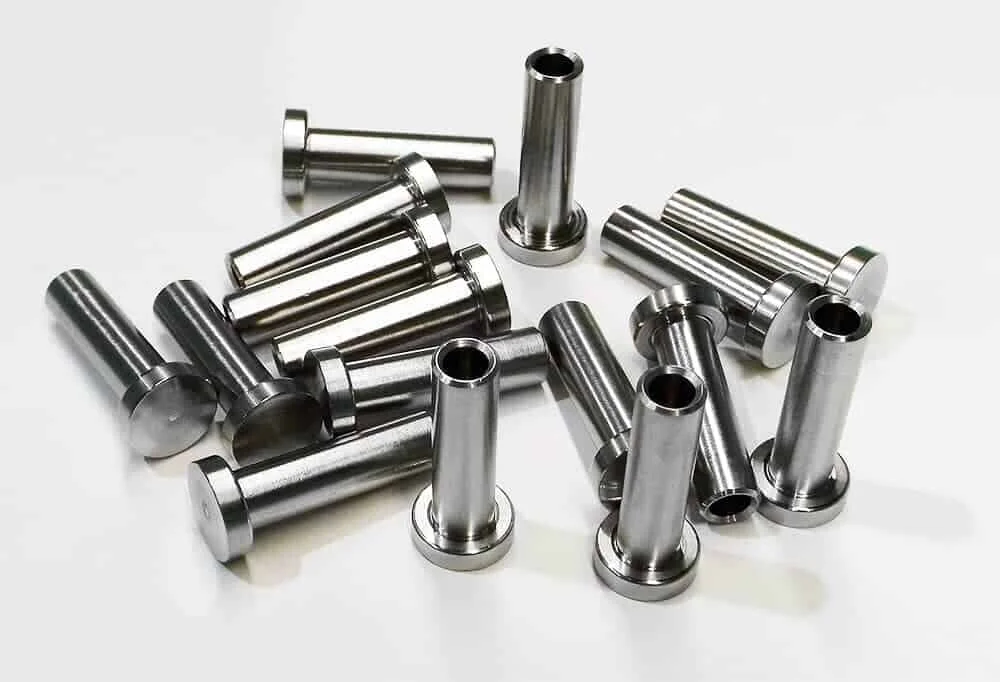
Precision CNC Machined Stainless Steel Pins and Sleeves
316L Precision Turning

Core Mechanical Properties

Selecting the correct stainless steel grade is a balance between machinability and environmental resistance. Below are the typical mechanical properties for the most widely used CNC machined grades.

Alloy Grade Yield Strength Tensile Strength Hardness (Rockwell B)
303 (Free-Machining) ~ 240 MPa ~ 600 MPa ~ 85 HRB
304 (Standard) ~ 205 MPa ~ 515 MPa ~ 80 HRB
316L (Marine/Medical Grade) ~ 170 MPa ~ 485 MPa ~ 79 HRB

International Grade Comparison

Ensure precise material sourcing globally. Match American standards (AISI/ASTM) with European (DIN/EN) and Chinese (GB) stainless steel equivalents.

AISI / ASTM (USA) DIN / EN (Europe) GB (China) Key Characteristics
303 1.4305 / X8CrNiS18-9 Y1Cr18Ni9 Contains added sulfur to drastically improve machinability. Slightly lower corrosion resistance than 304. Ideal for high-volume shafts, gears, and fittings.
304 1.4301 / X5CrNi18-10 06Cr19Ni10 The most common austenitic grade. Excellent corrosion resistance and formability. Often used in kitchen equipment and general industrial enclosures.
316 / 316L 1.4404 / X2CrNiMo17-12-2 022Cr17Ni12Mo2 Contains molybdenum for severe corrosion resistance (especially against chlorides and salt water). The standard for marine, pharmaceutical, and surgical implants.
Proven Performance

Hardcore Industrial Applications

When parts must resist harsh chemicals, bodily fluids, or highly corrosive marine environments without degrading, stainless steel is mandatory.

Surgical Instruments & Implants

Machined from 316L or 17-4 PH, these medical devices require exceptional biocompatibility, high strength, and the ability to withstand repeated high-temperature autoclave sterilization.

Marine Hardware & Fluid Valves

Precision CNC turned 316L fittings, pump housings, and subsea connectors resist pitting and crevice corrosion when continuously exposed to harsh saltwater environments.

Food & Pharma Processing

Food-grade 304 and 316 stainless steel components are heavily utilized for mixing blades, hygienic manifolds, and packaging equipment to ensure zero contamination.

Expert Machining Tips

Stainless steel is infamous for rapid work hardening and poor thermal conductivity. Huade engineers implement rigorous protocols to extend tool life and ensure perfect finishes:

  • 1

    Never Let the Tool Dwell

    If a cutting tool rubs against stainless steel without cutting, the surface instantly work-hardens, making subsequent passes nearly impossible. We program aggressive, continuous feed rates to cut beneath the hardened layer.

  • 2

    Sharp Tools with Positive Rake

    Unlike carbon steel, stainless requires extremely sharp cutting edges with positive rake angles. This ensures a clean shearing action rather than pushing the metal, reducing heat generation and built-up edge (BUE).

  • 3

    High-Pressure Coolant is Mandatory

    Because stainless steel conducts heat poorly, the cutting heat goes directly into the tool rather than the chips. We use high-pressure, through-coolant systems to blast heat away and aggressively evacuate chips.

Top 3 Surface Treatments

While stainless steel resists rust naturally, CNC machining can embed trace iron into the surface or leave tooling marks that compromise sterility or aesthetics.

1. Passivation (ASTM A967)

A critical chemical bath (using nitric or citric acid) that strips free iron and contaminants from the surface, massively accelerating the formation of the natural protective chromium-oxide layer.

2. Electropolishing

An electrochemical process that strips away the microscopic peaks of the surface. This creates an ultra-smooth, highly reflective, and sterile finish—mandatory for surgical and pharmaceutical parts.

3. Bead Blasting / Mechanical Polishing

To erase CNC tooling lines and provide a uniform aesthetic, we offer fine glass bead blasting for a premium matte finish, or hand/robotic polishing for a high-gloss, mirror-like appearance.

Ready To Machine Stainless Steel?

Start Your Manufacturing RFQ

Upload your 3D CAD files today. Our engineering team will review your stainless specifications and provide a free DFM report along with rapid pricing.