CNC Machining
ABS Plastic
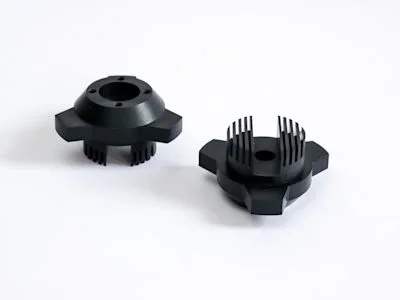
ABS (Acrylonitrile Butadiene Styrene) is the most widely used engineering thermoplastic for CNC machining. Renowned for its exceptional impact resistance, high machinability, and excellent dimensional stability, it is the perfect material for functional prototypes, electronic housings, and custom test fixtures.
Core Mechanical Properties
Machine-grade ABS is typically extruded into solid billets, offering highly consistent mechanical properties without the flow lines or internal voids found in molded parts. Below is the typical data for machined ABS.
| ABS Type | Tensile Strength | Impact Strength (Izod) | Heat Deflection (HDT) |
|---|---|---|---|
| General Purpose | 40 - 50 MPa | 200 - 300 J/m | 85°C - 95°C |
| Flame Retardant (V-0) | 35 - 45 MPa | 150 - 250 J/m | 75°C - 85°C |
| High-Heat (Automotive) | 40 - 50 MPa | 150 - 200 J/m | 100°C - 110°C |
Industry Standard Comparison
While plastics do not use national metal grades, ensuring the correct ABS formulation and standard compliance is critical for safety and performance.
| Material Classification | ISO / ASTM Standard | Flammability Rating | Key Characteristics |
|---|---|---|---|
| General Purpose ABS | ISO 2580 / ASTM D4673 | UL94 HB | The most widely machined ABS billet. Excellent balance of impact resistance, machinability, and cost-effectiveness for everyday components. |
| Flame Retardant ABS | ISO 2580 / ASTM D4673 | UL94 V-0 | Contains specific halogenated or non-halogenated additives to self-extinguish. Mandatory for internal enclosures of high-voltage electronics. |
| High-Heat ABS | ISO 2580 / ASTM D4673 | UL94 HB | Formulated to withstand higher ambient temperatures before deforming. Heavily utilized for automotive interior prototypes and under-hood testing. |
Application Fit Matrix
ABS is a practical CNC plastic for prototype housings, jigs, and functional mockups where impact resistance and easy finishing matter.
| Application | Recommended Material | Why This Material Works | Typical CNC Process | Finish / Risk Note |
|---|---|---|---|---|
| Prototype Enclosures | ABS Sheet or Block | Impact-resistant, easy to machine, and simple to paint. | Milling, drilling, tapping | Thin snap features are usually better molded than machined. |
| Automotive Interior Mockups | ABS | Good toughness and familiar product feel. | 3-axis milling, trimming, engraving | Heat exposure can warp ABS. |
| Assembly Jigs & Guards | ABS | Lightweight and quick to modify. | Milling, slotting, drilling | Use inserts for repeated tightening. |
| Consumer Product Samples | ABS | Accepts sanding, painting, and bonding. | Milling, routing, finishing | Specify color and texture for visible parts. |
| Low-Load Mechanical Covers | ABS | Adequate strength for covers and non-structural brackets. | Milling, countersinking, chamfering | Design radii around screw bosses. |
Selection Rule
Match the grade to the part's real job first: strength, heat, wear, corrosion, insulation, transparency, or cosmetic finish.
DFM Reminder
Material choice changes tolerance risk, burr control, wall thickness, thread strategy, and finishing route.
Quote Tip
Share the operating environment, mating parts, finish expectations, and inspection requirements with the drawing.
Expert Machining Tips
While highly machinable, plastic generates heat rapidly. If heat builds up, ABS will melt, smear, and fuse to the cutter. Huade engineers employ specific strategies to ensure clean cuts:
- 1
Single/Double-Flute Sharp Tooling
We strictly use ultra-sharp, uncoated carbide end mills with only 1 or 2 flutes (often specifically designed for plastics). This provides massive chip valleys, preventing the ABS from clogging and melting.
- 2
Aggressive Feed Rates
In plastic machining, the chip carries the heat away. We program relatively high feed rates to ensure the tool takes a substantial "bite" out of the ABS, forcing the heat out with the chip rather than letting the tool rub and melt the surface.
- 3
Careful Coolant Selection
Certain oil-based or synthetic coolants can cause Environmental Stress Cracking (ESC) in ABS. We often machine ABS using compressed air blasts or specially formulated, non-reactive water-soluble coolants.
Top 3 Surface Treatments
ABS takes incredibly well to secondary post-processing, allowing CNC machined prototypes to look entirely indistinguishable from final consumer products.
1. Vapor Smoothing (Acetone)
A highly popular finish for ABS. The machined part is exposed to solvent vapors (like acetone) which gently melt the outermost microscopic layer, completely erasing CNC tool marks and leaving a glossy, injection-molded-like finish.
2. Custom Painting & Coating
ABS offers excellent paint adhesion. We can apply custom Pantone/RAL colors, soft-touch rubberized coatings, or EMI/RFI conductive shielding paints for internal electronic housings.
3. Silk Screening & Laser Etching
For control panels and consumer electronics, we can easily apply permanent logos, warning labels, and button indicators directly onto the machined ABS surface.
Start Your Manufacturing RFQ
Upload your 3D CAD files today. Our engineers will review your plastic specifications, provide a free DFM report, and return an accurate quote within 24 hours.