CNC Machining
PVC Plastic
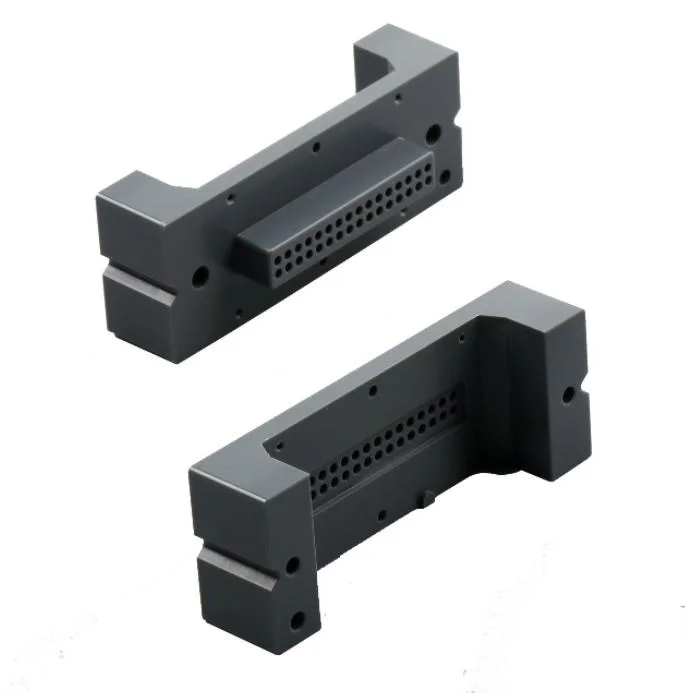
PVC (Polyvinyl Chloride) is a highly rigid, exceptionally cost-effective engineering plastic. Boasting inherent UL94 V-0 flame retardancy, outstanding dielectric strength, and massive resistance to acids and alkalis, it is the workhorse material for electrical connector housings, chemical processing valves, and water treatment manifolds.
Core Mechanical Properties
Machine-grade PVC is significantly harder and more rigid than the flexible PVC used in consumer goods. Below are the typical properties for extruded Rigid PVC (Type 1) billets.
| Property | Typical Value | Key Benefit |
|---|---|---|
| Flammability Rating | UL94 V-0 | Inherently self-extinguishing without requiring expensive or toxic flame-retardant additives. |
| Chemical Resistance | Excellent | Highly resistant to strong acids, alkalis, and salt solutions, preventing corrosion in harsh environments. |
| Tensile Strength | ~ 40 - 55 MPa | Offers excellent rigidity and structural support for heavy electrical and plumbing fixtures. |
| Continuous Use Temp. | ~ 60°C (140°F) | Low heat tolerance. PVC will soften quickly at elevated temperatures, requiring strict environmental control. |
Material Comparison: Rigid PVC vs CPVC
In CNC machining, PVC is generally classified into two primary rigid grades. Choosing the right one depends entirely on your application's operating temperature.
| Material Grade | Max Operating Temp. | Key Characteristics & Primary Use Case |
|---|---|---|
| Rigid PVC (Type 1) | 60°C (140°F) | The standard dark grey machining billet. Extremely cost-effective, easily machinable, and highly chemical resistant. Used for cold-water manifolds, electrical housings, and structural brackets. |
| CPVC (Chlorinated PVC) | 90°C (194°F) | PVC that has been subjected to a chlorination reaction. It maintains the identical chemical resistance and flame retardancy of Type 1 PVC but can withstand significantly hotter fluids without deforming. |
Application Fit Matrix
PVC is a cost-effective chemical-resistant plastic for fluid systems, lab fixtures, and simple components in corrosive environments.
| Application | Recommended Material | Why This Material Works | Typical CNC Process | Finish / Risk Note |
|---|---|---|---|---|
| Chemical Pipe Fittings & Adapters | Rigid PVC | Good resistance to many chemicals in low-pressure fittings. | Turning, threading, drilling | Confirm pressure, temperature, and chemical compatibility. |
| Lab Equipment Panels | PVC Sheet | Chemical-resistant and economical for wet-area fixtures. | Routing, milling, drilling | PVC can chip at edges; specify deburring. |
| Valve & Pump Components | PVC | Useful for compact compatible fluid-control parts. | Milling, drilling, porting | Avoid high-temperature use and aggressive threads. |
| Tank Accessories | PVC | Common for brackets, covers, and simple tank parts. | Routing, drilling, trimming | UV exposure and heat can reduce service life. |
| Electrical Insulating Plates | PVC | Non-conductive and easy to fabricate. | Milling, countersinking, drilling | FR4 or G10 is better for higher stiffness. |
Selection Rule
Match the grade to the part's real job first: strength, heat, wear, corrosion, insulation, transparency, or cosmetic finish.
DFM Reminder
Material choice changes tolerance risk, burr control, wall thickness, thread strategy, and finishing route.
Quote Tip
Share the operating environment, mating parts, finish expectations, and inspection requirements with the drawing.
Expert Machining Tips
Machining PVC comes with significant hazards. If the material overheats, it can emit corrosive hydrochloric acid gas. Huade engineers apply extremely strict protocols to prevent tool degradation and operator risk:
- 1
Extreme Heat Control (Prevent Gassing)
If PVC burns or melts, it releases toxic and highly corrosive chlorine gas that will rapidly rust CNC machine guideways. We utilize very aggressive chip evacuation, high feed rates, and compressed air blasts to keep the cutting zone completely cool.
- 2
Sharp Tooling & Climb Milling
PVC can be slightly brittle and is prone to edge chipping if machined improperly. We strictly use razor-sharp, uncoated carbide tools and employ climb milling toolpaths to shear the plastic downward, preventing edge blowout.
- 3
Proper Machine Ventilation
Even under optimal conditions, machining PVC produces an acrid odor. We process all PVC components in dedicated CNC routers and mills equipped with high-velocity vacuum extraction systems to protect our machinery and staff.
Post-Processing & Assembly
One of PVC's greatest strengths is how easily it can be bonded and assembled, allowing for complex, multi-part liquid manifolds.
1. Solvent Welding (Gluing)
Unlike Polyethylene or POM, PVC can be permanently fused together using PVC cement/solvents. The solvent chemically melts the mating surfaces, creating a completely gas-tight, waterproof bond that is as strong as the base material itself.
2. As-Machined Finish
Type 1 Rigid PVC machines exceptionally well, leaving a clean, uniform, matte grey surface. It rarely requires any cosmetic post-processing, bead blasting, or painting.
3. Threading and Tapping
Because PVC is highly rigid, it takes direct machine tapping very well. It is common to CNC thread NPT (National Pipe Thread) connections directly into PVC blocks for plumbing and fluid routing applications.
Start Your Manufacturing RFQ
Upload your 3D CAD files today. Our engineers will review your fluid routing specifications, provide a free DFM report, and return an accurate quote within 24 hours.