Titanium CNC Machining Services
Grade 5, Grade 2 and Grade 23 Parts
Titanium is not hard in the same way tool steel is hard. It is springy, heat stays at the cutting edge and it punishes rubbing. Good titanium machining is mostly heat control, rigidity and steady chip formation.
Best fit
aerospace brackets, medical instruments, lightweight shafts and high-end fasteners
Common grades
Grade 5 Ti-6Al-4V, Grade 2 and Grade 23 ELI
Watch point
heat concentration, springback, galling and thread wear
Typical route
rigid milling, turning, thread milling, polishing and anodizing when needed
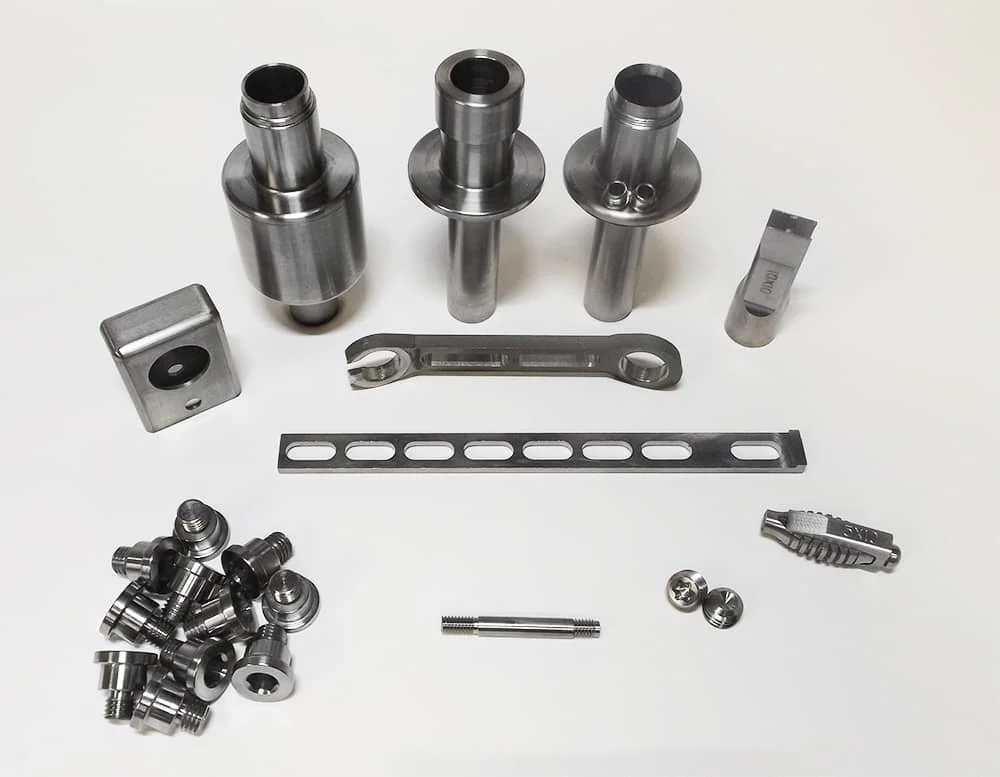
Titanium Grades For CNC Machining
Grade 5 is the normal high-strength titanium choice. Grade 2 is commercially pure and more corrosion-focused. Grade 23 is the cleaner ELI option for medical-type requirements.
| Grade | Yield Strength | Tensile Strength | Hardness |
|---|---|---|---|
| Grade 5 Ti-6Al-4V | ~ 830 MPa | ~ 900 MPa | ~ 36 HRC |
| Grade 2 Commercially Pure | ~ 275 MPa | ~ 345 MPa | ~ 80 HRB |
| Grade 23 Ti-6Al-4V ELI | ~ 795 MPa | ~ 860 MPa | ~ 32 HRC |
International Grade Comparison
Do not swap titanium grades casually. Strength, ductility, certification and biocompatibility expectations can change with the grade.
| ASTM / AISI / UNS | DIN / EN | GB | Engineer Note |
|---|---|---|---|
| Grade 5 / UNS R56400 | 3.7165 / Ti6Al4V | TC4 | The workhorse titanium alloy for aerospace, motorsport and high-strength lightweight parts. |
| Grade 2 / UNS R50400 | 3.7035 / Ti2 | TA2 | Commercially pure titanium with lower strength but excellent corrosion resistance and ductility. |
| Grade 23 / UNS R56401 | 3.7165 ELI | TC4 ELI | Extra-low interstitial Grade 5 variant used when medical or damage-tolerance requirements are stricter. |
Application Fit Matrix
Titanium earns its place when low weight, high strength, corrosion resistance, and demanding aerospace or medical performance meet.
| Application | Recommended Material | Why This Material Works | Typical CNC Process | Finish / Risk Note |
|---|---|---|---|---|
| Aerospace Brackets & Fittings | Grade 5 Ti-6Al-4V | High strength-to-weight ratio and fatigue resistance. | 5-axis milling, drilling, thread milling | Heat control matters; avoid thin unsupported ribs. |
| Medical Instruments & Implant Trials | Grade 5 or Grade 2 Titanium | Biocompatibility and corrosion resistance. | Milling, turning, polishing | Confirm implant-grade certification for regulated use. |
| Drone & Racing Components | Grade 5 Ti-6Al-4V | Strong, lightweight, and tougher than aluminum. | Milling, turning, slotting | Galling risk in threads; consider inserts. |
| Chemical & Marine Fixtures | Grade 2 Titanium | Excellent corrosion resistance in many chloride environments. | Milling, drilling, tapping | Grade 2 is lower strength than Grade 5. |
| High-End Fasteners & Shafts | Grade 5 Ti-6Al-4V | Strong, light, and corrosion-resistant hardware. | CNC turning, threading | Threads need careful inspection. |
Selection Rule
Match the grade to the part's real job first: strength, heat, wear, corrosion, insulation, transparency, or cosmetic finish.
DFM Reminder
Material choice changes tolerance risk, burr control, wall thickness, thread strategy, and finishing route.
Quote Tip
Share the operating environment, mating parts, finish expectations, and inspection requirements with the drawing.
What We Check Before Cutting Titanium
If a titanium setup chatters, do not just slow everything down. Rubbing makes heat worse. The setup, tool and chip load need to work together.
- 1
Cool The Cutting Edge Aggressively
Titanium does not carry heat away well. Through-coolant, sharp tools and controlled engagement protect tool life and surface integrity.
- 2
Account For Springback
Thin titanium features flex away from the tool. We support the part and avoid pretending a delicate wall will behave like aluminum.
- 3
Treat Threads With Respect
Titanium can gall. Thread form, fit, coating and mating material should be reviewed before production, especially for repeated assembly.
Surface Treatments That Actually Fit
Titanium already resists corrosion. Finishing is usually for identification, wear resistance or appearance.
1. As-Machined or Polished
Common for functional parts. Polishing is targeted to cosmetic or friction-sensitive surfaces.
2. Color Anodizing
Useful for identification and appearance. Color comes from oxide thickness, not dye, so process control matters.
3. DLC or PVD Coating
Good for wear and galling resistance where titanium slides against another surface.
Send The Details That Change The Quote
Send grade, certification needs, thread fits, mating materials, wall thickness concerns and whether any surfaces require polishing or coating.
Material condition
Name the exact grade, stock condition and certificate requirement. The same alloy can machine and perform differently after heat treatment, aging or cold work.
Functional features
Flag threads, bearing bores, sealing faces and mating materials. These features determine the machining sequence, surface requirement and inspection plan.
Finish and release
Include coating, masking, cosmetic zones and report needs in the controlled RFQ so finished dimensions and acceptance criteria are aligned before production.