CNC Machining
Acrylic (PMMA)
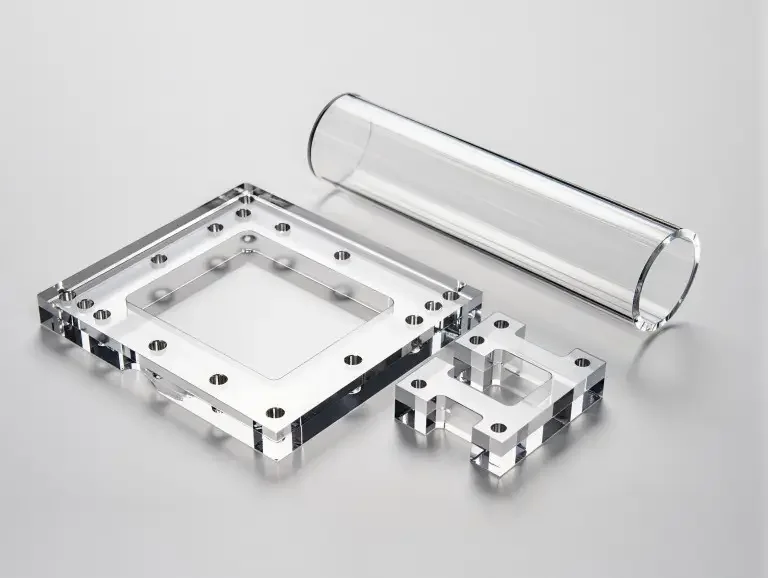
PMMA (Polymethyl Methacrylate), widely known as Acrylic, is the premier engineering thermoplastic for optical clarity. Offering an astonishing 92% light transmission, excellent UV resistance, and high machinability, it is the ultimate glass substitute for precision microfluidic manifolds, LED light guides, and complex transparent housings.
Core Mechanical Properties
Acrylic is chosen primarily for its optical and aesthetic properties, but it also boasts solid tensile strength. Below are the typical properties for extruded or cast PMMA billets used in CNC machining.
| Property | Typical Value | Key Benefit |
|---|---|---|
| Light Transmission | 92% | Matches or exceeds traditional silicate glass. Crystal clear transparency. |
| Tensile Strength | 65 - 75 MPa | Strong and stiff, but structurally brittle under heavy impact. |
| Index of Refraction | 1.49 | Excellent optical characteristics for machining custom lenses and prisms. |
| Continuous Use Temp. | 70°C - 80°C | Relatively low thermal limit. Not suitable for high-heat environments. |
Material Comparison: Acrylic vs Polycarbonate
When engineers need a clear plastic, the choice almost always comes down to Acrylic (PMMA) or Polycarbonate (PC). Understanding their differences is critical to part success.
| Feature | Acrylic (PMMA) | Polycarbonate (PC) |
|---|---|---|
| Impact Resistance | Low (Brittle, can shatter) | Extreme (Virtually unbreakable) |
| Optical Clarity | 92% (Highest Clarity) | 88% (Slight blue/grey tint) |
| Scratch Resistance | Good | Poor (Scratches easily without coating) |
| Machining & Polishing | Machines easily, Vapor polishes perfectly | Gummy to machine, difficult to vapor polish |
Application Fit Matrix
PMMA acrylic is chosen for transparent machined parts where optical clarity, polishability, and crisp appearance matter.
| Application | Recommended Material | Why This Material Works | Typical CNC Process | Finish / Risk Note |
|---|---|---|---|---|
| Display Windows & Covers | Clear PMMA / Acrylic | Excellent clarity and polishability. | Routing, milling, polishing | Acrylic scratches more easily than PC. |
| Light Guides & LED Diffusers | Optical Acrylic | Transmits light cleanly for edge-lit features. | Milling, engraving, diamond polishing | Tool marks can affect light uniformity. |
| Instrument Panels | Tinted or Clear Acrylic | Good cosmetic quality for windows and interfaces. | Routing, engraving, countersinking | Aggressive countersinks may crack. |
| Fluid Visualization Blocks | Cast Acrylic | Clear material allows inspection of channels. | Milling, drilling, bonding prep | Avoid high-pressure manifolds. |
| Retail & Product Fixtures | Acrylic Sheet | Clean edges and transparent appearance. | Routing, polishing | Flame polishing can distort tight edges. |
Selection Rule
Match the grade to the part's real job first: strength, heat, wear, corrosion, insulation, transparency, or cosmetic finish.
DFM Reminder
Material choice changes tolerance risk, burr control, wall thickness, thread strategy, and finishing route.
Quote Tip
Share the operating environment, mating parts, finish expectations, and inspection requirements with the drawing.
Expert Machining Tips
Acrylic is brittle. Improper machining or aggressive workholding will cause micro-cracks, edge chipping, or outright shattering. Huade engineers apply strict protocols to ensure perfect clarity:
- 1
Preventing Edge Chipping
We strictly use highly polished, single-flute "O-flute" router bits. Toolpaths are programmed with gentle ramped entries and reduced exit feeds to prevent the brittle acrylic from blowing out or chipping at the corners.
- 2
Thermal Management
Acrylic melts easily and can quickly re-weld behind the cutter. We utilize aggressive chip evacuation with compressed air blasts and specific feed-to-speed ratios to ensure chips are cleared instantly before heat can build up.
- 3
Stress Relief (Annealing)
Aggressive machining introduces internal stresses. If a stressed part is exposed to polishing chemicals later, it will "craze" (develop hundreds of micro-cracks). We routinely anneal acrylic parts in ovens to relieve this stress prior to final polishing.
Polishing & Optical Finishes
Directly off the CNC machine, Acrylic has a translucent, frosted appearance due to tooling marks. We offer specialized post-processing to restore it to 100% optical clarity.
1. Vapor Polishing (Internal Channels)
The ultimate finish for complex geometries. We expose the machined part to a specialized chemical vapor (like Weld-On 4). The vapor melts the outermost microscopic layer of plastic, instantly turning frosted internal channels and deep pockets crystal clear.
2. Manual & Mechanical Polishing
For flat outer surfaces, light guides, and large optical windows, we use progressively finer abrasive pads and buffing wheels with polishing compounds to achieve a pristine, distortion-free, mirror-like finish.
3. Flame Polishing
A rapid and cost-effective technique used strictly for external edges. A high-temperature hydrogen-oxygen flame is quickly passed over the frosted edge, melting and smoothing it instantly for a clean, clear aesthetic.
Start Your Manufacturing RFQ
Upload your 3D CAD files today. Our engineers will review your optical specifications, provide a free DFM report, and return an accurate quote within 24 hours.