CNC Machining
POM (Delrin®)
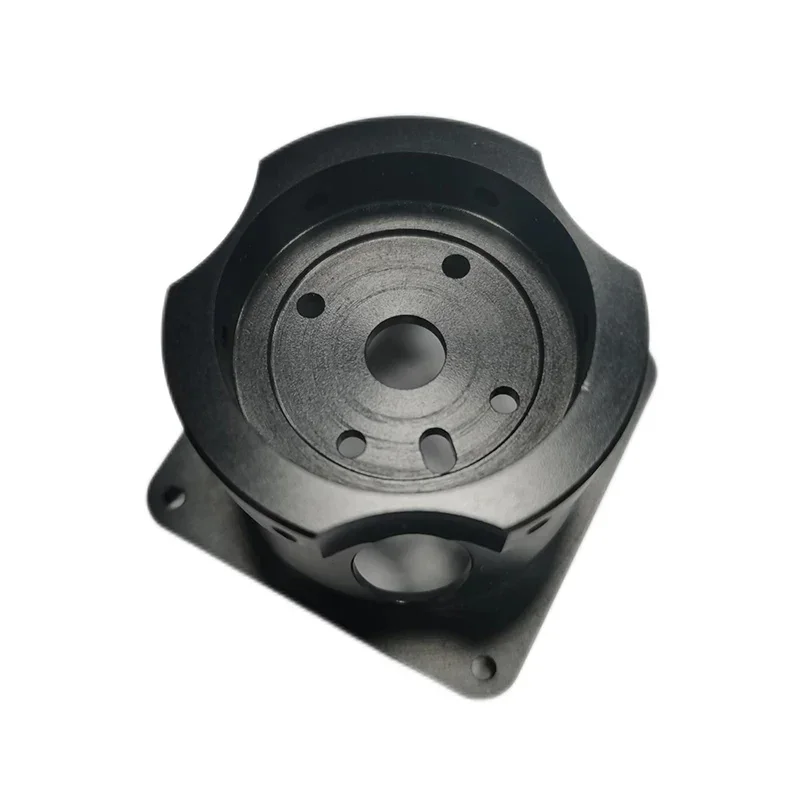
POM (Polyoxymethylene), widely known as Acetal or Delrin®, is universally recognized as the most machinable engineering plastic. Offering an incredible combination of high stiffness, low friction, and excellent dimensional stability, it easily bridges the gap between metals and standard plastics for precision gears, bearings, and intricate fluid manifolds.
Core Mechanical Properties
Unlike Nylon, which absorbs moisture and swells, POM remains highly dimensionally stable in wet environments. Below are the typical mechanical properties for machined Acetal billets.
| Property | Typical Value | Key Benefit |
|---|---|---|
| Tensile Strength | ~ 65 - 70 MPa | High stiffness and mechanical yield, making it an excellent replacement for brass or aluminum in many structural parts. |
| Coefficient of Friction | 0.20 - 0.35 | Naturally lubricious surface. Perfect for sliding mechanisms, wear pads, and unlubricated gear trains. |
| Moisture Absorption | ~ 0.2% | Significantly lower than Nylon. Tolerances remain tight even when completely submerged in water. |
| Machinability | Excellent | Produces clean, short chips rather than long stringy ribbons, allowing for ultra-fast CNC cycle times. |
Material Comparison: Homopolymer vs Copolymer
This is the most critical distinction in POM machining. "Delrin" is a specific brand of Homopolymer, while general "Acetal" is often a Copolymer. They perform differently in gas-tight and chemical applications.
| Material Grade | Centerline Porosity | Key Characteristics & Use Case |
|---|---|---|
| POM-H (Delrin®) | Yes | Homopolymer Acetal. Offers slightly higher room-temperature tensile strength, stiffness, and creep resistance. Warning: Extruded rods often exhibit "centerline porosity" (micro-voids in the center), making it unsuitable for pressurized gas/fluid manifolds. |
| POM-C (Acetal Copolymer) | No | Copolymer Acetal. Slightly softer than Delrin but offers superior chemical resistance to strong alkalis and hot water. Crucially, it has no centerline porosity, making it the perfect choice for liquid/gas routing manifolds and medical valves. |
| PTFE-Filled (Delrin® AF) | Depends on Base | Blended with Teflon® (PTFE) fibers to create the absolute lowest friction plastic available. Used exclusively for extreme-wear bearings and sliding joints where external lubrication is impossible. |
Application Fit Matrix
POM acetal, often called Delrin, is a go-to CNC plastic for low-friction precision motion parts with good dimensional stability.
| Application | Recommended Material | Why This Material Works | Typical CNC Process | Finish / Risk Note |
|---|---|---|---|---|
| Gears & Timing Pulleys | POM / Delrin | Low friction and stable machining for motion components. | Turning, gear cutting, milling | Avoid press fits that can split hubs. |
| Bushings & Rollers | POM / Delrin | Smooth running surfaces and good dimensional stability. | Turning, boring, grooving | Specify bore tolerance and mating shaft. |
| Automation Fixtures | POM / Delrin | Machines accurately and protects delicate products. | Milling, drilling, pocketing | Use inserts for repeated screw assembly. |
| Sliding Blocks & Wear Pads | Acetal Copolymer or Homopolymer | Low moisture absorption and low friction. | Milling, profiling, drilling | Choose grade based on hot water or chemicals. |
| Valve & Pump Components | POM | Good machinability for small fluid-control parts. | Turning, milling, drilling | Check chemical compatibility. |
Selection Rule
Match the grade to the part's real job first: strength, heat, wear, corrosion, insulation, transparency, or cosmetic finish.
DFM Reminder
Material choice changes tolerance risk, burr control, wall thickness, thread strategy, and finishing route.
Quote Tip
Share the operating environment, mating parts, finish expectations, and inspection requirements with the drawing.
Expert Machining Tips
POM is a joy to machine, yielding beautifully clean, short chips. However, internal stresses and centerline issues must be managed by our CNC programmers:
- 1
Navigating Centerline Porosity
When machining Delrin (POM-H) rods or thick plates, the very center of the material is often porous. We specifically program toolpaths to avoid placing critical sealing features (like O-ring grooves) directly in the porous centerline, or we switch to POM-C.
- 2
Heat Control & Sharp Tooling
While highly machinable, POM is still a thermoplastic and will melt if pushed too hard with dull tools. We strictly use highly polished, sharp-edged carbide end mills combined with air blasts to clear chips instantly and maintain a pristine surface finish.
- 3
Managing Asymmetrical Machining
Like all extruded plastics, POM holds internal stress. If a design requires removing a massive amount of material from only one side, the part may bow. We employ specific roughing strategies, flipping the part multiple times to balance stress relief.
Post-Processing & Assembly
Because POM is highly resistant to chemicals and possesses natural lubricity, it requires specialized approaches for final assembly.
1. As-Machined / Bead Blasting
POM machines so well that the "as-machined" finish is typically exceptionally smooth and glossy. If a uniform, non-reflective aesthetic is required, we can apply a light glass-bead blast for a premium matte texture.
2. Mechanical Assembly (No Glue)
Due to its extreme chemical resistance and low surface energy, POM is incredibly difficult to glue or paint. Assembly must rely on mechanical fastening. We routinely machine tight-tolerance press-fits or utilize snap-fit geometries.
3. Threaded Inserts & Welding
While POM holds threads well, for high-cycle assembly, we recommend pressing or ultrasonic-welding brass threaded inserts into the plastic. POM can also be successfully bonded to itself using ultrasonic welding techniques.
Start Your Manufacturing RFQ
Upload your 3D CAD files today. Our engineers will review your dimensional specifications, provide a free DFM report, and return an accurate quote within 24 hours.