CNC Bronze Machining Services
Bushings, Bearings and Wear Parts
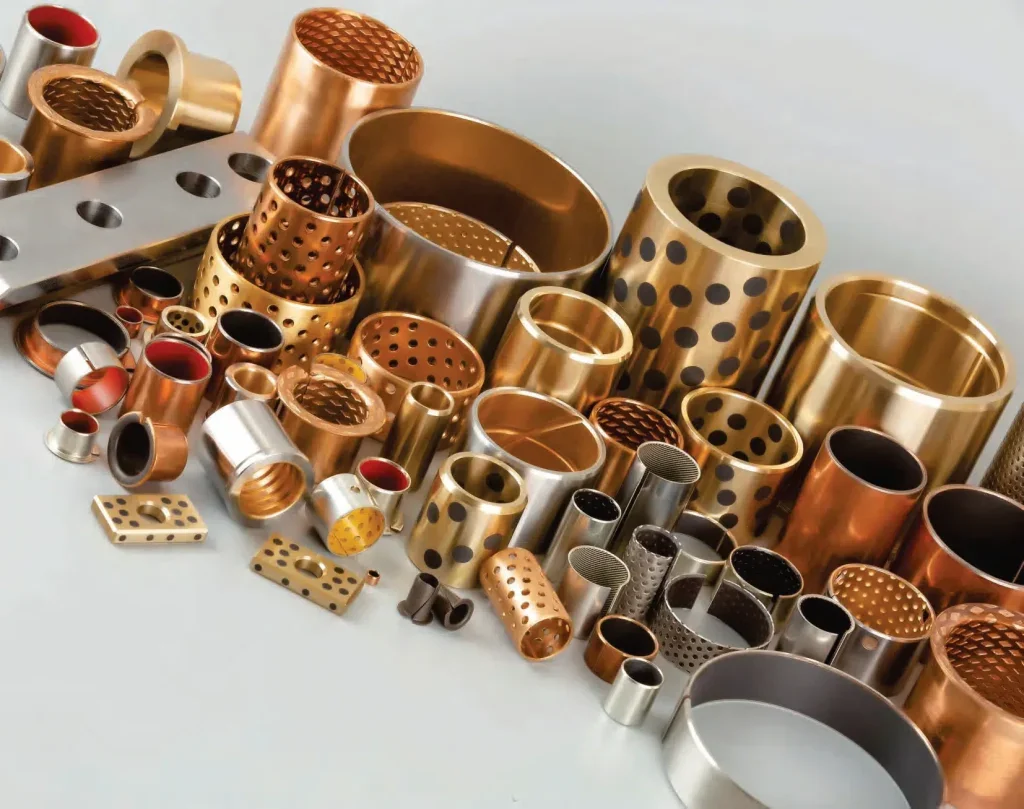
CNC bronze machining is the practical choice when a part slides, carries load or works around moisture. Bronze is not simply darker brass: the right C932, C954 or C510 grade protects a bearing surface, a valve interface or a marine-adjacent component; the wrong grade can turn into an expensive material mistake.
Best fit
bushings, bearings, wear plates, guide blocks and marine hardware
Common grades
C932, C954 and C510 bronze
Watch point
running clearance, lubrication grooves and mating material
Typical route
turning, boring, grooving, milling and lapping where needed
Bronze Grades For CNC Machining
Bronze selection should start with load, speed, lubrication and the mating material. Strength values help, but wear behavior usually decides the grade.
| Grade | Yield Strength | Tensile Strength | Hardness |
|---|---|---|---|
| C932 Bearing Bronze | ~ 125 MPa | ~ 240 MPa | ~ 65 HRB |
| C954 Aluminum Bronze | ~ 250 MPa | ~ 585 MPa | ~ 170 HB |
| C510 Phosphor Bronze | ~ 380 MPa | ~ 520 MPa | ~ 85 HRB |
International Grade Comparison
Bronze grade names get used loosely in RFQs. We confirm the alloy family before quoting because bearing bronze, aluminum bronze and phosphor bronze machine and perform differently.
| ASTM / AISI / UNS | DIN / EN | GB | Engineer Note |
|---|---|---|---|
| C93200 | CuSn7Zn4Pb7 / CC493K | ZCuSn7Pb7Zn3 | Reliable bearing bronze for sleeve bushings, washers and lubricated sliding parts. |
| C95400 | CuAl10Fe5Ni5 | ZCuAl10Fe3 | Stronger aluminum bronze for heavy wear, marine hardware and loaded guide parts. |
| C51000 | CuSn5 / CW451K | QSn4-0.3 | Phosphor bronze with spring behavior and fatigue resistance for thinner precision components. |
Application Fit Matrix
Bronze is strongest in wear, sliding, and marine-adjacent applications where bearing behavior matters more than simple shape.
| Application | Recommended Material | Why This Material Works | Typical CNC Process | Finish / Risk Note |
|---|---|---|---|---|
| Sleeve Bushings & Bearings | C932 Bearing Bronze | Excellent embeddability and sliding wear behavior under lubrication. | Turning, boring, grooving | Define running clearance, lubricant grooves, and bore surface finish. |
| Wear Plates & Guide Blocks | Aluminum Bronze or Phosphor Bronze | High load capacity and resistance to galling against steel. | Milling, facing, drilling | Keep broad flatness tolerances realistic after material removal. |
| Marine Hardware | Aluminum Bronze | Better seawater-adjacent corrosion performance than many copper alloys. | Turning, milling, threading | Confirm galvanic pairing with mating metals. |
| Worm Gears & Motion Parts | Phosphor Bronze | Good fatigue strength and low friction against hardened steel worms. | Gear milling, hobbing, turning | Tooth finish and lubrication matter more than cosmetic finish. |
| Pump & Valve Components | C932 or Aluminum Bronze | Handles moderate loads, sliding contact, and fluid service. | Turning, boring, port milling | Specify pressure, fluid, and mating material. |
Selection Rule
Match the grade to the part's real job first: strength, heat, wear, corrosion, insulation, transparency, or cosmetic finish.
DFM Reminder
Material choice changes tolerance risk, burr control, wall thickness, thread strategy, and finishing route.
Quote Tip
Share the operating environment, mating parts, finish expectations, and inspection requirements with the drawing.
What We Check Before Cutting Bronze
A bronze drawing should tell us how the part works. Bore tolerance without clearance, load and lubrication is only half the story.
- 1
Specify Bore Finish And Clearance
For bushings, the bore surface and running clearance matter more than a cosmetic outside diameter. Tell us the shaft size and fit target.
- 2
Add Lubrication Detail Early
Oil grooves, grease holes and lead-in chamfers are cheap to plan and expensive to rescue after the part is already installed.
- 3
Watch Flatness On Wear Plates
Bronze plates can move after heavy material removal. For broad flat parts, we plan roughing, resting and final passes.
Surface Treatments That Actually Fit
Most bronze parts stay as-machined. Finishing is usually about function: surface finish, oil retention and corrosion context.
1. As-Machined Functional Finish
Best for bores, grooves and bearing faces where geometry and surface roughness matter more than appearance.
2. Polishing
Useful for visible marine or decorative hardware, but do not polish away functional bearing geometry.
3. Protective Oil or Clear Coat
Used when oxidation during storage or display matters. Functional sliding areas normally need a different plan.
Material, process and RFQ decisions in one cluster
Bronze vs brass selection guide
Keep alloy families separate before choosing a machining route.
Bronze vs copper comparison
Compare wear behavior against conductivity requirements.
Bronze machining buyer guide
Review process choices, parts and RFQ details.
CNC turning services
For sleeves, bushings, bores and rotational bronze geometry.
CNC milling services
For wear plates, guide blocks, pockets and ported components.
Send The Details That Change The Quote
Include shaft size, load, speed, lubrication method, mating material and any required bore finish or inspection method.
Material condition
Name the exact grade, stock condition and certificate requirement. The same alloy can machine and perform differently after heat treatment, aging or cold work.
Functional features
Flag threads, bearing bores, sealing faces and mating materials. These features determine the machining sequence, surface requirement and inspection plan.
Finish and release
Include coating, masking, cosmetic zones and report needs in the controlled RFQ so finished dimensions and acceptance criteria are aligned before production.