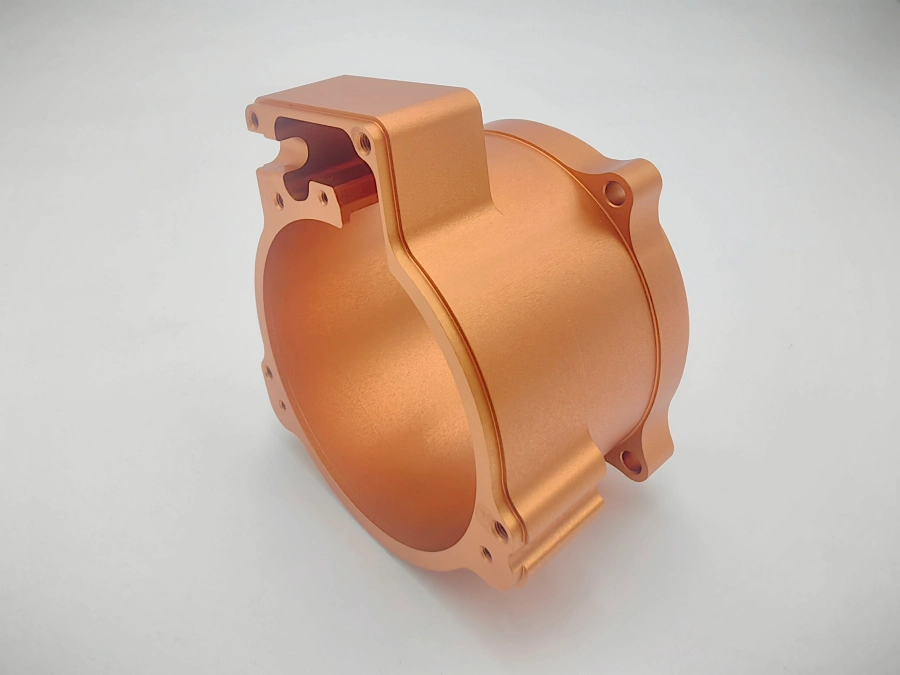
Choosing between 3-axis, 4-axis and 5-axis CNC milling affects setup time, tool access, part accuracy and machining cost. The most advanced machine is not automatically the best choice. The correct route depends on geometry, critical datums, material, quantity and finish.
Quick Comparison
| Machine | Motion | Best suited for |
|---|---|---|
| 3-axis CNC mill | X, Y and Z linear motion | Prismatic parts, plates, pockets and simple contours |
| 4-axis CNC mill | Three linear axes plus one rotary axis | Multi-side features, cylindrical work and fewer setups |
| 5-axis CNC mill | Three linear axes plus two rotary axes | Complex contours, angled faces and difficult tool access |
What Is 3-Axis CNC Milling?
A 3-axis CNC mill moves along X, Y and Z. The workpiece normally stays in one orientation, so hidden features may require a second setup. It is often a strong choice for brackets, plates, covers and accessible housings.
What Is 4-Axis CNC Milling?
A 4-axis CNC mill adds rotary motion, often called the A-axis. The part can be indexed or rotated so the machine reaches several sides without fully removing and re-aligning it. This is useful for cylindrical components, radial holes and multi-face housings.
What Is 5-Axis CNC Milling?
A 5-axis CNC mill adds two rotary axes. The tool can approach a surface from different angles, helping with undercuts, deep cavities, impellers, aerospace contours and complex robot components. The extra capability should solve a real access or setup problem.
Key Decision Factors
Part geometry and tool access
Choose 3-axis for accessible faces, 4-axis for rotary or multi-side features, and 5-axis when the tool must maintain changing orientation across complex surfaces.
Number of setups
If a part needs several re-clamps, 4-axis or 5-axis machining may reduce datum-transfer risk. If one setup already reaches all critical features, additional axes may not add value.
Accuracy and inspection
Multi-axis machining can preserve feature relationships, but accuracy still depends on calibration, workholding, tooling and inspection. Identify functional datums, fits, runout, position and surface finish on the drawing.
Cost and quantity
3-axis machining is often economical for straightforward work. A 4-axis or 5-axis route can reduce setup and handling time on suitable parts, which may offset higher programming or machine rates.
Materials and Applications
All three processes can machine aluminum, stainless steel, alloy steel, brass, titanium, POM, PEEK and other engineering materials.
- 3-axis: plates, brackets, covers and simple housings
- 4-axis: valve bodies, radial-hole parts, fixtures and multi-face housings
- 5-axis: aerospace contours, impellers, robot joints and angled features
For broader process guidance, read our CNC milling guide or review custom CNC milling services.
Frequently Asked Questions
Is 5-axis CNC milling more accurate than 3-axis milling?
Not in every situation. It can reduce setups and improve feature alignment on complex parts, but final accuracy depends on the complete process and inspection plan.
Is 4-axis machining the same as 5-axis machining?
No. Four-axis machining adds one rotary axis. Five-axis machining adds two rotary axes and can change tool orientation more freely.
How can I reduce CNC milling cost?
Use the fewest setups that safely reach the required features, avoid unnecessary tight tolerances, use standard tools and provide clear drawings.
Request a Milling Quote
Share your CAD files and drawing through our RFQ page. Huade will review the geometry, compare suitable milling routes and quote against the actual material, quantity, tolerances and finish.