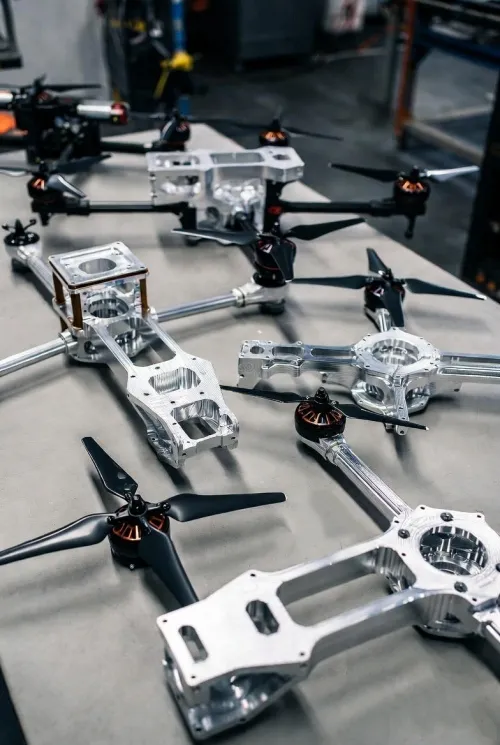
Urgent 7075 Precision Fasteners for a Canadian Drone Startup
At the end of April 2020, a veteran-founded Canadian drone startup placed its first trial order with Huade for only 5 custom fasteners. The quantity was small, but the part was technically demanding, the tolerance target was ±0.01 mm, and delivery had to be completed before a May drone exhibition.
Small Trial Quantity, High Technical Risk, Zero Time To Fail
When this customer first came to Huade, they were still an early-stage drone company founded by military veterans. Their first order volume was only 5 pieces, but the application was serious. These were not standard catalog fasteners. They were custom UAV fasteners with an irregular hollow structure, made from 7075 aluminum, and they could not deform during machining or assembly.
The parts also had to hold ±0.01 mm tolerance and arrive within 10 days so the customer could complete the prototype before their May drone exhibition. Huade treated this startup exactly like any major customer, adjusted internal scheduling, and pushed the sample order through as an urgent manufacturing project.
The result was a full technical and delivery success. The customer received the parts in only 7 days, every critical dimension passed inspection, assembly fit was excellent, and the company went on to win its first major market order after the show. Since then, Huade has continued to support them with drone fasteners, wings, brackets, housings, and other UAV structural components.
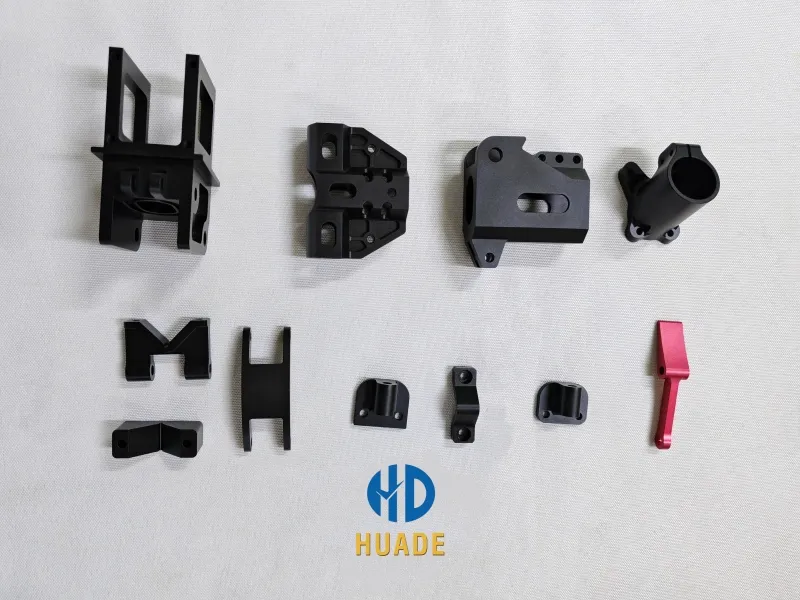
Long-Term UAV Component Supply
After the first urgent fastener project, Huade expanded support to a wider range of drone parts, including structural brackets, wings, housings, and precision lightweight assemblies.
Why This First Trial Order Was Hard
- The first order was only 5 pieces, but the technical difficulty was high because the fastener geometry was non-standard, hollow, and sensitive to deformation.
- The material was 7075 aluminum, chosen for high strength-to-weight performance, but it also required careful machining control to prevent distortion on thin-wall sections.
- The drawing tolerance requirement was ±0.01 mm, which is demanding for a small hollow structural fastener that must also assemble cleanly in an aerospace-style drone structure.
- The startup needed to receive the parts within 10 days because their team had to complete assembly before a drone exhibition in May 2020.
Why The Delivery Timing Mattered
The real pressure in this project was not only tolerance. It was the launch window. The drone exhibition was effectively a make-or-break event for a startup that needed working hardware, clean assembly, and enough confidence to present itself credibly in front of the market.
Finishing this order in 7 days instead of the 10-day maximum gave the customer time to complete build verification, finalize assembly, and participate in the show without compromising the mechanical quality of the fasteners.
That first project became the beginning of a long-term relationship. Today, as the low-altitude economy continues to grow, that company has developed from an early-stage Canadian startup into a large cross-border group operating in both Canada and the United States.
Process Route Used For The 7075 Hollow Drone Fastener
This project required more than just quick machining. The process had to protect the shape of a thin irregular hollow component while still meeting tight tolerance and urgent delivery.
Priority Scheduling And DFM Review
Huade adjusted the production schedule immediately after receiving the trial order at the end of April 2020. The first step was a fast manufacturability review focused on wall thickness, internal cavity rigidity, thread or locating features, and the best datum strategy for holding ±0.01 mm.
Controlled 7075 Roughing
The blank was rough-machined with conservative stock allowance so that most of the internal stress release happened before final sizing. For hollow drone fasteners, roughing too aggressively can shift the part and create size instability in later finishing stages.
Semi-Finishing To Stabilize Thin Walls
Semi-finishing toolpaths were used to balance cutting load around the hollow profile. This helps reduce local distortion and keeps the part more stable before final finishing passes on the sealing, locating, and assembly-critical surfaces.
Finish Machining And Final Verification
The final operations focused on bore size, outside profile, wall consistency, and assembly interfaces. After inspection confirmed full-size compliance, the parts were shipped immediately so the customer could complete assembly before the exhibition.
Tool Selection For 7075 Thin-Wall UAV Components
Drone parts often combine lightweight design with high structural expectations. For this reason, tooling strategy had to support both dimensional control and deformation prevention on a custom hollow fastener geometry.
- Sharp solid carbide end mills were selected for 7075 aluminum to keep cutting forces lower and improve finish quality on thin-wall features.
- Smaller-diameter carbide tools were used in staged passes rather than trying to remove too much material in one pass, reducing deformation risk on the hollow section.
- High-speed finishing passes with controlled radial engagement helped maintain edge quality and dimensional consistency on the irregular outer profile.
- Drilling and finishing operations were sequenced carefully so that hole position and concentric relationships stayed stable after the main cavity had already been machined.
- Deburring and edge-break control were treated as functional steps, not cosmetic ones, because poor edge condition could affect assembly on lightweight drone structures.
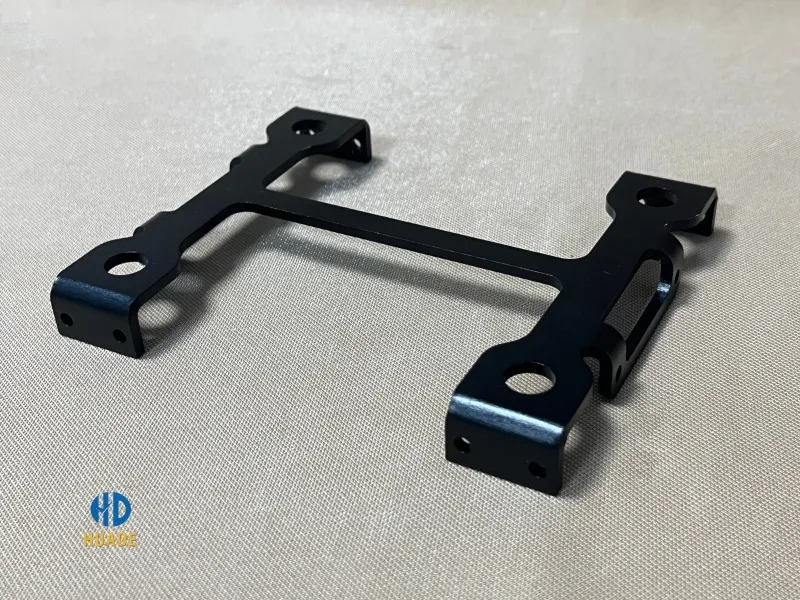
What We Needed To Protect
For a part like this, the main risks are wall deflection, post-machining size shift, and local dimensional drift after the cavity or hollow feature is opened up.
The process therefore focused on balanced material removal, stable datum transfer, controlled finishing stock, and careful sequencing of internal and external features so the final geometry stayed predictable.
Because these were drone assembly parts, functional fit mattered as much as measurement. The customer ultimately confirmed that the fasteners assembled perfectly into their UAV system.
Quality Control For Urgent Tight-Tolerance Drone Parts
An urgent order is only valuable if the parts arrive usable. That is why dimensional verification and assembly-critical checks were built into the process from the start.
Critical dimensions were checked around the hollow body, bore features, and assembly faces instead of relying only on overall outside size.
The process emphasized deformation prevention, because a part can measure close in one area and still fail functionally if the thin wall shifts after release.
Full-size compliance was confirmed before shipment, and the customer reported perfect assembly after receipt.
The successful first trial established trust and led to long-term supply of drone fasteners, wings, brackets, housings, and additional structural components.
Internal Links For Buyers Sourcing UAV Components
If your team is sourcing UAV fasteners, lightweight structural parts, or urgent tight-tolerance aluminum components, the pages below will help you review machining capability, materials, quality systems, and RFQ support.
Custom CNC Milling
See how Huade handles lightweight structural profiles, thin-wall machining, and complex milled drone components.
Open Page7075 Aluminum Machining
Explore 7075 aluminum machining for strength-to-weight critical parts, precision fasteners, and aerospace-style assemblies.
Open PageQuality Control & Metrology
Review our inspection approach for tight-tolerance parts that must assemble cleanly on first build.
Open PageHelp Center
Find answers on tolerances, RFQ files, lead times, and rapid machining support.
Open PageUseful Industry And Material Context
These external resources provide additional context around drone industry operations, regulatory environments, and the material background relevant to this case.
FAA UAS Resources
Official Federal Aviation Administration resources covering drone operations and the broader UAS ecosystem.
Transport Canada RPAS Guidance
Official Canadian guidance on remotely piloted aircraft systems and operational risk assessment.
Aluminum Association 7xxx Overview
Industry context for high-strength 7xxx aluminum alloys, including 7075 applications.
Talk To Huade About Your Drone Machining Project
If your team needs custom drone fasteners, lightweight 7075 components, brackets, housings, or urgent prototype support, send us your drawings and target timeline. We will review the geometry, tolerance, and machining route with you.