Residual Stress
T651 stock and balanced roughing can reduce movement when pockets remove a large share of the material.
Send your CAD model and drawing for high-strength 7075 CNC milling or turning. Huade plans stock condition, material removal, workholding, cosmetic protection and inspection around the features that matter to your assembly.
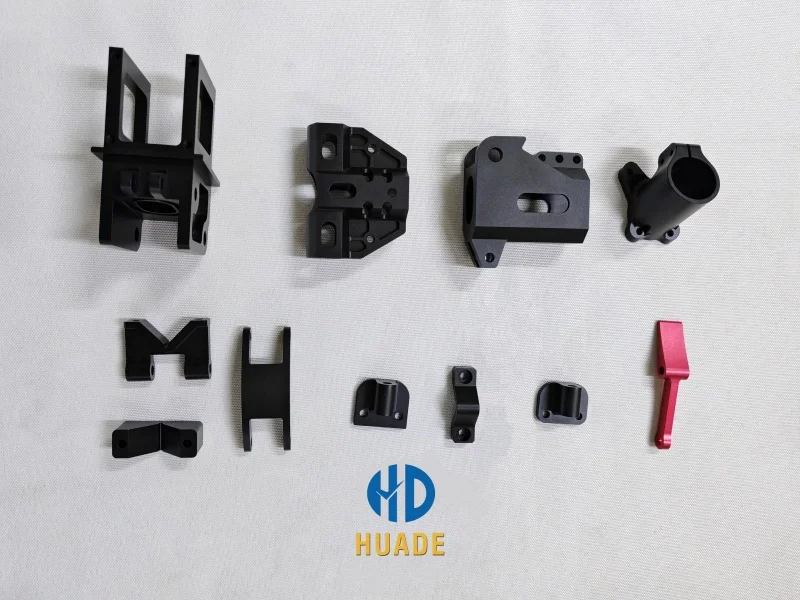
Common temper
7075-T6 / T651
Strength profile
High strength-to-weight ratio
Order fit
Prototype to repeat production
Typical parts
UAV, aerospace, robotics, audio
7075 aluminum is selected when a lightweight component needs substantially higher strength than general-purpose grades. Typical applications include UAV hardware, aerospace-style brackets, loaded robotic components, precision fasteners and high-performance equipment parts.
Strong material alone does not guarantee a stable part. Our 7075 aluminum machining review considers temper, stock shape, residual stress, removal balance, thin sections, tool access and finish requirements before the process is released.
The drawing determines the machine route. We select milling, turning or multi-axis machining around geometry, datum continuity, tool access and inspection needs.
| Process | Best Fit | Planning Focus |
|---|---|---|
| CNC milling | Structural brackets, frames, plates and complex profiles | Balanced roughing, stable workholding and corner access |
| CNC turning | Fasteners, shafts, sleeves and rotational hardware | Concentricity, thread quality and controlled handling |
| 5-axis machining | Weight-reduced parts with features on multiple faces | Tool reach, thin-section support and datum continuity |
T651 stock and balanced roughing can reduce movement when pockets remove a large share of the material.
Tool pressure, heat and unclamping movement are considered when walls or ribs become flexible.
Bare or cosmetic 7075 parts need controlled handling between machining, inspection and packing.
Coating and service exposure should be reviewed because 7075 is less corrosion-resistant than 6061.
Choose 7075 when high strength, stiffness and fatigue performance are the main drivers for a weight-sensitive component.
Choose 6061 when corrosion resistance, weldability, anodizing consistency and lower material cost matter more than maximum strength.
| Finish | Best Fit | Drawing Note |
|---|---|---|
| Type II anodizing | Color and corrosion protection | Color can differ from 6061; approve expectations. |
| Hardcoat anodizing | Wear-resistant functional surfaces | Allow for dimensional build-up and masking. |
| Conversion coating | Conductivity or paint preparation | Specify the governing standard and class. |
| Bare machined finish | Controlled metallic appearance | Define scratch and handling acceptance clearly. |
01 / Material
State the exact alloy, temper and any material certification requirement in the RFQ.
02 / Critical Features
Mark fits, threads, flatness, runout and features that require documented inspection.
03 / Finish
Show visible faces, masking zones, color targets and handling acceptance on the drawing.
Real 7075 projects covering precision fasteners, thin profiles, high-strength UAV parts and scratch-sensitive visible components.
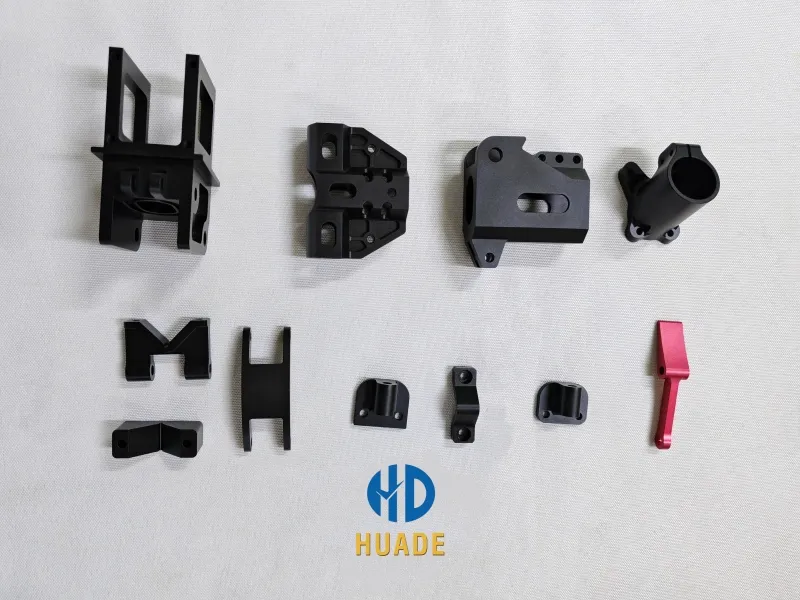
How Huade delivered 5 custom 7075 hollow drone fasteners in 7 days at +/-0.01 mm tolerance before a major drone exhibition.
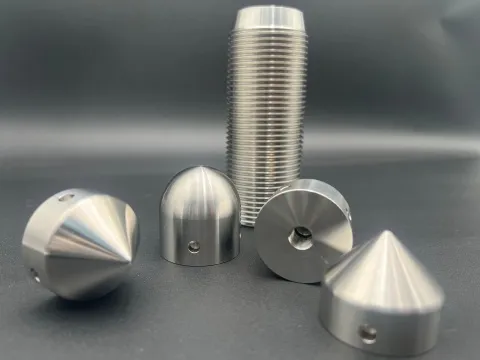
A 4+ year supply relationship built on cosmetic control for thin long curved speaker parts, bare 7075 and 5074 deliveries, and scratch-free visible surfaces.
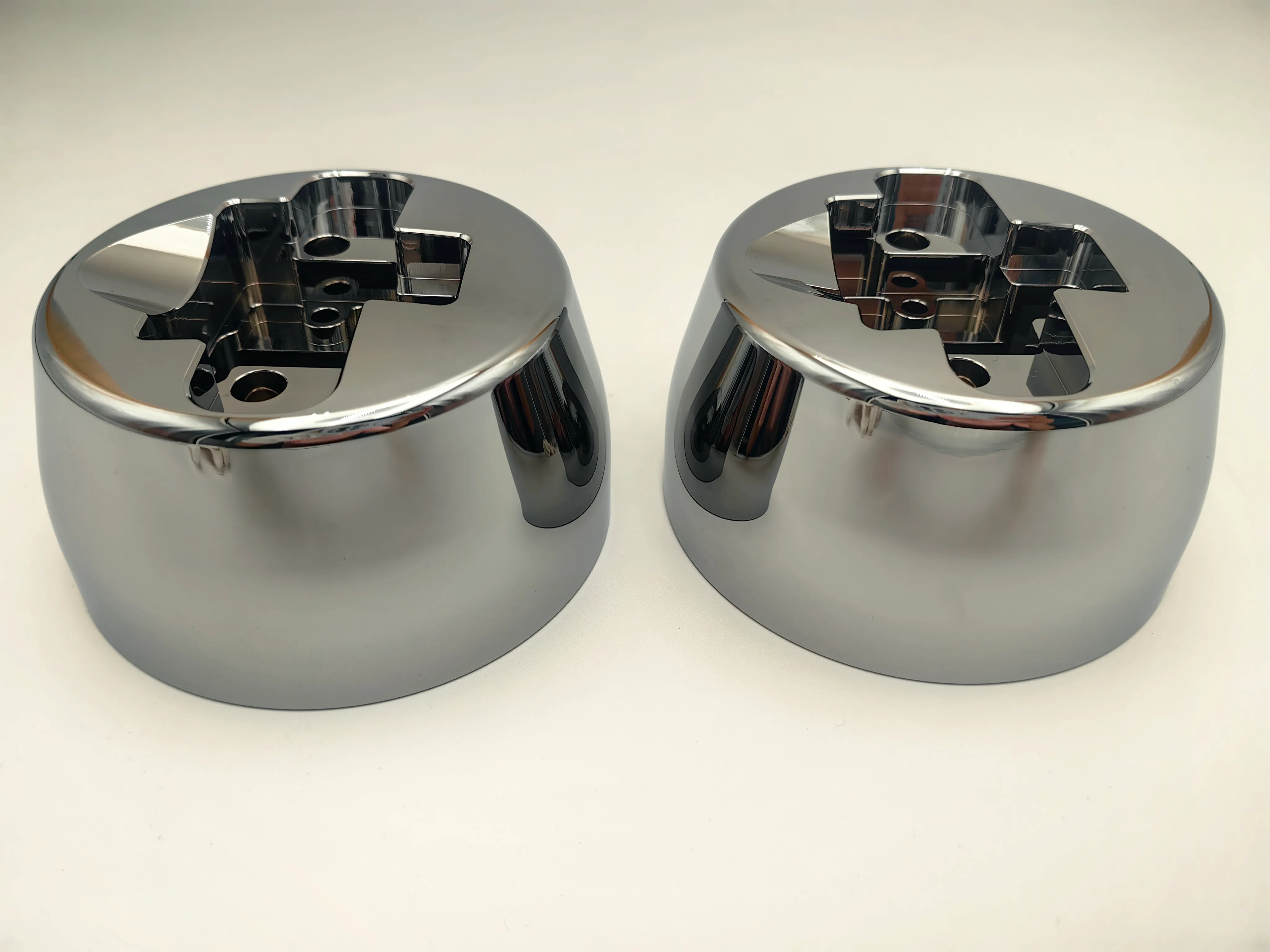
A photo-backed case showing appearance-critical 6061 aluminum machining for premium coffee equipment, with polished surfaces, chrome finishing, and functional internal geometry.
7075 is highly machinable, but high-removal and thin-wall parts still need a plan for residual stress, workholding, tool access and movement after unclamping.
Yes. The required temper should be stated on the drawing or RFQ. T651 is often reviewed for parts where dimensional stability after heavy stock removal matters.
Yes, although its copper and zinc content can produce a different color response from 6061. Functional requirements and cosmetic expectations should be agreed before production.
Use 7075 when the part needs higher strength or fatigue performance at low weight. Use 6061 when weldability, corrosion resistance, finish consistency or cost has higher priority.
Send the CAD model, 2D drawing, quantity, material temper, finish and inspection requirements. Our team will review the machining route and quote the part.
CAD Model
STEP, STP, IGS or X_T
Drawing
Critical tolerances and threads
Order Details
Quantity, finish and delivery target