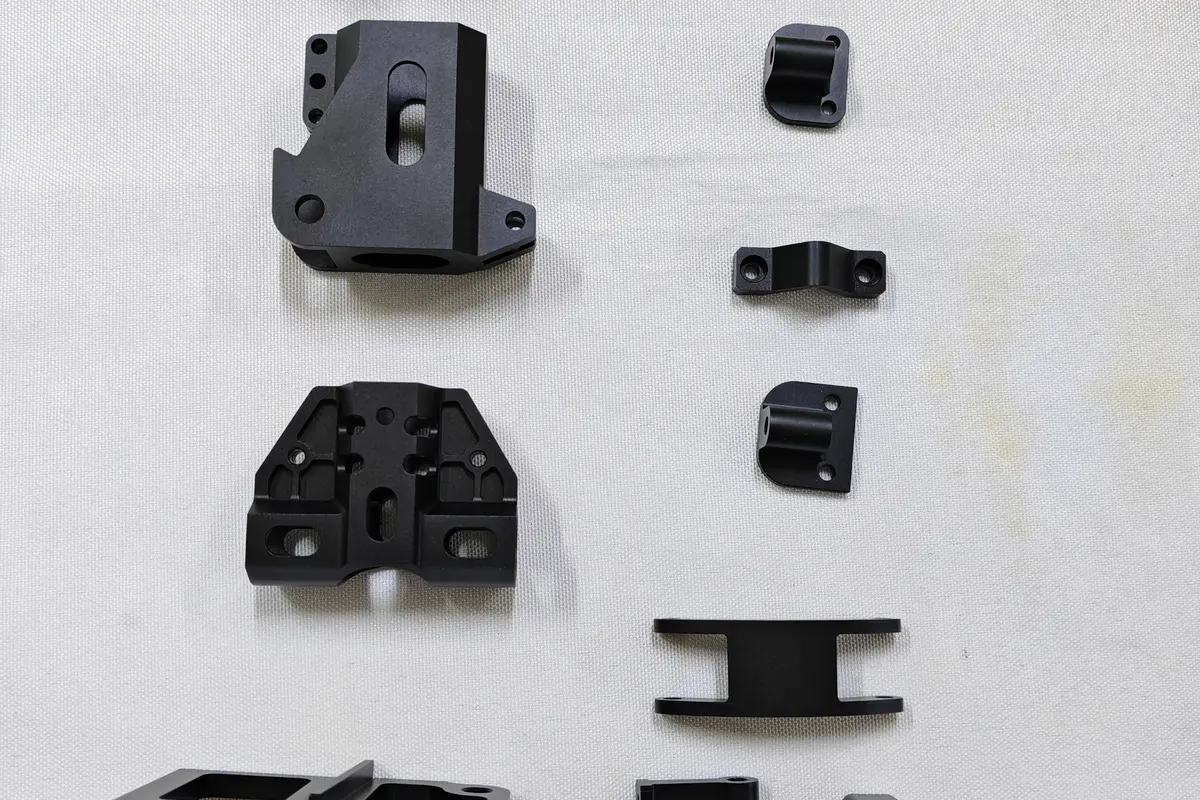
304 and 316 are both austenitic stainless steels, but they should not be treated as interchangeable on a CNC drawing. The practical choice is usually driven by the service environment, not by a generic preference for the “better” alloy. This guide focuses on the decisions that affect a machined part: corrosion exposure, feature geometry, finish, inspection, and total cost.
The short answer
Choose 304 for general indoor, food-equipment, architectural, and industrial parts where chloride exposure is limited. Choose 316 when the part will see salt, coastal air, chlorinated cleaners, marine splash, or more aggressive process fluids. The molybdenum in 316 improves resistance to pitting and crevice corrosion; it does not eliminate the need for sensible design and surface control.
Comparison for machined components
| Decision factor | 304 | 316 |
|---|---|---|
| General corrosion resistance | Strong | Stronger in chloride-bearing environments |
| Typical CNC cost | Lower | Higher material and tool-load cost |
| Machining behavior | Work-hardens; use positive, consistent cuts | Similar, often slightly more demanding |
| Good fit | Housings, brackets, food equipment | Marine fittings, medical/lab hardware, chemical equipment |
| Design caution | Avoid trapped moisture and rough crevices | Still validate the actual medium and temperature |
Both grades can work-harden if a cutter rubs instead of shears. For thin walls, deep pockets, or fine threads, provide a realistic tolerance and allow the manufacturer to sequence roughing, stress relief where appropriate, and finishing passes. See our stainless steel CNC machining capability for material and RFQ support.
What to put on the drawing
Call out the exact grade and applicable material standard, rather than writing only “stainless steel.” State whether substitute grades need approval, request mill test reports when traceability matters, and define the finish after machining. For a corrosion-critical part, include the operating medium, temperature range, cleaning chemicals, and whether a joint can trap liquid.
Passivation can remove free iron contamination after machining and is often useful for both grades. It is not a coating and does not turn 304 into 316. Electropolishing may improve cleanability and reduce surface asperities on appropriate geometries; validate it against dimensional tolerances because every finishing step belongs in the tolerance stack.
Avoid a common selection error
This comparison is different from 201 vs 304 stainless steel. That decision often begins with economy and indoor exposure. The 304-versus-316 decision begins with a more specific corrosion risk: chlorides, crevices, cleaning cycles, and the consequence of a field failure.
RFQ checklist
Send the 3D model and drawing, annual quantity, grade and condition, critical dimensions, surface-finish requirement, and any corrosion or cleaning requirement. If a surface seals against an O-ring or mates with another part, identify it. For a part-focused quote package, review our stainless steel machined parts service; our team can then review manufacturability before quoting a custom CNC machining project.