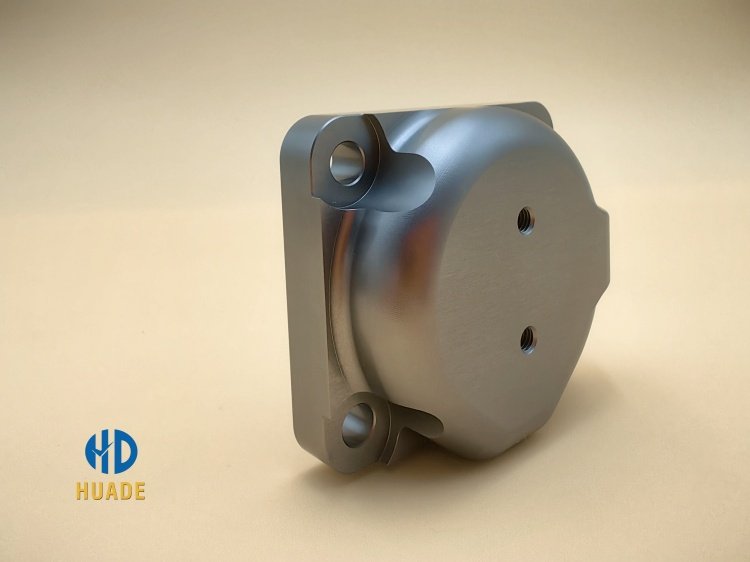
Industrial robot performance depends on the fit and stability of its mechanical interfaces. Joint housings, shafts, EOAT jaws, adapter plates, brackets and sensor housings each impose different requirements for stiffness, mass, alignment, wear and inspection.
From automotive welding to electronics assembly, material handling and precision polishing, industrial robots rely on repeatable mechanical interfaces. Understanding those interfaces helps buyers specify parts that assemble correctly and remain stable through repeated motion. For the wider automation context, see advanced robotics in manufacturing.
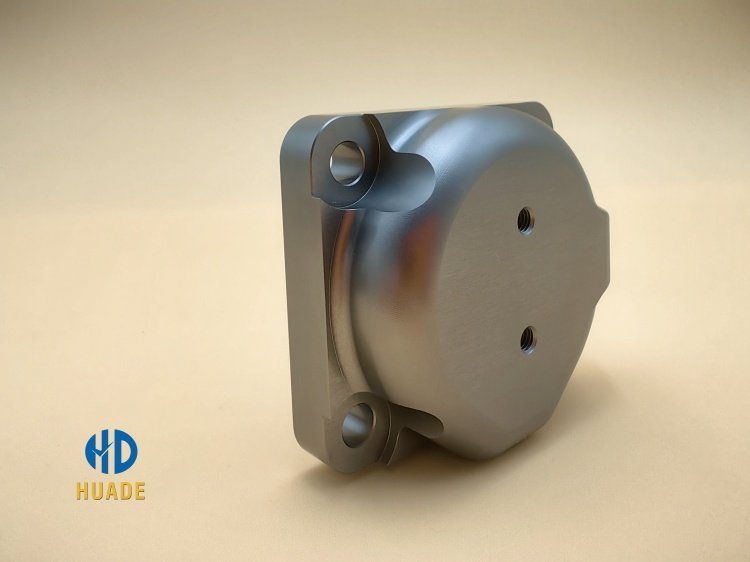
High-precision industrial robot parts such as robot joints and Eins-compatible grippers, illustrating key parts of an industrial robot.
1. The “Body” of Industrial Robots: Mechanical & Drive Systems
The foundation of industrial robots lies in their mechanical systems, including frames, joints, and actuators. Mainstream robots fall into five structural categories:
- Articulated Robots: Human-arm-like design ideal for welding, painting, and assembly tasks. They dominate automotive plants, where six-axis flexibility enables full-range welding.
- SCARA Robots: Optimized for high-speed precision assembly, especially in the electronics industry where component placement tolerances can be as tight as ±0.01 mm.
- Cartesian Robots: Excel at linear movements for pick-and-place, packaging, and palletizing. Their rigid structure makes them highly repeatable.
- Delta Robots: Lightweight parallel robots designed for high-speed sorting, packaging and pick-and-place operations.
- Collaborative Robots (Cobots): Built with advanced force sensors and safety systems, Cobots can share workspace with human operators without safety cages.
These joints and frames are powered by servo motors (for precise positioning) and hydraulic/pneumatic actuators (for heavy-duty stamping or high-force welding). The choice of drive system directly impacts accuracy, cycle time, and energy efficiency.
2. End Effectors: The Robot’s “Hands”
If the body provides structure, the end effector defines purpose. End-of-Arm Tooling (EoAT) determines whether a robot can grip, weld, spray, polish, or assemble effectively.
- Grippers & Chucks: Pneumatic clamps, electric grippers, and modular chucks—such as Eins Robot Chucking Parts—are vital for secure workpiece handling.
- Tool Heads: Specialized attachments like welding torches, spray guns, and polishing wheels enable task-specific automation.
- Sensor-Integrated Tools: Smart EoAT with force/torque sensors or vision cameras allow adaptive gripping, reducing scrap and boosting yield.
In today’s factories, modular design is the new standard. Quick-connect interfaces and plug-and-play grippers from suppliers like Eins allow manufacturers to adapt production lines in hours, not days. This adaptability cuts downtime, lowers tooling costs, and future-proofs automation against changing product demands.
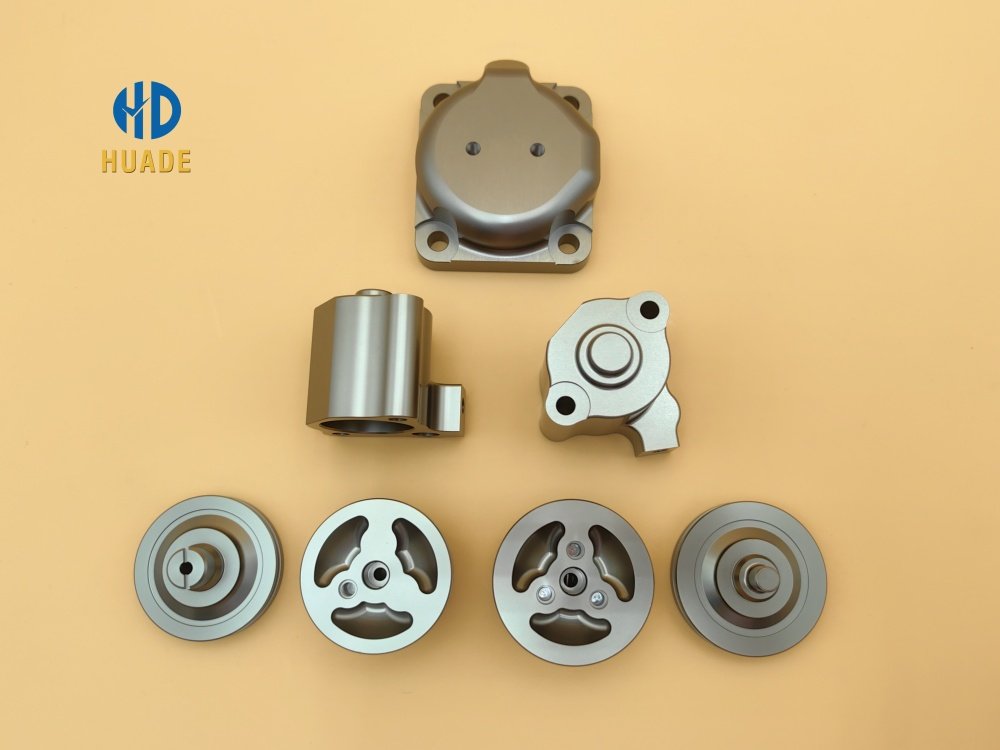
Modular parts of an industrial robot including Eins robot chucking parts, showcasing CNC-machined industrial robot parts used in automation systems.
3. How HDProto Empowers Industrial Robots
At Dongguan Huade Precision Manufacturing Co., Ltd. (HDProto), we specialize in the high-precision components that form the backbone of industrial robots. By addressing challenges in precision, durability, and rapid response, HDProto delivers measurable value to customers worldwide.
- High-Precision Joint Components: CNC-machined housings, shafts, sleeves and mounting interfaces with tolerances assigned to the features that control fit, runout and alignment.
- Custom EOAT Components: Gripper jaws, adapter plates and chuck interfaces designed around payload, reach, stiffness and changeover requirements.
- Sensor-Ready Structures: Robot arm housings pre-engineered with cable channels and mounting points, simplifying the integration of vision or force-control systems.
- DFM Review: Engineering review identifies access, workholding, tolerance and inspection risks before production.
HDProto’s end-to-end service—from prototype to full-scale production—gives customers a reliable partner for evolving automation needs.
Before releasing a robot component, verify the datum scheme, bearing or shaft fits, moving clearances, finish allowance, cable-path features and inspection method. Our industrial robot parts DFM checklist and surface finishes for industrial robot parts cover the two decisions most often missed after machining has started.
4. Future Trends: Intelligence & Sustainability
As Industry 4.0 reshapes factories worldwide, industrial robot components are evolving in three directions:
- Modular end effectors: repeatable locating and fastening interfaces reduce changeover risk.
- Sensor integration: mounting faces and cable routes need defined tolerances and protection.
- Lightweight structures: material removal and wall thickness need to balance mass against stiffness.
- Condition monitoring: bearing, shaft and gear interfaces need inspection that follows their functional datums.
With the rise of smart factories, the ability to integrate intelligent, sustainable, and modular industrial robot parts will be the decisive factor for global manufacturers.
Turn Robot Requirements into a Manufacturable RFQ
The performance of industrial robots hinges on their components. From micron-level joint accuracy to versatile end effectors, every part defines automation’s limits. At HDProto, we deliver high-reliability industrial robot parts through precision machining, empowering clients to lead the smart manufacturing revolution.
Review our industrial robot parts machining capabilities for joint housings, EOAT jaws, shafts, adapter plates and sensor-ready components. For rotation-critical parts, also review our robot shaft runout guide. When requesting a quote, include the robot interface, datum scheme, material, loading, quantity, finishing state and critical inspection requirements.